
So far it’s been a summer of sport, heat and some seriously good creative. We’ve been keeping track.
Here are the campaigns that made us stop scrolling.
Football fever took over
According to data by Tracksuit, the top brands dominating awareness around the 2026 World Cup were Coca Cola, Adidas and McDonald’s. Brands that have been sponsoring the Cup as far back as 1970.
This sponsorship data confirms that consistency over decades beats big budgets in any given year. But the brands winning without official sponsorship this summer all did a similar thing. They found a genuine, authentic angle on the moment and executed it with confidence. Proving that a point of view without a crazy media budget can still win.
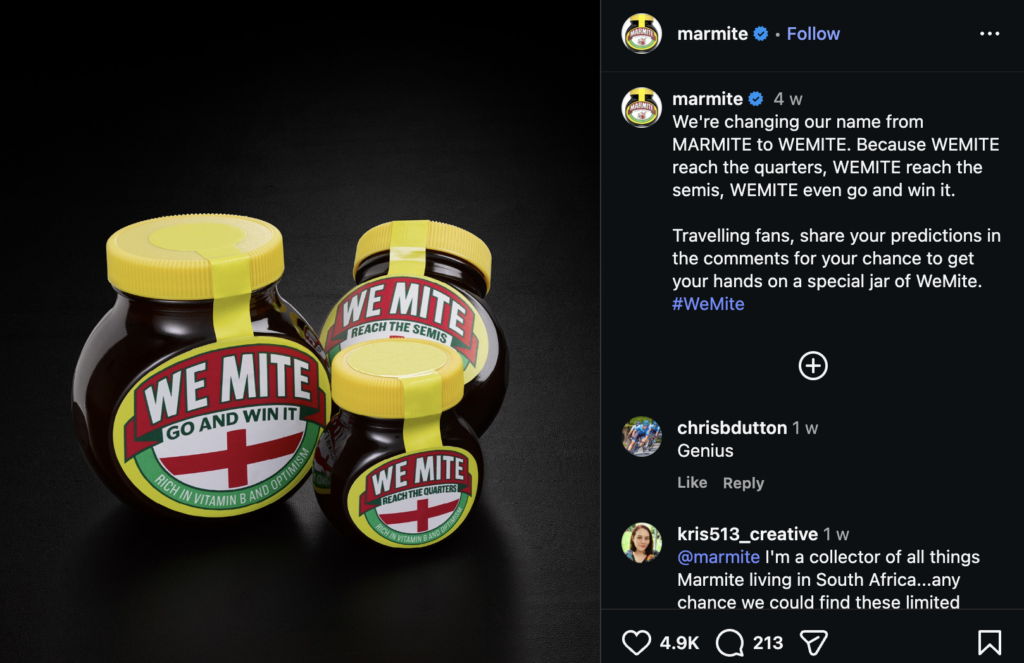
We Mite just win it (we didn’t)
Marmite temporarily renamed itself WeMite, releasing limited-edition jars tiered by fan optimism. A small ‘WeMite reach the quarters’, a medium ‘WeMite reach the semis’ and, for the true believers, a large ‘WeMite go and win it’. Available via Heathrow Express for fans heading to the airport. Created with adam&eve\TBWA. Simple, perfectly timed and entirely on brand for a product that has always run on opinion.
It’s just a shame the jar on our shelf is now just a reminder of what could have been.
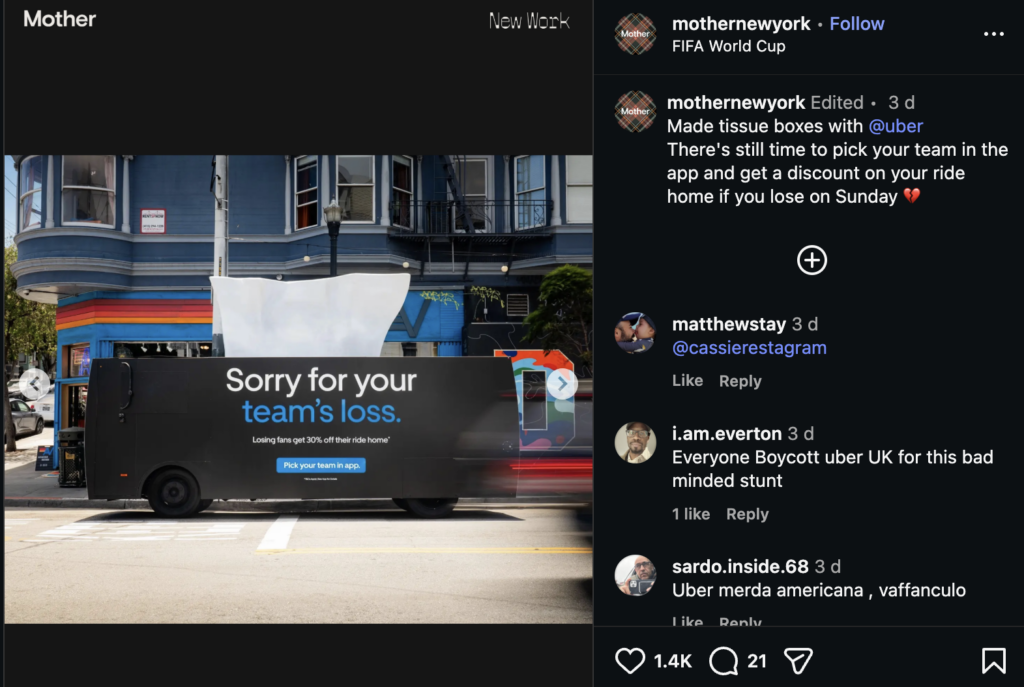
Uber shows up for England’s worst moment
Uber sent a tissue truck out to console England fans following their exit. Part of its wider ‘Sorry for Your (Team’s) Loss’ activation, the truck toured nine host cities and fan zones distributing tissues and promo codes. Created by Mother, it extended an in-app Defeat Deals promotion where fans who picked their team in advance unlocked 30% off a ride once eliminated. Reactive, human and pretty funny.
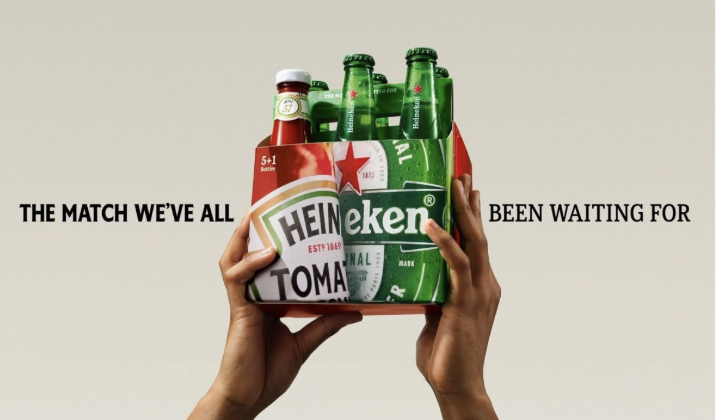
Heinz and Heineken share an audience, a cultural moment and a fridge
Heinz and Heineken, two brands whose names sound alike and whose products live in the same fridge, put out a six-pack of Heineken with one bottle replaced by a Heinz ketchup. Five lagers and a substitute. A pun doing most of the heavy lifting. Posted simultaneously as a collab on both brands’ Instagram accounts. Just a simple observation and the confidence to make it.
Read more: Another round: Beverage industry insights
A poster you can play with
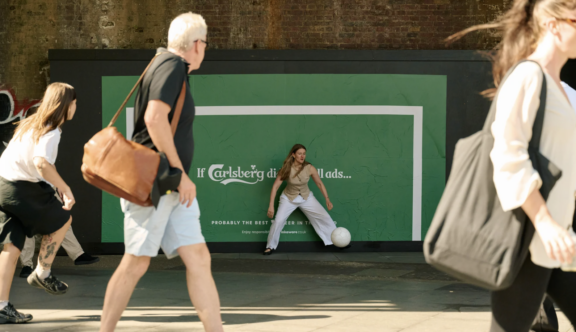
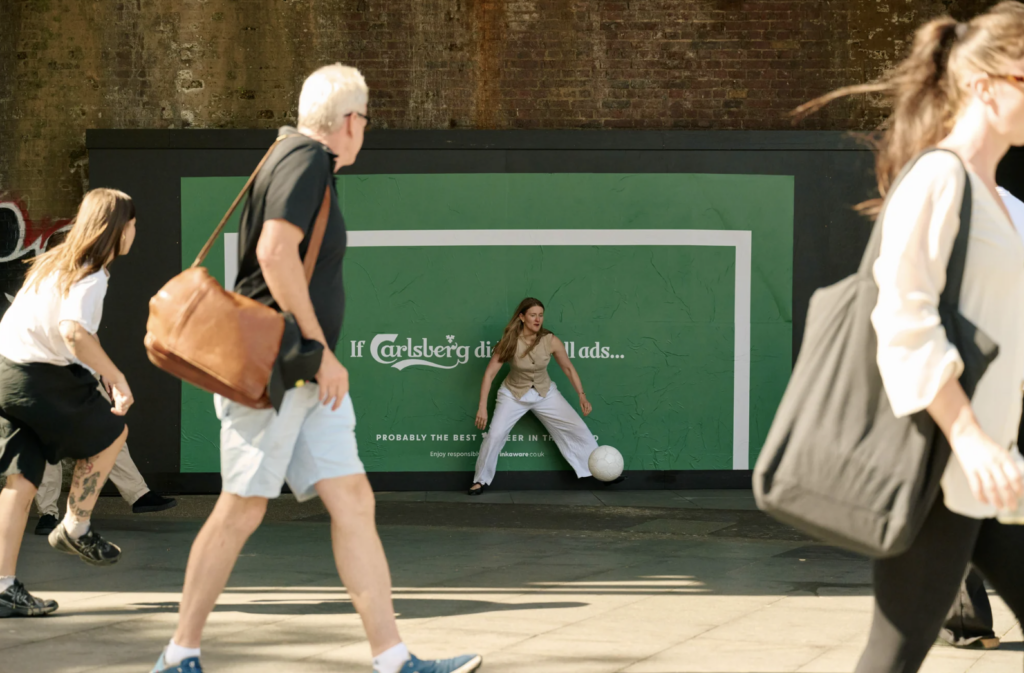
Goal Posters appeared across UK cities: goal-shaped flyposters at Sutton Walk and the Shoreditch Tunnels in London and Bridge Street in Manchester, inviting passers-by to stop and play. Carlsberg’s research found 75% of UK adults were watching football this summer while a third hadn’t had a kickabout in over six months.
The idea is rooted in access. While most fans are watching the tournament from thousands of miles away on screens, Carlsberg put something playable and tangible in the street. No ticket needed. Just a poster shaped like a goal and the simple joy of a kickabout.
The brands that won by being censored
FIFA’s clean-stadium rules required every host venue to strip all non-sponsor branding. Three brands turned it into the best free advertising of the summer.
- Levi’s had its batwing logo covered with a white tarp at Levi’s Stadium. Rather than use a generic rectangle, they cut the tarp to follow the signature batwing silhouette – making the covered logo more recognisable than the original. They adopted the censored treatment across social media, changed their profile picture to reflect the blackout and extended it to stores in London, Paris, Milan and Berlin. It turned into the brand’s most viewed, shared and commented-on social campaign.
- Heinz had its bottles inside World Cup venues photographed with black tape covering the labels. It recreated the look voluntarily, releasing a limited-edition censored bottle with a black strip across the label. Highlighting how iconic the brand is, even without its name.
- Gillette went further. Making the covering look like shaving foam dripping over the stadium signage. Joining the bandwagon with a bit of theatre.
In these cases, constraint became the campaign. But it only worked because the brands were already distinctive enough that audiences understood exactly what was underneath.
Read more: Guinness Women’s Six Nations best campaigns
An 11:37pm kick off
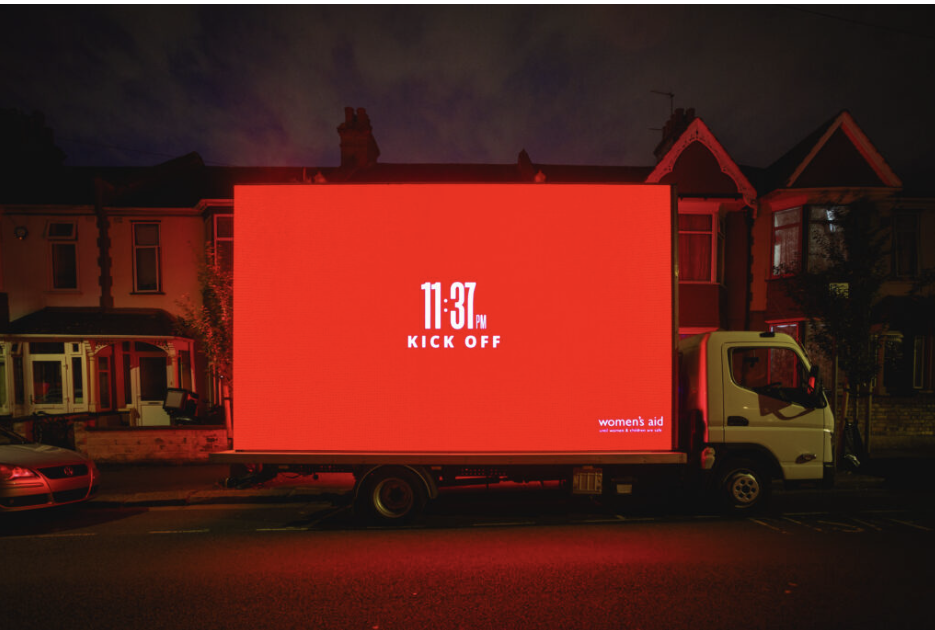
Women’s Aid and ELVIS created The Other Kick Off ahead of England’s opening match, intercepting one of football’s most Googled questions, “what time is kickoff?”, and replacing the expected answer with a different time: 11:37pm.
Not the start of the match. The estimated point at which domestic abuse incidents are most likely to surge after the game.
The figure was calculated using historical reporting data, average match lengths, added time, half-time intervals and post-match drinking patterns. OOH sites appeared across city centres, transport hubs and fan zones with football-inspired creative contrasting the excitement of kickoff with what comes after for too many women.
Research showed domestic abuse incidents increase by 38% when England lose and 26% when they win.
The best purpose-led campaigns don’t announce themselves but let the creative do the work. Women’s Aid made an ad based on a devastating and powerful insight that spoke for itself.
Beyond the footy: the best of the rest
You may be surprised to hear that there were campaigns happening away from the pitch.
The great crisp pilgrimage
Travel brand loveholidays opened a two-day Soho pop-up covering an entire room floor to ceiling with 4,600 bags of crisps from around the world.
The insight behind it: 57% of Britons try new crisp flavours while abroad, 39% enjoy seeking out varieties unavailable in the UK and a quarter admit to bringing crisps home in their suitcase. Crisps, it turns out, have become part of the travel experience.
Visitors could sample international flavours, take home a free packet and enter a holiday prize draw. TikTok creators and food influencers extended the campaign.
The crisp insight is brilliant because it’s relatable, specific and completely underexplored as brand territory. The best experiential campaigns are built around a real human behaviour that the brand can credibly own. loveholidays found theirs in a suitcase full of Pringles.
Corona’s living poster
Corona’s Sun Shadows’campaign in Cape Town may be the most technically impressive piece of outdoor advertising this summer.
Created by Boundless, the work used the long shadows cast by Cape Town’s sunset to form the silhouette of a Corona beer bottle for a few fleeting minutes each evening. A simple white chalk outline on the pavement completed the label once the light lined up.
No CGI or digital manipulation. Just precise planning and timing to predict exactly where the shadows would fall. The team say it relies on the same principle as previous Corona work – a sun-powered billboard and a billboard timed to the moon – using nature to do the creative work when given the right conditions.
Corona’s brand positioning – life is best lived outside – has been consistent for years, and this campaign is a beautiful expression of it.
Greenpeace hijacks the heatwave
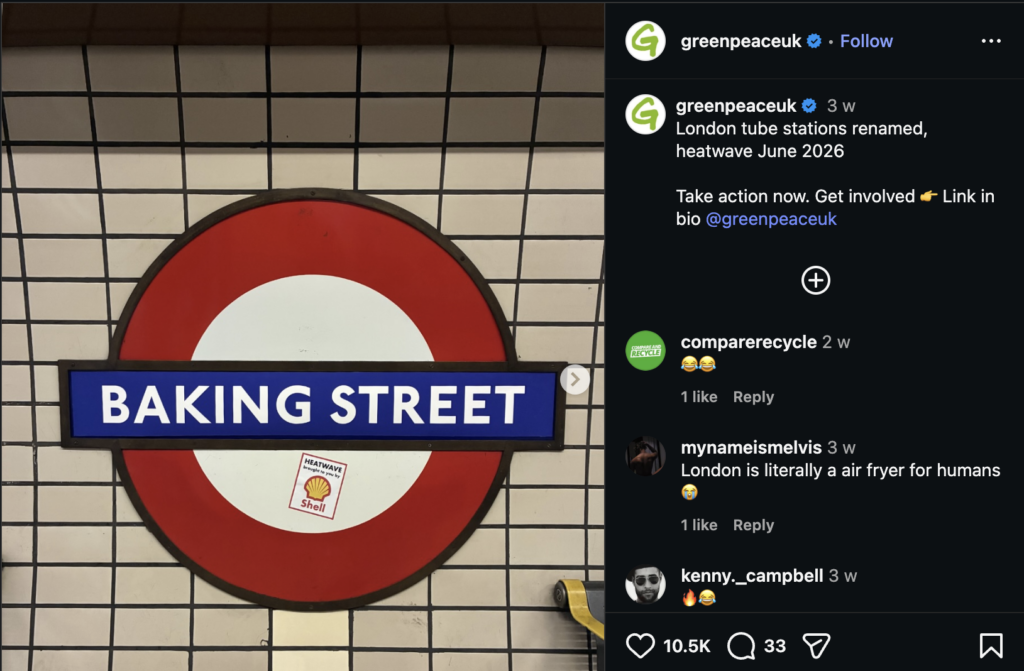
During the UK’s record-breaking heatwave which saw temperatures hit 36.7°C, the hottest June day on record, Greenpeace placed stickers over London Underground station signs to rename them.
Baker Street became Baking Street. Tottenham Court Road became Hottenham Court Road. London Bridge became London’s Burning. Each altered sign carried one line: ‘Heatwave, sponsored by Shell.’
One of the most distinctive bits of creative work of the summer – made from existing infrastructure and timed perfectly to a news story that did the amplification for free.
The StrategiQ view
Coca-Cola doesn’t need to do anything too clever at the World Cup. Forty-eight years of consistent sponsorship has done the work. But Marmite, Uber, Carlsberg and Heinz all found authentic angles on the same cultural moment because they understood what they stood for and found the version of the story only they could tell.
Levi’s understood their brand was strong enough to survive a tarp. Women’s Aid understood the most powerful insight was already hiding in the data. loveholidays understood that holiday nostalgia lives in a crisp packet.
Know what you stand for. Find the moment. Back yourself.
Sources:
- https://www.famouscampaigns.com/2026/07/whos-winning-the-sponsorship-league-table-at-fifa-world-cup-2026/
- https://www.famouscampaigns.com/2026/07/marmite-bets-on-england-going-all-the-way-with-wemite-rebrand/
- https://www.famouscampaigns.com/2026/07/uber-rolls-out-a-tissue-truck-for-englands-world-cup-exit/
- https://www.famouscampaigns.com/2026/07/carlsberg-turns-flyposters-into-football-goals-with-new-campaign/
- https://www.famouscampaigns.com/2026/06/heinz-and-heineken-the-match-weve-all-been-waiting-for/
- https://www.famouscampaigns.com/2026/06/womens-aid-turns-footballs-biggest-question-into-a-warning-about-abuse/
- https://womensaid.org.uk/womens-aid-reveals-the-other-kick-off-time-thousands-of-women-dread-during-the-world-cup/
- https://www.famouscampaigns.com/2026/07/loveholidays-opens-pop-up-celebrating-crisps-from-abroad/
- https://www.famouscampaigns.com/2026/07/corona-turns-sunset-shadows-into-a-giant-beer-bottle/
- https://www.famouscampaigns.com/2026/06/shell-targeted-as-greenpeace-rebrands-tube-stations-during-heatwave/
- https://www.thedrum.com/news/10-brands-that-won-the-world-cup-on-social-media-without-making-a-big-budget-football-ad