
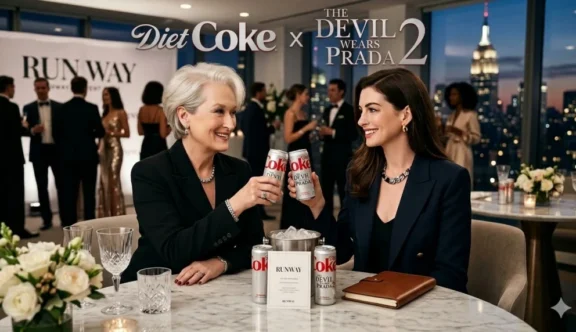
From Dior to Diet Coke to Five Guys, the brands who riffed on the newest Devil Wears Prada movie weren’t just tapping into a trend. No, no. They were inserting themselves into a cultural world audiences have known for almost 20 years – often by answering the same question: how do you survive a meeting with Miranda Priestly in your brand’s house style?
For Diet Coke, it was ‘canny packs’ to hide your fizzy drink from a discerning boss. For Havaianas, it was slip-ons so stylish they replace heels altogether.
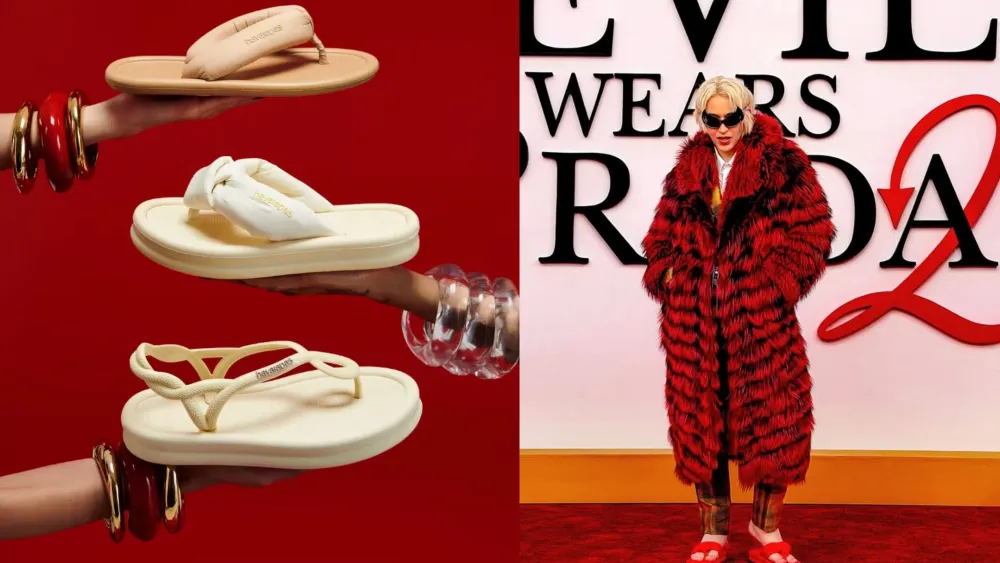
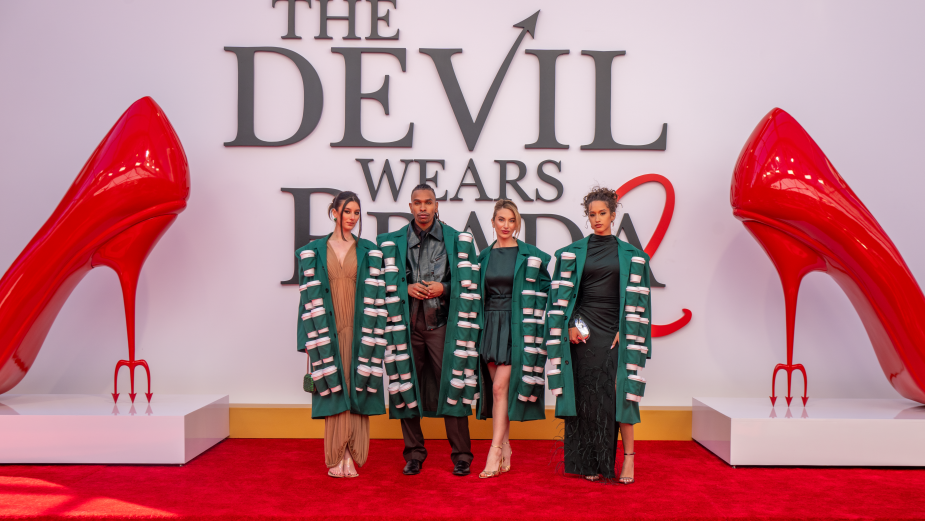
Havaianas’ ‘Puffed Family’ collection made a major red carpet appearance during the film’s New York City premiere.
From Dior – who practically co-owned the universe as a primary corporate partner in the sequel – to John West tuna, who had absolutely no business being in the conversation and were all the better for showing up anyway, here are the brands who flocked back to the office. And not just any office…
Why was every brand suddenly in on The Devil Wears Prada?
Miranda Priestly represents impossible standards, elite taste and the slightly absurd performance of authority. The genius of the original film was that she never became a pantomime villain. She was compelling and, if you were honest with yourself, a little bit aspirational. There’s even a flicker of humanity there – however small – by the end credits.
For brands, that emotional familiarity is valuable. The audience already understands the stakes. No setup required. You could drop directly into the world, play with its dynamics and make it work for what your brand is about.
The Devil Wears Prada world gave brands permission to dramatise small rituals and frame convenience as sophistication. The products themselves didn’t need to be premium to play.
Some brands channeled Miranda. Others wanted her approval.
Two camps, one universe.
Look at the spread of brands in the conversation and they split fairly cleanly into two groups. Not by category, exactly, but by the role they chose to play in the Miranda universe.
A. The fashion authority brands
Dior, Vogue, Valentino, Tiffany, L’Oréal, Trессemmé. These brands didn’t need to borrow credibility from Miranda Priestly. Rather, they confirm it. Their campaigns treated the film almost as mythology – polished, knowing, elevated. Dior took this furthest: as a primary corporate partner in the sequel, the brand is literally woven into the plot, with scenes filmed at the newly renovated flagship and real Dior product throughout.
For these brands, Miranda’s world is theirs. They’re not visitors. Their tone was composed and the message simple: this is what fashion at its most authoritative looks like, and we belong here.
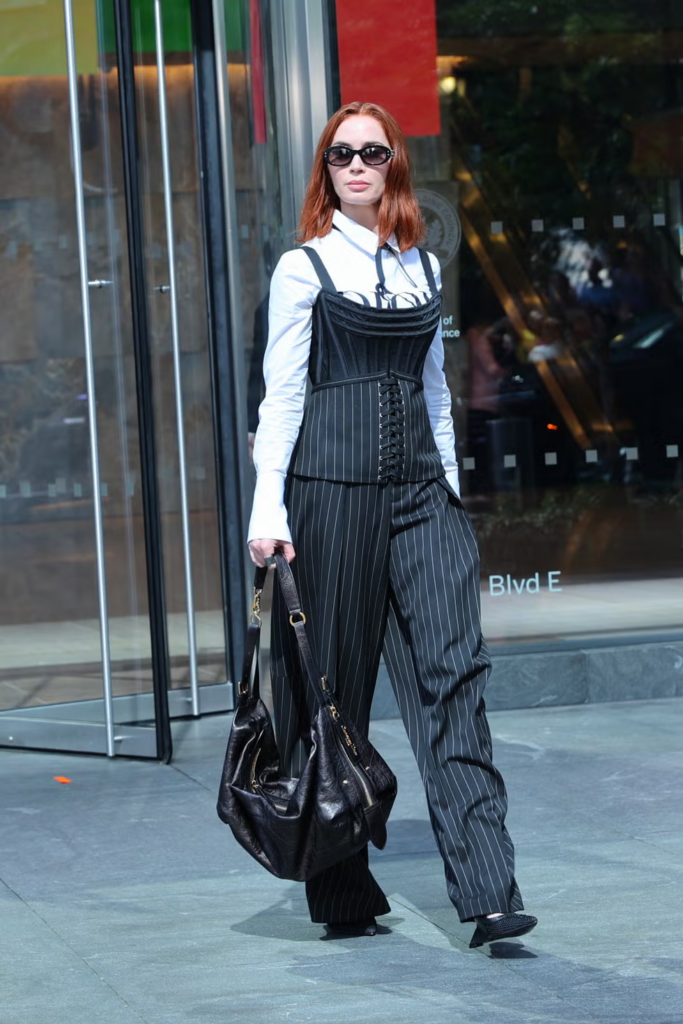
Emily Blunt wearing a Dior pinstripe suit on the set of The Devils Wears Prada 2.
That’s also why the Anna Wintour and Miranda Priestly crossover became news in itself. During the original film’s release, Wintour reportedly wanted nothing to do with The Devil Wears Prada, widely understood to be inspired by her, and the production famously struggled to source fashion samples because luxury brands were wary of associating with it.
Nearly 20 years later, the relationship flipped entirely. Fashion’s gatekeepers were no longer distancing themselves from the franchise – they were lining up for a part in it. The film went from industry satire to fashion canon.
B. The playful ‘survive Miranda’ brands
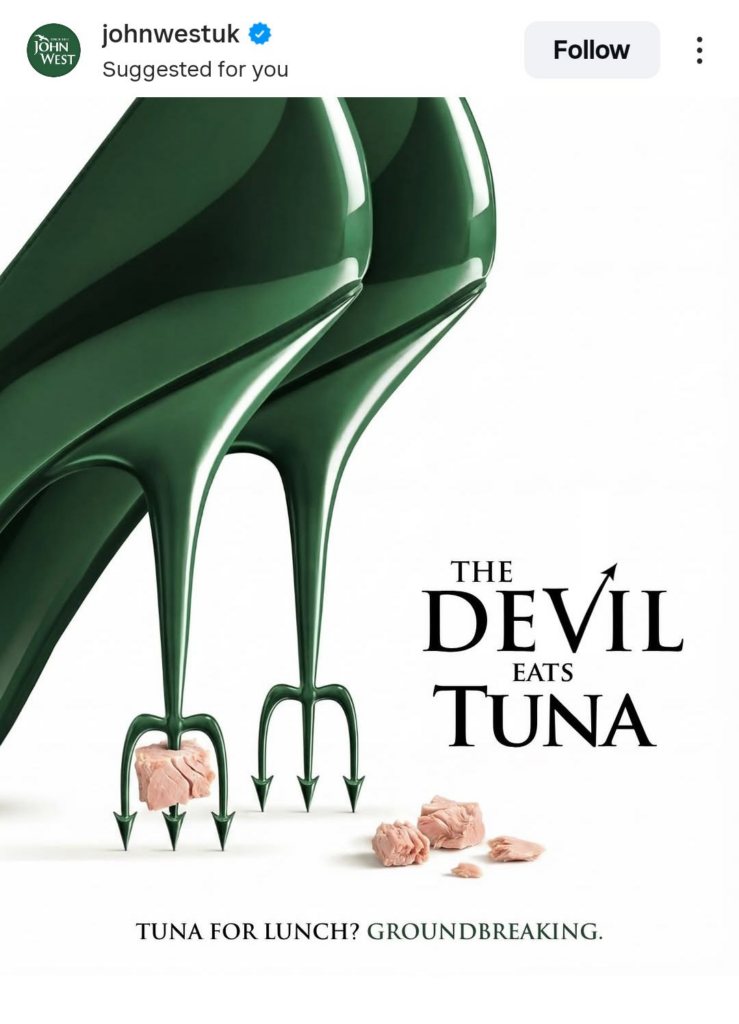
Five Guys. Diet Coke. John West. Starbucks. These brands have no natural claim on the fashion universe and they knew it – which is exactly what made them interesting to watch. They weren’t trying to become luxury brands. They used the language of fashion seriousness to dramatise completely ordinary behaviour, and the irony gap was where all the fun lived.
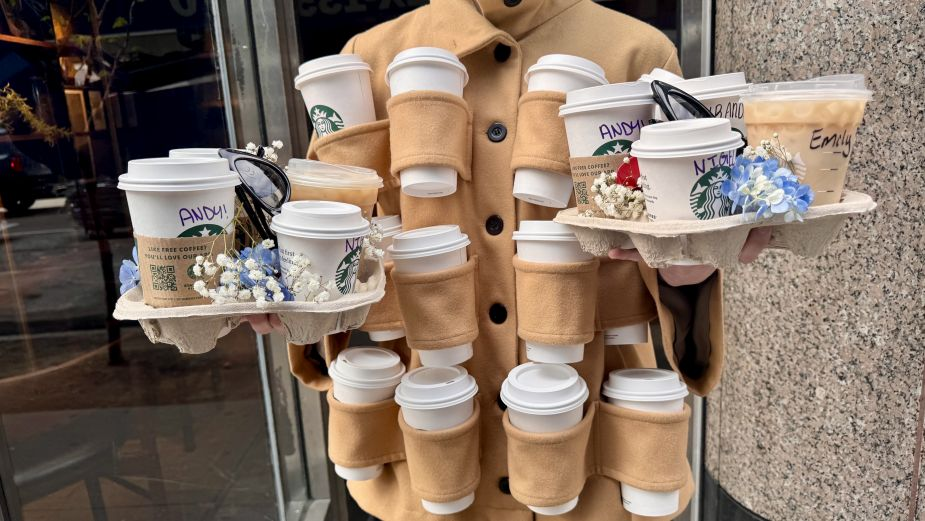
Starbucks turned the takeaway coffee order into a fashion accessory with a coat featuring sewn-in cup holders for your drinks.
Diet Coke’s execution was a good example of how to get this right. The canny packs and the video where Miranda is waved off before the can is cracked open was a small, precise joke that understood its own product perfectly. Diet Coke has always been about stolen moments of pleasure. The Miranda universe gave that familiar idea a new, cinematic frame.
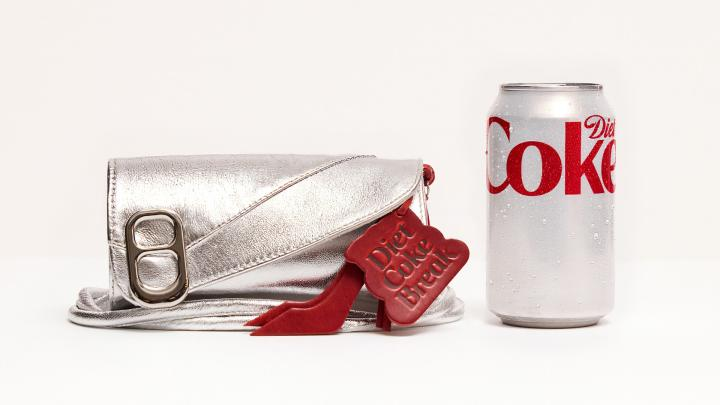
The Diet Cok ‘Canny Pack’
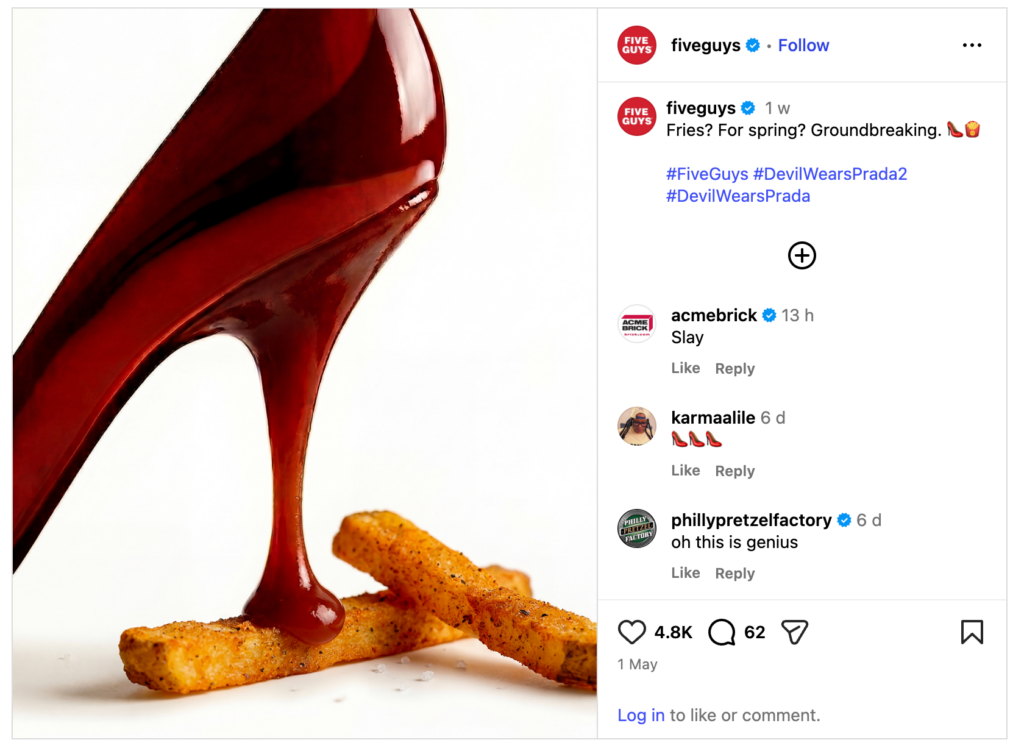
Five Guys and John West both leant into visual comedy – the high heel dip, ‘the devil eats tuna’ caption – that worked because it committed fully to the absurdity.
Why this fit like a glove in 2026
Cultural moments don’t land in a vacuum, and nostalgia alone couldn’t have powered this level of obsession around the sequel. It’s that so much of the emotional territory explored in the original film felt strangely current again.
Return-to-office culture has made the rituals of professionalism visible again: the pressure to look put-together, navigate workplace dynamics and appear composed while secretly inhaling a desk lunch at speed. The Runway universe turns those rituals into entertainment rather than exhaustion. It gives people a way to laugh at the routines they’re already living – the coffee run, the takeaway burger, the shoes coming off under the desk by 4pm – and enjoy them that little bit more.
The message is: you, too, could be living a life Miranda Priestly might acknowledge with a withering glance. Which is, somehow, exactly the compliment everyone wants.
What separated the good from the ‘trend-jacking slop’
With AI making it trivially easy to generate a Miranda-based meme or GIF at the drop of a beret, the scroll inevitably filled up with campaigns that decided to ‘give it a go’, because, why not? You know them when you saw them. You eyerolled and scrolled past.
But the existence of bad trend-jacking doesn’t make the trend itself a mistake. It makes taste and strategy the differentiator.
The two questions worth asking before any campaign of this kind:
- Does it fit the strategic narrative the brand wants to get across?
- Is it actually funny, impactful or beautiful – or does it just exist for the sake of it?
Yes to both: fair game. Anything else: skip it.
The difference isn’t budget. It’s whether someone with taste and a genuine understanding of the brand made the call, or whether the brief was ‘do something Miranda-related by Thursday’.
The best campaigns realised that the cultural universe they were borrowing from had its own standards. Miranda Priestly, of all fictional characters, would not accept mediocrity. The irony of a lazy campaign riding her coattails is the kind of thing that deserves a slow blink and a dismissal.
The broader lesson
What The Devil Wears Prada moment illustrated, across all its brand expressions, is how cultural fluency works as a creative asset. When a brand taps into a world that audiences already understand, it doesn’t need to build context from scratch. It can spend its creative energy on the idea itself, because the foundation is already there.
Dior leans into aspiration and authority because that’s who Dior is. Meanwhile, Starbucks is there to serve everyone’s favourite coffee order. No matter how devilishly specific the drink choice. Neither is pretending to be the other.
That’s the note worth carrying into any trend-adjacent creative conversation: the question is never just ‘should we do this?’ It’s ‘what’s the version of this that only we could do?’ If the answer is clear, the campaign tends to take care of itself. If it isn’t, no amount of Miranda’s reflected authority will save you.
Now, if you’ll excuse us. We’re kicking off our heels after a very long day of crushing it.
Want to make brand moments that actually land? Get in touch with us to talk strategy. StrategiQ helps ambitious brands find the creative that’s distinctly theirs.
References
- https://www.theguardian.com/film/2026/may/02/the-devil-wears-prada-2-meryl-streep-finances-emily-blunt-anne-hathaway-stanley-tucci
- https://lbbonline.com/news/devil-wears-prada-brand-collabs-google-starbucks-tresemme-grey-goose-smartwater
- https://www.npr.org/2026/05/02/nx-s1-5805152/devil-wears-prada-2-trends-fashion
- https://wwd.com/shop/shop-shoes/havaianas-the-devil-wears-prada-2-flip-flops-where-to-buy-1238928735/
- https://www.mediapost.com/publications/article/414751/devil-wears-prada-2-attracts-all-the-brands-eve.html
- https://www.marketing-interactive.com/here-are-the-brands-strutting-the-devil-wears-prada-2-runway
- https://edition.cnn.com/2026/04/28/entertainment/devil-wears-prada-2-marketing
- https://www.forbes.com/sites/oliviashalhoup/2026/05/07/the-devil-wears-prada-2-opens-to-a-smash-success—but-is-it-marketing-or-nostalgia-doing-the-heavy-lifting/