
A beer mat and a tiny umbrella go a long way…
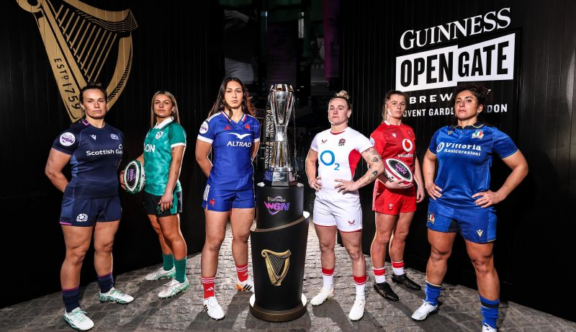
Last month, on 11 April 2026, more than 75,000 fans packed into Allianz Stadium for the opening fixture of the Guinness Women’s Six Nations. A tournament record.
Somewhere in that crowd, someone held up a black beer mat with a pint-shaped cutout and took a photo of the pitch through it. They posted it. Thousands of other people did the same.
Why? Because Guinness understands that the strongest social ideas don’t begin on social at all – they start in the real world. With keen observations around consumer behaviour.
Read on as we tackle: why Guinness’ Women’s Six Nations creative marketing is worth studying, along with a look at the wider socio-cultural bars the brand is helping to raise.
First, the commercial context
Guinness is the title partner of both the Men’s and Women’s Six Nations, in a long-term deal reported at around £15 million a year. That’s a serious investment by any measure. So, what’s in it for Guinness?
The Six Nations delivers a tapped-in audience. Rugby fans over-index heavily as Guinness drinkers compared to followers of almost any other major sport. So rather than chasing maximum reach – as many sponsorships do – this is about depth with exactly the right demographic, and very little waste.
Guinness’ extension into the Women’s Six Nations simply made sense. Its Never Settle campaign (centred around responsible drinking and inclusion) gave the Women’s Six Nations’ partnership a frame that felt earned instead of bolted on. One that aligned neatly with rugby’s own values: integrity, inclusivity, authenticity and strength.
And when a brand’s values genuinely overlap with a sport’s, sponsorship stops feeling like advertising and starts to feel like belonging.
Guinness has produced some top-notch Women’s Six Nations work. Here’s a helping of the best.
The Guinnbrella: why strong digital campaigns often start ‘IRL’
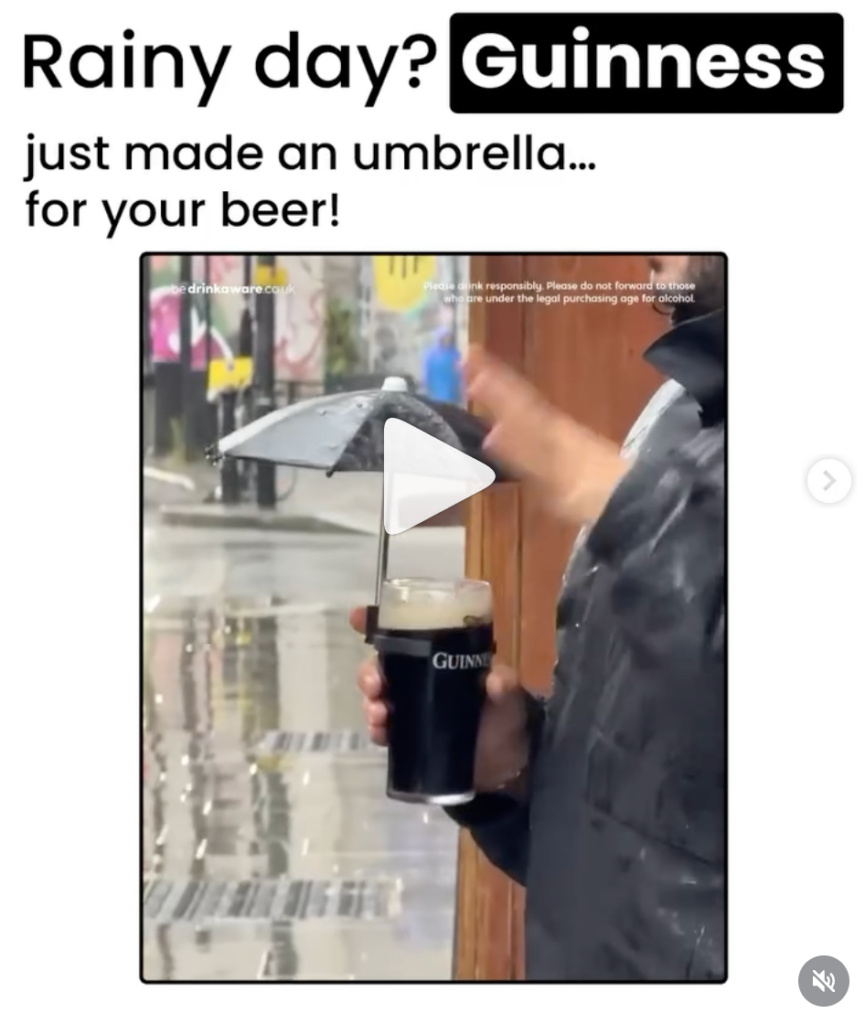
Let’s talk about a tiny umbrella.
The Guinnbrella – a miniature umbrella that sits on top of your pint glass and protects it from the rain – is one of those ideas that seems obvious in retrospect. Which usually means it’s good.
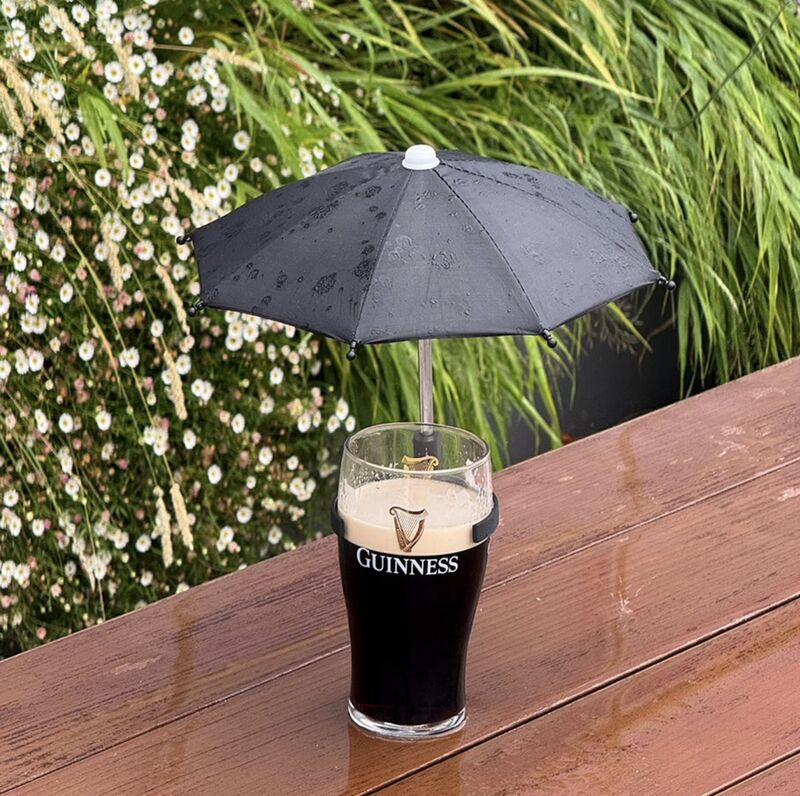
The Guinnbrella protects a pint from the rain
At its core is an observation about behaviour: people watch rugby outside. But it rains in Britain – even in summer – and protecting your pint is treated as something close to a moral duty.
So, Guinness built the solution.
In doing so, they transformed a simple cultural insight into a physical object that was inherently shareable because it worked in the real world first.
The Guinnbrella only really lands in pubs, stadiums and other settings where people naturally want to take photos and share moments with friends. That’s the point, and the social content that followed? An excellent byproduct.
Pints of View: the beer mat that became a campaign
In February 2026, Guinness rolled out the ‘Pints of View’ activation to the UK ahead of the Six Nations. Black beer mats. Pint-shaped cutouts. The idea: frame your matchday moment through the glass.
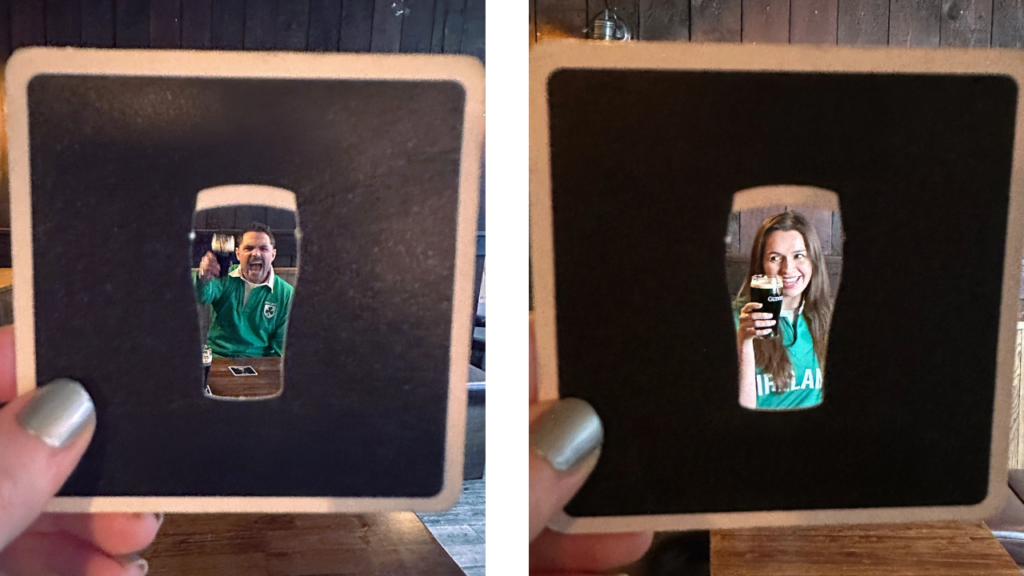
Credit: Famous Campaigns
A simple idea. But a smart one. A low-tech, high-insight piece of creative built around an existing behaviour: the ritual of photographing your pint before kick-off. Guinness didn’t invent the habit. Instead, it gave people a fun and memorable addition to it.
Forcing new behaviours is a tricky beast. Whereas identifying what’s already a cultural norm and amplifying that in a way that feels native to the audience? Pure gold.
More than that, the mats placed fans inside the beer, giving them a way to feel totally immersed in the moment. Thousands of fans ended up creating near-identical images – pint-shaped frames around stadiums, friends and rugby pitches – all unmistakably Guinness, without even needing the logo in the shot.
The campaign extended Guinness’ Lovely Days platform – its celebration of those ordinary-extraordinary moments that sport creates.
Moving at the speed of light with Guinness
The sky – make that the moon – was the limit when Guinness took the pint out of the pub and sent it into space.
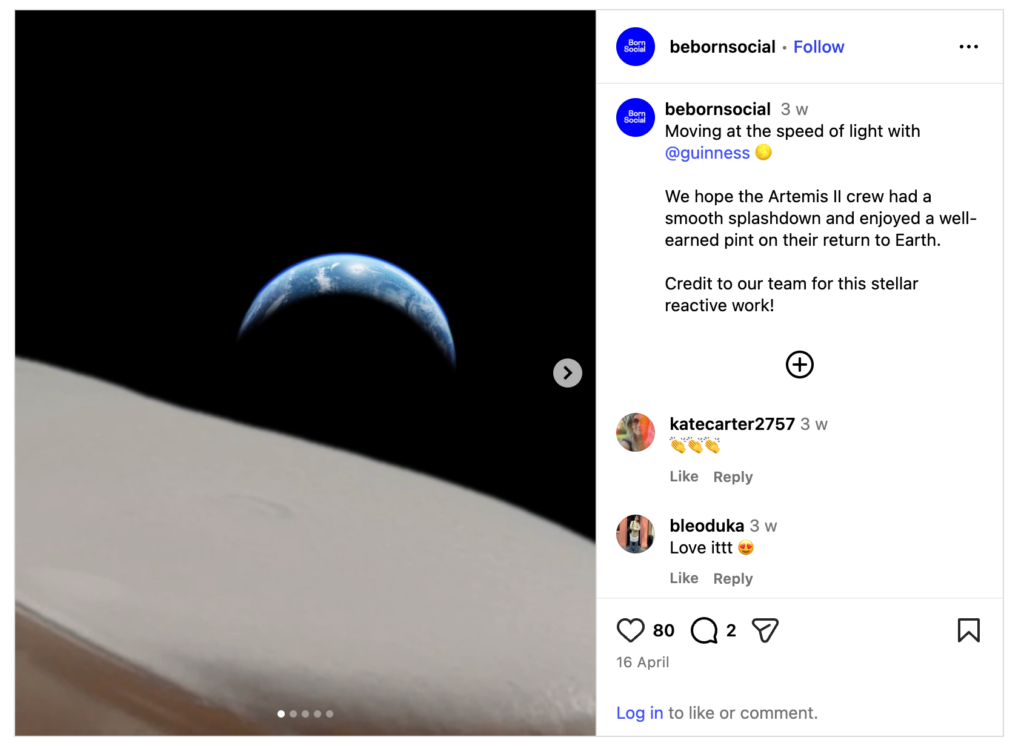
In a creative tied to the Artemis mission, perfectly poured Guinness pints were shown from the perspective of astronauts looking back at Earth.
It worked because it took something as grounded and everyday as a pint and exaggerated its cultural weight, by situating it within one of humanity’s most ambitious explorations. The joke lands because it’s both absurd and oddly logical – if Guinness is already part of social ritual on Earth, why wouldn’t it be part of how we imagine ourselves off it?
The pour
The Women’s Six Nations final takes place on 17 May 2026 in Dublin – the first time Ireland will host a standalone Women’s fixture at the Aviva Stadium. A fitting stage for a tournament that has grown in quality, visibility and cultural weight in ways that would have been difficult to imagine even five years ago.
Guinness has been consistently present throughout that journey – not reinventing itself, but showing up as the women’s game has grown into its own space, with its own audiences, stories and significance.
That continuity is key. Women’s rugby has spent too long in the shadow of the men’s game, with less visibility and less investment. Having the same major sponsor across both tournaments brings deeper inclusivity, and it’s an example of brand practising what it preaches.
Even Guinness’ focus on responsible drinking takes on sharper resonance here. Shaping safer, more respectful spectating matters in any stadium – but especially as new and more diverse audiences come to women’s sport for the first time.
In this sense, Guinness is helping set the tone around modern rugby culture.
We’re noticing:
- good strategy ✔
- activations fans can’t help joining in with ✔
- plus a do-good attitude ✔
For that, Guinness, cheers to you! Pour us a pint of the action.
More insights in our report: Another round – a quick sip of the UK beverage industry.
StrategiQ works with ambitious brands on the strategy, content and creative that builds long-term visibility and commercial value. If this piece got you thinking, let’s talk.