I went back in time.
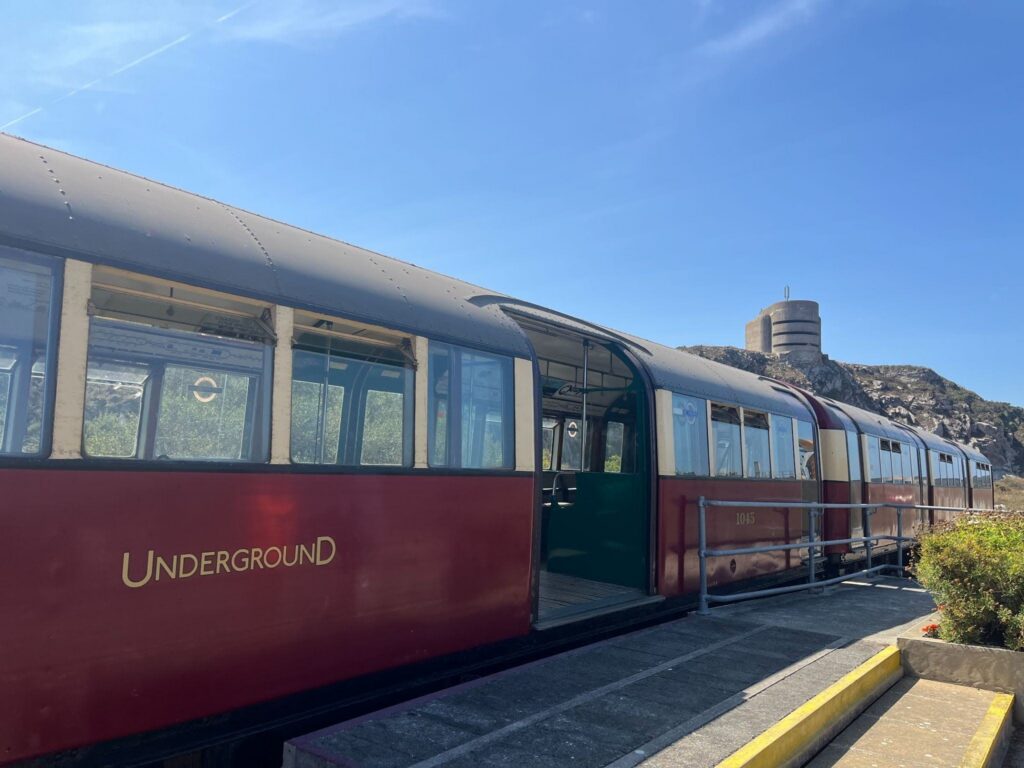
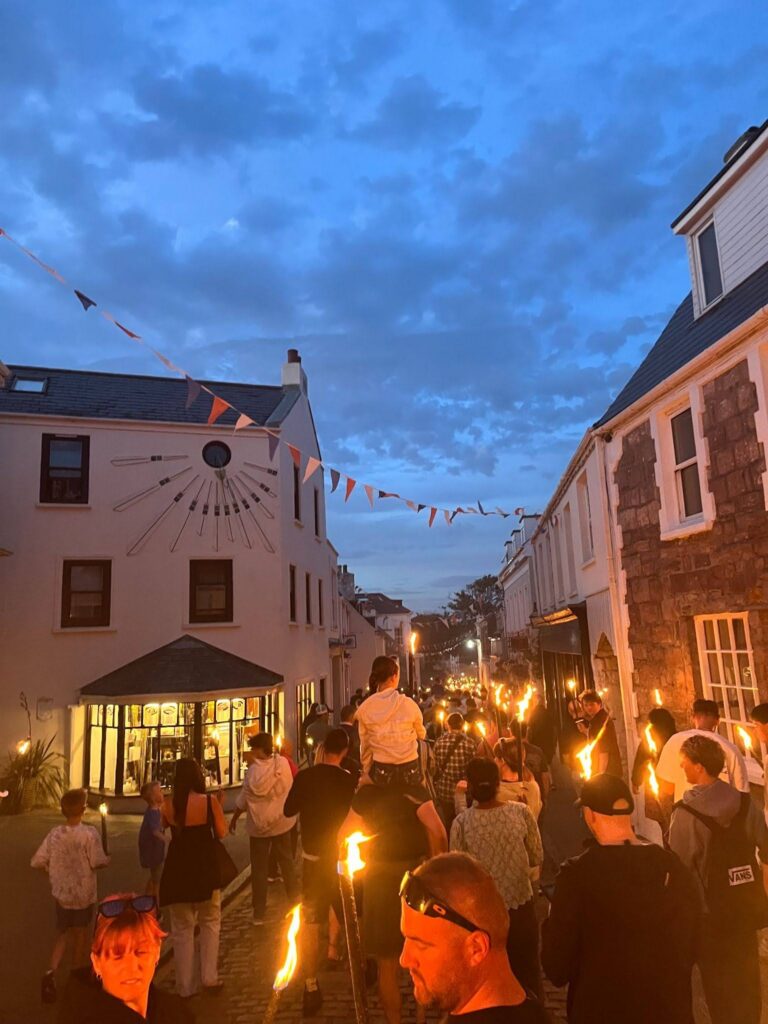
To a place where seatbelts aren’t mandatory and MOTs aren’t required. There are no traffic jams, and the railway is quite literally a London Underground carriage from the 1930s. By day, beautiful, quiet beaches adorned by historic forts host sandcastle competitions and by night, torchlit parades light the cobbled streets.
No, I (sadly) didn’t get in a DeLorean, though the teeny plane required to get there wasn’t much bigger. I didn’t even leave the UK, or maybe I did? The politics get blurry there. But it wasn’t Timbuktu; it was Alderney, Channel Island, 3.5 square miles, population 2,000.
Why am I talking about this in a marketing newsletter?
Anyone who lives in the world, and therefore consumes well, anything, has probably been taken on a journey back in time recently too. Whether in the form of low-rise jeans, Polaroid cameras or through watching Stranger Things, we have been reaching for comfort in the form of a less complicated world.
I’m also a firm believer that observing and constantly learning from people and places is not just a good human quality but entirely necessary to being a good strategist. Besides, I’d hazard a guess that you’re already at least a bit curious to find out what goes on here – if not, I would gently suggest you’re in the wrong business, given that ours is built entirely on influencing human behaviour.
We’re all magpies
Our industry is great at championing good work, and I believe we’re all the better for it, but we’re also very good at navel-gazing, and even better at following the crowd. “Oh, I too believe this McDonald’s campaign is the best I’ve ever seen.” “Wait, look what they’ve done now.” “NO. WAIT. THIS ONE.” You know the drift.
No shade whatsoever to the genuinely talented teams at Leo Burnett and Wieden+Kennedy, whose work is, in fairness, excellent just sadly out of us mere mortals’ price range. My point is that while we’re drawn to the big, and the expensive, we too often overlook what actually works organically, day in, day out, and often without any intervention at all. Surely the best use of our powers as marketers is to amplify what already exists rather than try to carve behaviour from scratch every time? It’s easy to miss in the noise, but strip it all away and you’ll be pleasantly reminded.
In small communities, news and gossip travel like wildfire. Marketing budgets don’t exist in Alderney, but that doesn’t mean that marketing doesn’t happen. It just means that other mechanisms have to step up: word of mouth, chief among them. Most “advertising” on the island happens via a poster in a shop window, followed by half the island telling their friends about it.
Case in point:
“The solar eclipse is tomorrow, I wish we had some glasses.”
“Let me ask around…
Great news! (Trusted source) says the café has 500 pairs, going on sale at 4 pm.”
“There are only 2,000 people on this island. There’s no way many others have this information. We’re in!”
Insert SpongeBob meme here because a few moments later I arrived to find something that can only be described as a rival to the Wimbledon queue. No programmatic, not even a shop window poster. Just demand, fulfilled entirely by well-timed supply and word of mouth. And no, I didn’t get a pair. Turns out WOM is too good for my liking (and my retinas agree).
Brands don’t build communities.
We talk endlessly about brands “building communities” particularly on social. But it’s quite the opposite: Communities build brands, and if they’re smart, brands may occasionally be able to borrow some credit.
There’s a saying in Alderney:
“If there’s something you want, forget it; if there’s something you need, just ask.”
Yes, I’m aware that sounds like something a Hogwarts ghost told me on my quest to find the Room of Requirement. But I think it’s actually quite wonderful and a genuinely good summation of what “community” actually means. They are inherently human and reciprocal so just as good news spreads fast, so does the bad. So if you’re exempt from criticism in your own community, then news flash, it isn’t one.
Time AND place
Community isn’t the only place attention beats budget. Sometimes it’s just someone doing the basics properly, somewhere you didn’t expect it.
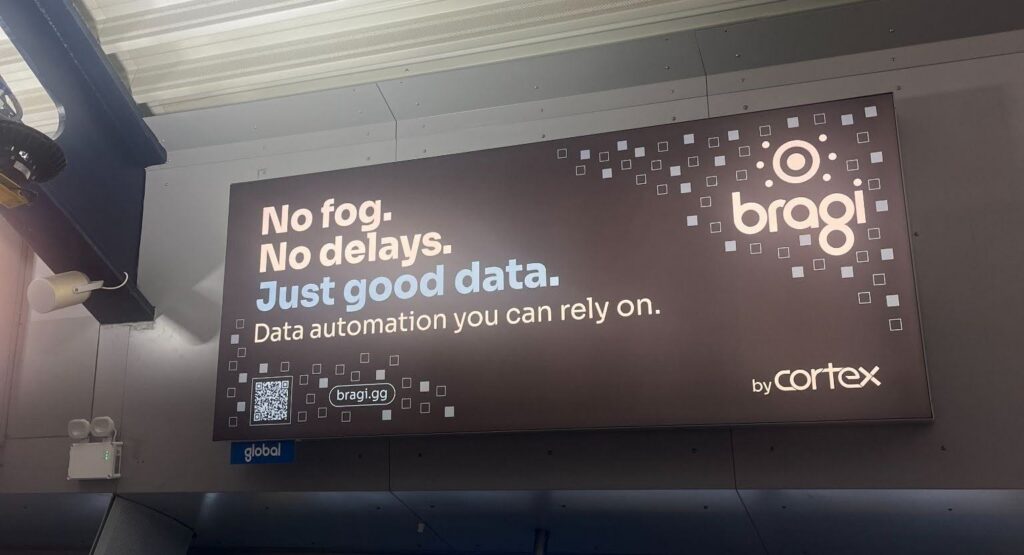
While Alderney’s charm is seemingly endless, one should be sure to pack their sense of humour for the journey – delays are frequent, and I became VERY familiar with the inside of Guernsey Airport. As anyone in advertising knows, this means one thing – gaze around and examine all marketing activity in the vicinity. I was pleasantly surprised.
Situational marketing can be brilliant when it’s done well, and excruciating when it isn’t. It’s not going to win any awards but I have to admit I cracked a smile reading this at the announcement that our flight had been delayed due to fog…
This, however, was nothing short of genius.
Clever use of unexpected real estate is usually a decent start, but the back of a boarding pass?! Who knew.
I only clocked it properly when someone tapped me on the shoulder, looking concerned and panting slightly. “Excuse me, you dropped this.” They handed me what looked like a bank card. I was halfway through explaining it wasn’t mine when I registered the paper feel in my hand. It was the bottom tab of my own boarding pass.
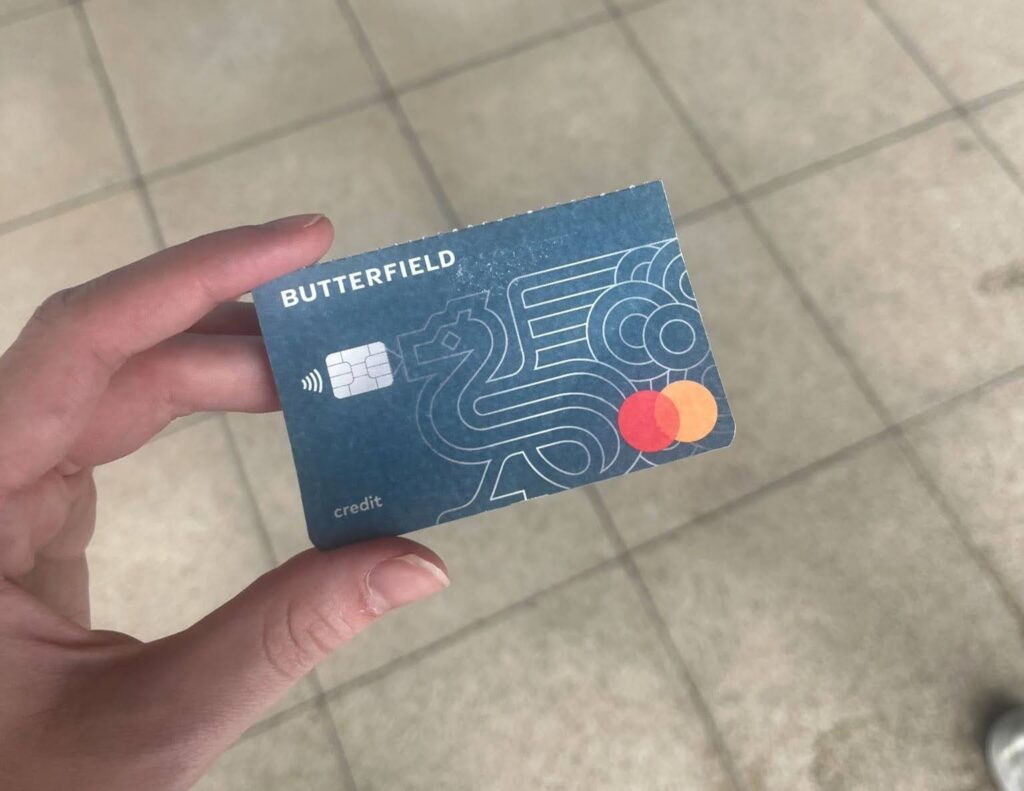
Take a bow, Butterfield.
I’m not on commission
Promise. And I’m not the only one going on holiday to the past.
Nostalgia is a full-blown trend right now because it’s a shortcut to authenticity (which, as every customer insight report will tell you, is all Gen Z live and breathe). It means that, rather than working to evoke a feeling amongst your audience, you just have to nudge them to remember one of their own.
But in this very real trip back in time, authenticity wasn’t manufactured; the world just existed, unapologetically as it was. No billboard alone can do that, but if more brands prioritised these principles instead of trend-chasing and pandering, then perhaps originality would thrive and we’d have something worth remembering in twenty years, rather than just exploiting what was built twenty years ago.
It’s sad that true authenticity is so hard to come by, but once you find it you can’t help but want more. I’m practically begging for a brand to say something I disagree with.
So, brands. There’s the gauntlet.
Enjoy some further evidence below (still not on commission).