
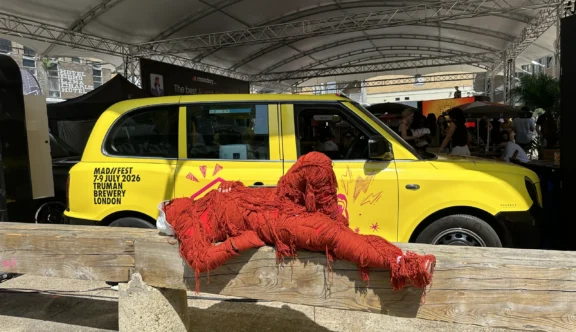
Day 3 of MAD//Fest brought the energy of a festival on its final stretch – slightly looser, noticeably more honest and, somehow, even hotter.
Here’s how we closed it out.
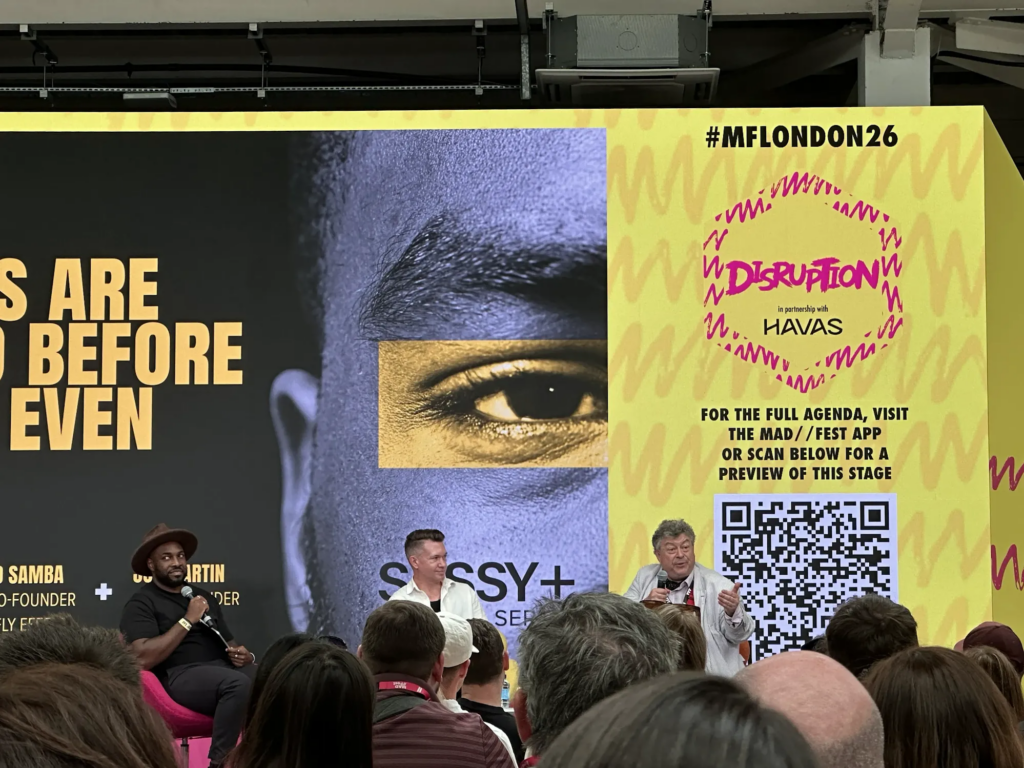
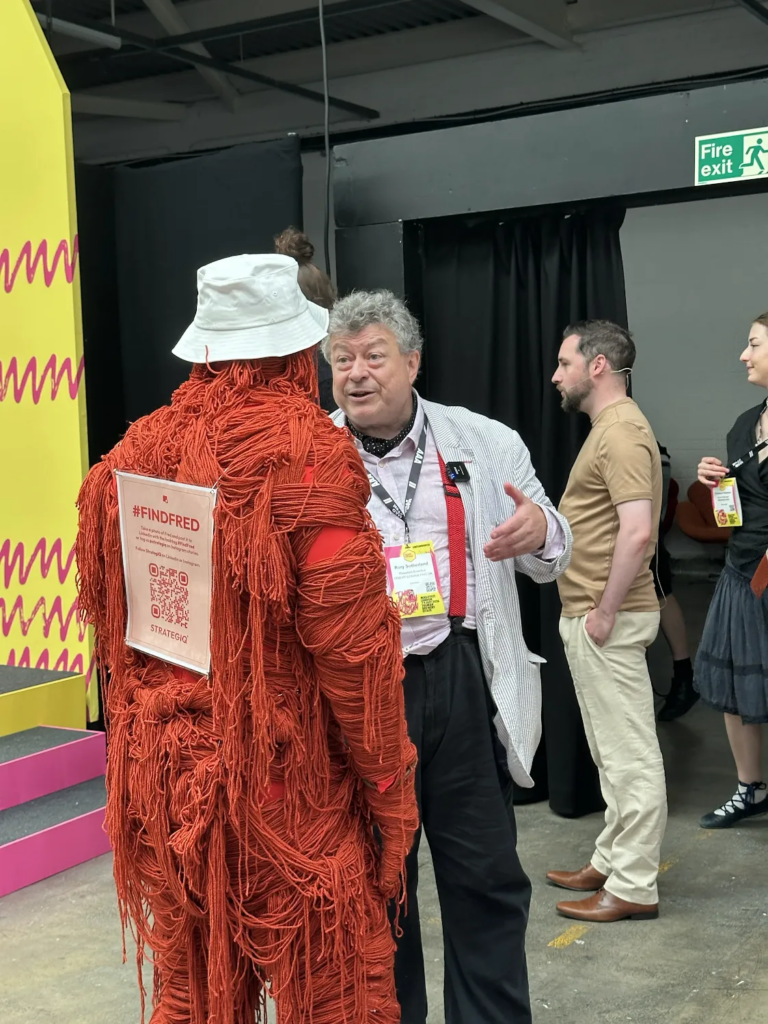
- Rory Sutherland suggested saving budget for innovation and coming up with the question before it’s been asked
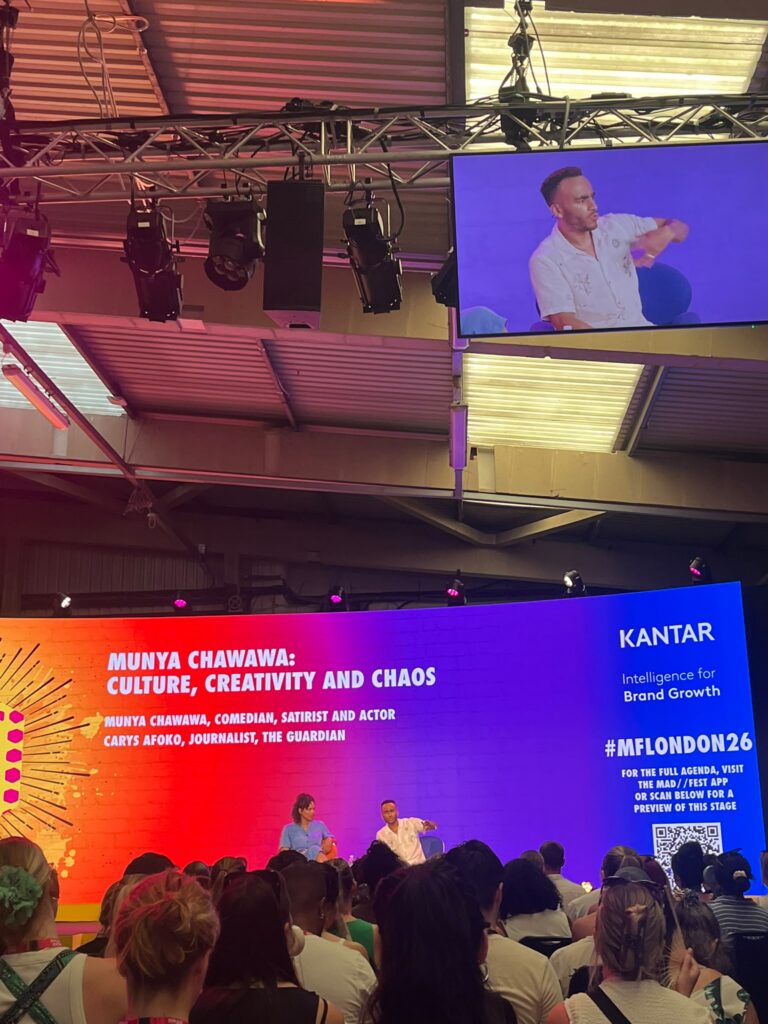
- Munya Chawawa brought a judge’s-eye view from this year’s Cannes Lions jury and his signature wit
- Vicki Maguire implored: “Make AI your b***”
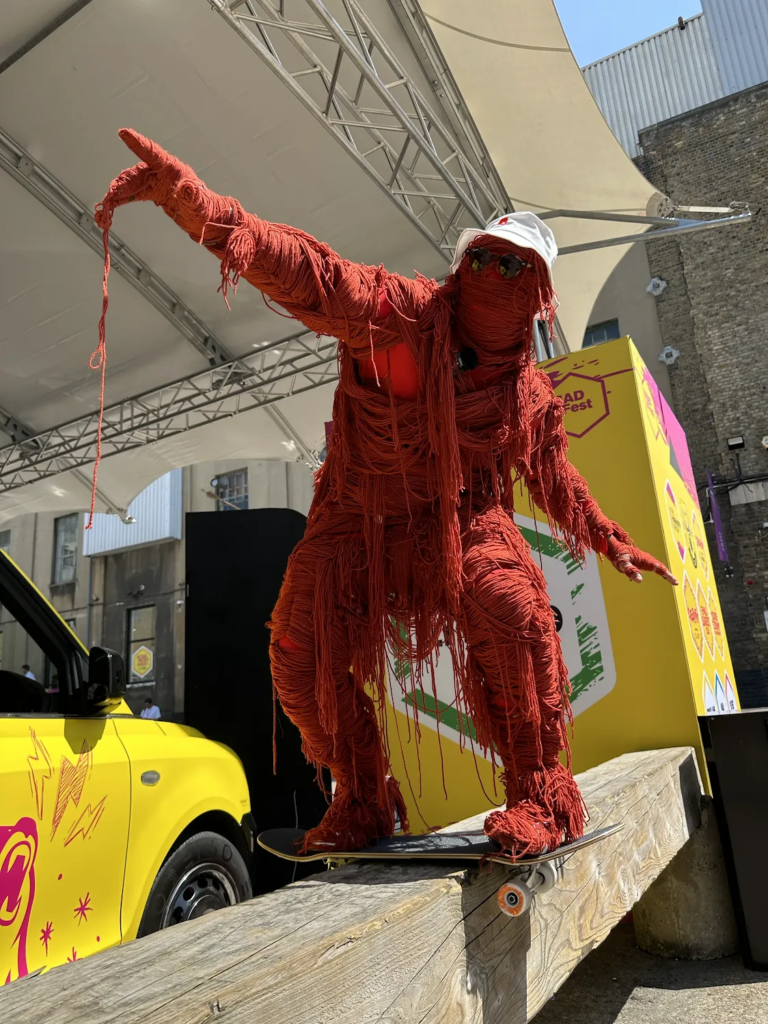
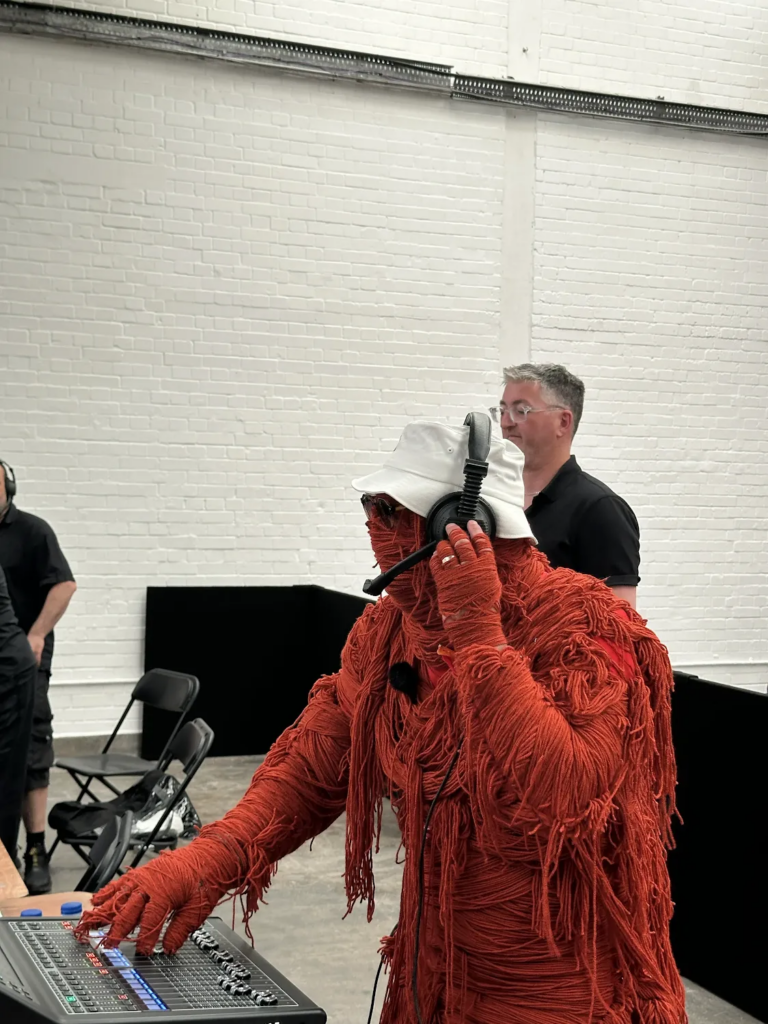
Plus more ‘Fred-nanigans’ – including a stint from the StrategiQ mascot on stage. We wouldn’t have it any other way.
Summing up MAD//Fest. In their own words…
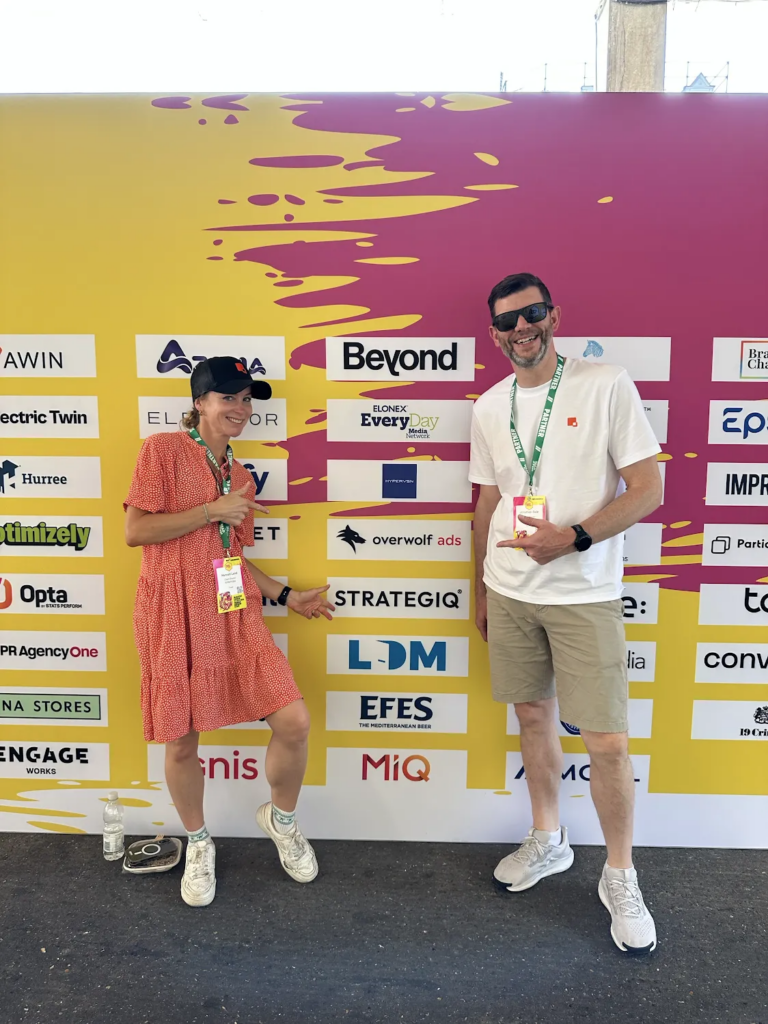
Here’s what the StrategiQ team came away thinking:
Andy, Founder – “Seeing the team engage with brands and partners so passionately about our agency and what we do has blown me away.”
Nick, Senior Creative Strategist – “F**cking sweaty.”
Sarah, Chief People Officer – “Despite the heat everyone worked so hard pulling together brilliantly. I feel like this is just the beginning!”
Nat, Head of CX – “Great chats, great energy.”
Nat also enjoyed a by-chance pitch in Polish (zawsze strategia!)
Tyler, Growth Director – “Go big or go home I say! It was epic to meet so many incredible brands and potential partners.”
Liv, Creative Strategist noted all the love our coffee table brand book garnered. “It turns out you can’t beat the feel of a real-life book – very in-keeping with the Human Touch theme of the festival”.
JD, Client Director – “The power of craft is what really stood out to me. People can feel the effort you put into things.”
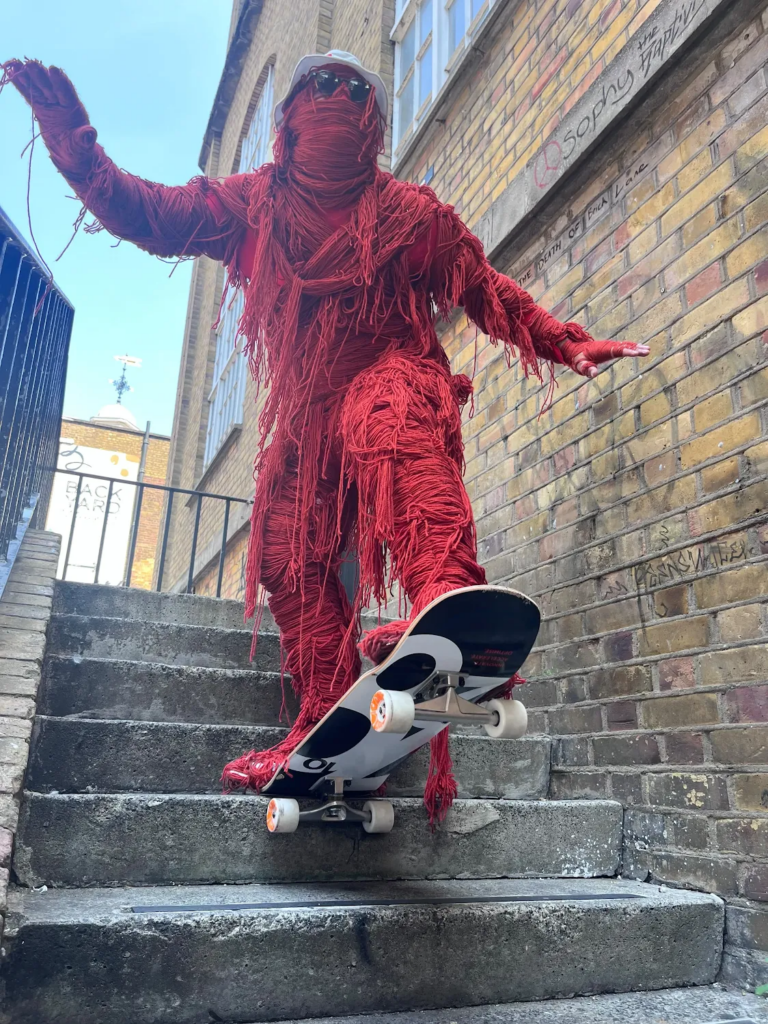
Fred, Official Mascot – “I showed up, made some friends and threaded myself into every conversation. I can’t be unravelled! See you next year.”
What other attendees said and thought
About Fred…
“a dangerous beat and one of a kind for sure”
“The talk of the town”
…and the festival
“Enriching”
“Hectic”
‘Buzzing”
“Mad”
“Hot!”
Some of Hannah’s favourite quotes from the female founders stage and other talks:
- “Understand what you’re becoming not who you were”
- “Don’t make decisions at breaking point”
- “Sit with your thoughts”
- “We’re in the era of community”
- On creativity: “You don’t need a d*** to DJ”
Revenge of the fabulous f**k ups
Vicki Maguire, Creative Director and self titled Sweary Ceramicist, returned to the stage to argue: we are becoming skippable. She talked about the decline of craft in the machine age – where content is produced at a volume nobody asked for and a quality nobody remembers.
And into that context, the creatives who were always too much, too weird, too difficult – their time has arrived.
“What a f**king time to be alive.” She meant it. This is the moment where the qualities that got creatives marked down in performance reviews are suddenly the most valuable things in the room.
“People giving appraisals telling you you’re great here but need to put more effort into timesheets – well, f**k that. That is not where you perform best.”
The message was anti-average. Use AI to bring brilliant ideas to life faster. Make it, in her words, “your bitch”. But the ideas still have to come from somewhere real. From the wonky, the scribbled, the instinctive. Creative and arts skills are greater than ever as the machine age has made them scarce.
“Find your one voice in the scribbles. Celebrate how brilliantly f**ked up we are.”
The StrategiQ takeaway: The frameworks and playbooks across three days were useful. But underneath all of it is a simpler truth: the industry needs people who give a damn enough to make something real. The machine can do average. Only you can do you. Be at your wonky best.
The herd wins: why connected people beat bigger budgets
Dan Brain, Tom Ridges and Rory Sutherland made the case for something most finance departments would rather not hear: the best metric isn’t always a metric at all.
Sutherland’s line summed up the problem neatly: “People would rather meet a target than be successful.”
Most business metrics are finance-based by design, and there’s no line item for entertainment value, delight or the feeling something gives you – even when that feeling is exactly what drives the behaviour.
His example was Heathrow’s pod parking, priced barely differently to short-stay parking next to the terminal. By any conventional transport metric, it shouldn’t win – a shuttle bus would do the same job. But people don’t book it for the six-minute transfer. They book it because riding the pod is fun, and some travellers are visibly disappointed when it’s full and they’re upgraded to the free, more convenient alternative instead.
The StrategiQ takeaway: If a decision only makes sense on a spreadsheet, it’s probably missing the actual reason people choose it. The brands who spot the ‘pod parking’ in their own category – the bit of the experience nobody thought to put a KPI on – are the ones who build something people will enjoy and remember.
‘More human than ever’ is a hospitality sector must
Sara Holt, CMO at Center Parcs, delivered a results-backed case for not completely automating away human emotion.
The numbers do the talking first. Center Parcs is posting record revenue and EBITDA growth, bucking a wider industry trend, and Holt puts it down to a deliberate, sustained focus on human connection.
That’s not an anti-AI position, though. AI chatbots and a digital concierge service now handle the queries that used to eat into staff time, freeing up colleagues on-site to deliver great service in person.
“Premiumisation is not about luxury, it’s about giving normal people an incredible experience – one they’re prepared to pay more for.”
That thinking shows up everywhere in the business. A new premium gastro pub was built with a soft play area attached, balancing what guests want to eat with what families actually need. Meanwhile, the Forest Spa opening its doors to day guests is helping it become a brand in its own right and deliver 9% EBITDA growth.
Center Parcs aims to “build better worlds” – for staff, for communities (they’re the UK’s biggest rewilder of woodland) and for customers.
Holt’s advice for the room: stay “relentlessly focused on guest and customer needs.”
The StrategiQ takeaway: AI can absolutely make service faster and freer up time – but it can’t manufacture the feeling of a great day out. Center Parcs’ growth is proof that investing in human emotion still pays.
Brands don’t grow in dashboards, they grow in people’s minds
Virginie Chesnais warned the Hex Stage: AI-led marketing efficiency isn’t the same as effectiveness.
Her argument starts with what AI is actually good at. It’s brilliant at optimising towards a goal – but it doesn’t question whether that goal is the right one in the first place. Defining success is still, and will remain, a human job.
“Optimised dullness is still dullness.”
Humans care about meaning. We question things. We’re drawn to imperfection, not away from it.
It’s part of why behind-the-scenes and making-of content is becoming more relevant: people want to see how things are actually made, not just the polished result.
The data backs it up. Ad recall is up 9 points between 2023 and 2026 – but recall alone doesn’t move the needle.
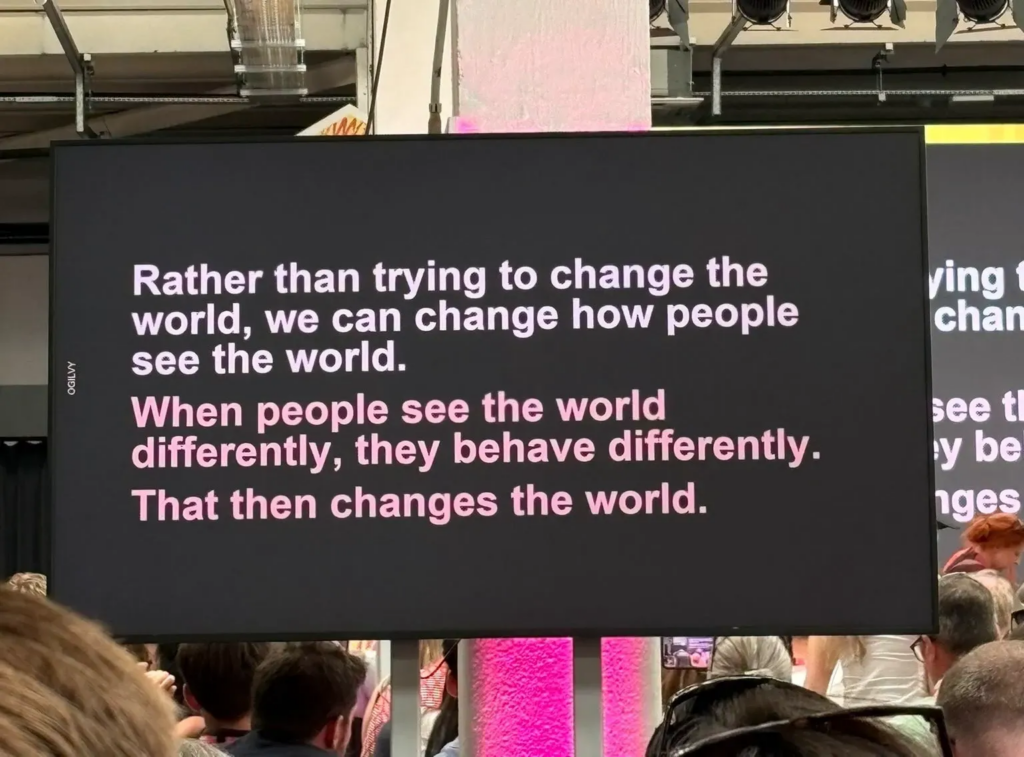
“In the AI age, emotional connection can be the greatest competitive advantage a brand has.”
Two lines worth keeping from the session: “Brands don’t grow in dashboards, they grow in people’s minds.” And on what it actually takes to get there: “Brands talk to people if they listen to people.”
The StrategiQ takeaway: AI can optimise the how. It still can’t answer the why. It certainly can’t come up with the why in the first place.
Cultural relevance before market share
GRIND’s brand director, Stacey Britt Fitzgerald, took the Disruption Stage with the story of how a 15-year-old coffee brand became a genuine challenger success.
The brand’s early differentiation was simple but sharp: an espresso bar by day, an espresso martini bar by night, in a shade of pink nobody else in coffee was touching.
GRIND’s coffee itself did a lot of quiet work – plenty of people didn’t even realise they were drinking GRIND and the product grew off its own credentials rather than the branding alone. That combination – product quality plus cultural relevance – is what took GRIND from a handful of coffee shops into wide retail, British Airways flights, event spaces and standalone brand coffee shops.
The advice for getting there: pay attention to what’s happening in the world around you – fandoms, subcultures, the things people are already excited about – and spot the commercial partnerships that fit.
GRIND’s Hello Kitty collaboration was the example given. Take the coffee seriously, but not everything else needs to be so earnest. The gap GRIND found: coffee with a hit of real-life dopamine.
The StrategiQ takeaway: GRIND didn’t win by being the best coffee in a crowded category – its success came from being culturally relevant first and letting the product quality follow. For challenger brands, the lesson isn’t to out-compete the category leaders on their own terms. It’s to look past the category entirely.
Munya Chawawa on demanding more from the brief
Comedian and content creator Munya Chawawa brought a judge’s-eye view from this year’s Cannes Lions jury – and a clear line on what makes brand work actually good.
His advice to creators: “Demand more from the brief. Ask to be in the development meetings. Ask to write scripts, to sit in the edit.”
Because working immersively with a brand, rather than just reading someone else’s script, is when the calibre of the work improves. Creators are more than a digital billboard, and they truly know their audiences – more than brands do.
“The one thing I’d ask from the industry is: Trust us more.”
Munya’s writing process comes from the same place. His style of market research is paying deliberate attention. “There’s satire, which, for me, is the reflection of how people are feeling en masse… All of my research is purely from co-inception. I’ve been there, seeing what resonates, whether people argue on sticking points. And then bottling that up, feeding it back in the satire.”
On AI, he was straightforward: he doesn’t use it. The campaigns he rated at Cannes were the ones that engaged with AI while keeping their content running through human creative hands.
“I hope that we still preserve those few accidents… I like the idea of playing with different ways of using AI, but still keeping the humanity.”
The StrategiQ takeaway: The best brand work doesn’t come from creators saying yes to everything. It comes from multiple perspectives, paying close attention to the culture and trusting instinct.
The Inaugural Sutherland Lecture
Rory Sutherland closed MAD//Fest solo on the Disruption Stage, and the target was clear from the start: finance.
His opening problem? ‘Creativity’ isn’t a word that lands with finance departments, so marketers need to speak to them differently. Human behaviour is highly complex and non-linear. Business has changed, but the default hasn’t: finance functions are still deciding what gets seen.
He made the case with two accidents. Penicillin was found by chance. Viagra was discovered mid-trial, when the drug failed to do the thing it was being tested for and did something else entirely. Set out to solve one problem, accidentally solve another – proof, in his view, that fixed metrics aren’t the right way to focus a business, because they only measure the thing you already decided to look for.
His alternative: “Come up with the question before it’s been asked. Be brilliant at something someone has neglected.”
Bees illustrate a similar principle: most do the waggle dance and repeat what’s already worked, but a small number peel off and explore. Without those explorers, the colony can’t grow – and in a business, that exploration is what revenue growth actually depends on.
His closing advice: hold back a contingency each year – he suggested 20% of the marketing and planning budget – specifically for innovation, rather than committing every pound to the plan you started the year with.
“Logic is there to stress check your dreaming.”
Create your own metrics, rather than only being judged against someone else’s.
The StrategiQ takeaway: If your only metric is the one finance already understands, you’ve already limited what you’re capable of finding. The businesses brave enough to hold back budget for innovation are the kind we admire – this is part of our 70.20.10 approach to making space for innovation.
That’s a wrap on MADfest 2026
Three days. Fifteen thousand people. More frameworks, proof points and provocations than any one team could absorb in a single festival.
But if there’s one thing that connected every session across all three days – from Nils Leonard telling the room to stop outsourcing the fun bit, to Vicki Maguire telling creatives to celebrate how brilliantly f**ked up they are – it’s this: the industry knows what it needs to do. It just needs to be brave enough to do it.
Be distinctive. Lead with craft. Earn the recommendation. Follow the desire line. Make something worth remixing. Admit the flaw. Find the thread.
See you at MAD//Fest 2027. Fred’s already planning his outfit.
StrategiQ is a MAD//Fest partner. If anything across these three days resonated – or you want to continue your conversation with us – get in touch.
Sources: