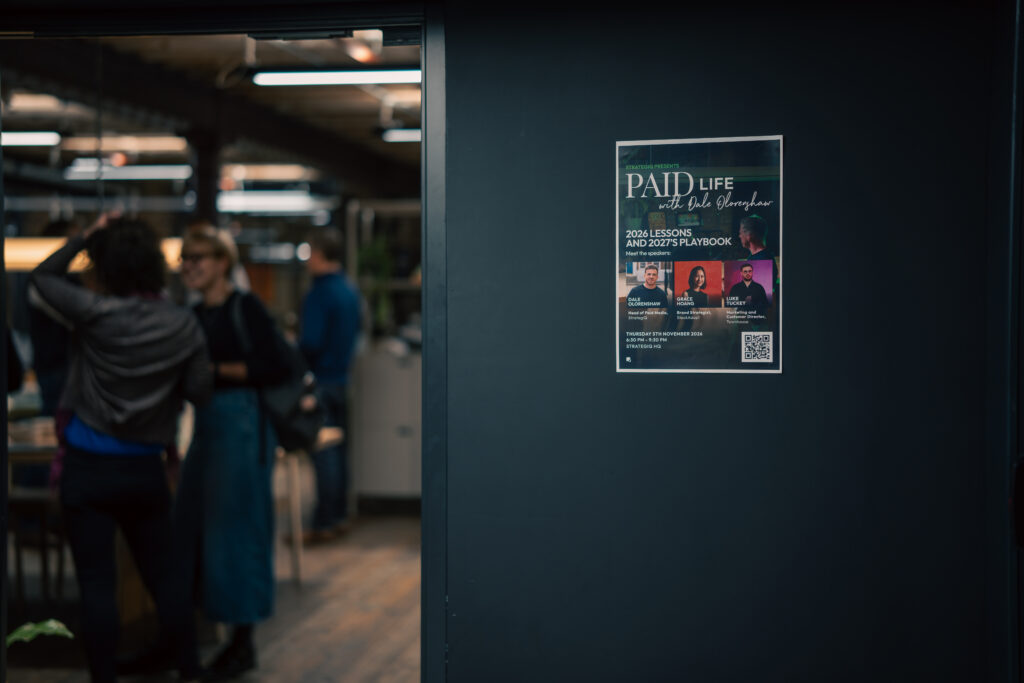
November’s Paid Life event brought senior in-house media leads and marketing directors to our London office to talk about one thing: what 2026 did to paid media, and how to plan smarter for 2027.
This year has been one of the most disruptive years paid media has seen in a decade. AI reshaping how campaigns are built and bought, signal loss and measurement pressure biting harder, budgets under sharper scrutiny and platforms consolidating spend and control. Everyone in a senior seat has felt it, and most have navigated it fairly alone.
That’s why we wanted to create a space to share what worked, what didn’t and where to place our 2027 bets.
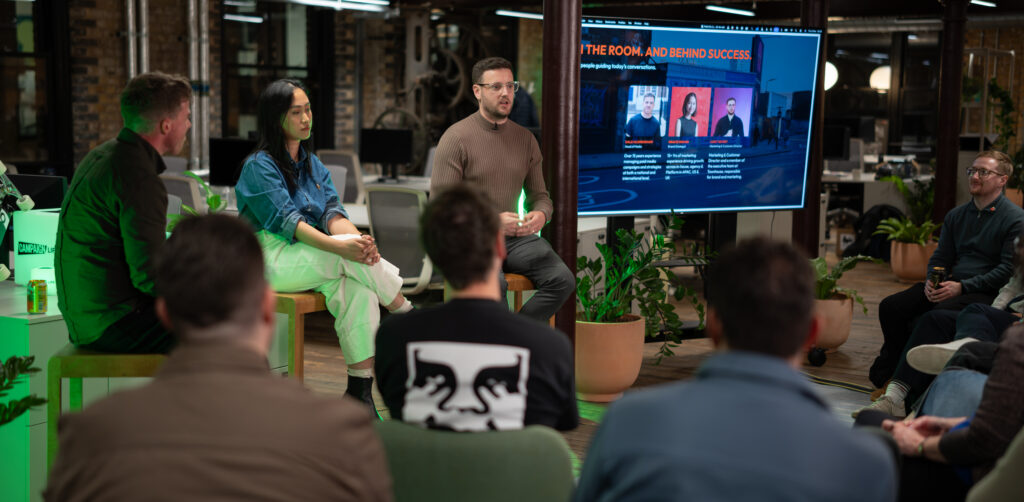
Dale Olorenshaw, our Head of Paid Media, hosted the evening, alongside Grace Hoang, Brand Strategist at StackAdapt, and Luke Tuckey MCIM, Marketing and Customer Director at Townhouse. Three short spotlights kicked things off. Then came two hours of honest conversation about what 2026 threw at us and what that means for how we plan, resource and spend in 2027.
Here’s what we took away.
- Launching is easy. Judging is the skill
- Good SEO is good GEO
- Fewer ads, better ideas
- Lead with the business, not the dashboard
- Start with the customer journey
Launching is easy. Judging is the job
Platforms have made campaigns easy to launch. Knowing whether they’re working is another story. Several people wondered whether they were paying more for less clarity, while wasted spend, bot traffic and shaky signals fed a healthy scepticism about programmatic and platform-reported data.
So where does the money go when budgets are tight? Wherever you can prove it’s working. The room’s advice was to keep testing what each channel adds. Some teams are seeing stronger results from Meta and testing a shift in spend, while keeping Google for reach. Share of voice came up as a way to track visibility. And Townhouse highlighted incrementality testing, which shows what paid activity actually drives, not just what a platform says it drove.
The skill that matters now is knowing which audiences are worth chasing, which channels earn their place and how far to trust attribution.

Good SEO is good GEO
Google is retiring Dynamic Search Ads and folding them into AI Max for Search, with legacy campaigns upgrading automatically from September. Cue the practical question: is it still worth sweating over keyword plans? The answer in the room was to spend that time on what the platforms actually read: your pages, product content and your shopping feeds.
AI Mode can show several answers and product options in a single view, and nobody’s sure how the commercial model will evolve. Some teams are keeping paid AI activity on the watchlist while Meta and Google deliver clearer returns. Sensible. And the pages, content and feeds you fix for paid will help you show up in AI search too.
“One key takeaway from me is to approach the AI side with a little bit more of an open mindset, and to probably test that a little bit more.” – Luke Tuckey, Marketing and Customer Director, Townhouse

Fewer ads, better ideas
More creative variants come at a cost. One example cited up to 100 ad variations, just to give the platform more to test. That’s a heavy lift for teams already stretched across big campaign moments.
With smaller budgets, the room’s view was simple: back a few strong creative ideas, and add variants only where spend and production capacity can support meaningful testing.
“70% of your budget should be used around budget efficiency: making your current channels, tactics, initiatives and campaigns work harder, get more juice out of the lemon. 20% to really accelerate that, whether that’s different language in your ads, different creative, just those incremental tests that you can be doing, which then unlocks 10% budget to be trying something completely new.” – Dale Olorenshaw, Head of Paid Media, StrategiQ
Show the business, not the dashboard
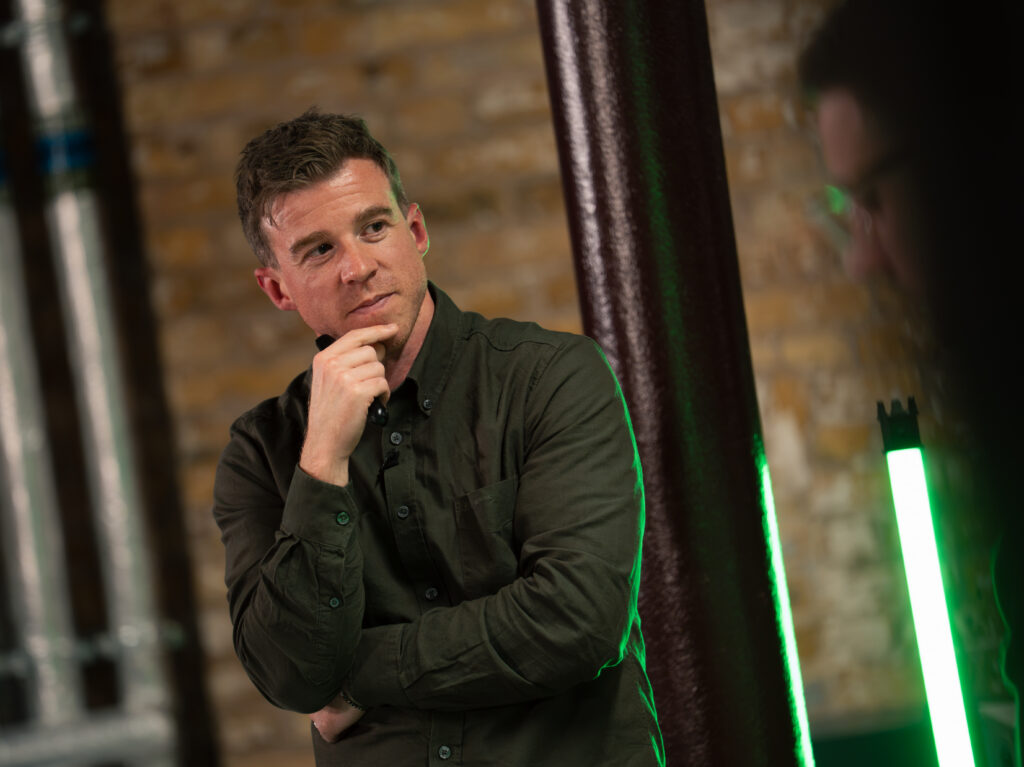
Dale’s spotlight was about turning budget needs and pivots into language the boardroom backs. What does the board actually want to know? Are we bringing in customers, and how healthy is the brand? Weekly ROAS is one input, not the whole story.
The value of an agency is in connecting channel performance to customer acquisition, demand and brand health, then explaining what to do next.

Start with the customer
The night’s conversation covered discovery and the value of being familiar to people before they’re ready to buy. It’s the question we’re taking back to every brief. Are we building demand, converting demand that already exists or fixing the point where customers drop out? That answer should shape the media mix and the measures of success.
Tip: Do your homework before the meeting. Go through the brand’s experience as a customer, and bring a specific observation about where it works, or where it’s harder than it should be. Then be candid about where performance stands, what’s holding it back and what you’d change first.
And make the basics work harder: better shopping feeds and site content, the strongest creative first, and incrementality tests to decide where extra spend or production earns its place.

Join the community
We want to say a huge thank you to our speakers and everyone who came along on the night. We’re absolutely thrilled to be part of this community with you.
Paid Life is part of a series of events for paid marketing leaders who want to trade war stories, share what they’ve learned and keep the conversation going.
Whether you’re steering a scale-up, managing a lean marketing budget or building your career from the ground up, there’s a place for you in the room.
Find out more and join the community.