

Welcome to The Uncertain Times. This week, the dust settles on Cannes Lions 2026 and a few pieces of work deserve your attention. WhatsApp changed what it means to share your contact details. Figma stopped being a design tool and became something much bigger. And WPP put a number on generative search.
This week, we’re talking about:
- Cannes Lions 2026: the work worth watching and the hot takes from the Croisette
- WhatsApp usernames: what it means for brands and creators
- Figma’s creative product suite: code, motion and AI on the same canvas
- Generative search: the fastest advertising channel in history?
- Google Universal Cart: what it does and why you need to act now
- The AI model that was banned for two weeks: what it tells us about AI governance
Beyond the rosé: Hot takes from our young creatives at Cannes
Our Creative Strategist Olivia Phillips was there, representing the UK alongside our Designer Marco Choi in the Young Lions Digital competition. Sitting shoulder-to-shoulder with the best young talent from Brazil to Mongolia, all tackling the same brief.
Three pieces of work that caught their eye:
- Based on a True Story (Missing People): Incredibly important and the best representation of dark humour in a long while. The campaign takes aim at the true-crime entertainment boom – specifically the casual way TV writers’ rooms pick over real missing persons cases for their dramas. Set in exactly that writers’ room, it’s uncomfortably, brilliantly funny. And devastating underneath it. Won a Film Gold Lion.
- Your Way Out (Coinbase): The quote that keeps coming back when watching this: “the best special effect is the truth.” A scathing critique of the financial system disguised as pure, brilliant film craft. Also won a Film Gold Lion.
- Beat Cancer Off (VML): Wear headphones if you’re watching in the office. That’s all we’ll say.
The StrategiQ takeaway: Creatively awarded work is 7x more effective (thanks James Hurman). The Cannes budgets look mental, but if the ROI data stacks up, they’re not. The businesses investing in brand building, not just performance, are the ones that compound. And the ‘colouring-in department’ holds the keys.
“If you’re not jealous of what you’re seeing, you’re probably not humble enough. Seeing the sheer amount of talent that exists, and being able to stand amongst it, is a sharp reminder that the moment you stand still, you’re obsolete.” – Olivia Phillips, Creative Strategist

Grab your WhatsApp username before someone else does
WhatsApp has announced usernames and is opening reservations now, ahead of a full launch later this year. The idea is straightforward: you’ll be able to share a username instead of a phone number.
Sharing a phone number can feel like a big step. Sometimes you just want to chat without handing over your digits. With over three billion people on WhatsApp, name overlap is significant, which is why reservations are opening early.
For businesses, creators and organisations, there’s also an option to claim an existing social handle.
The StrategiQ takeaway: A small product update with a meaningful implication for brand and creator presence on WhatsApp. A username gives you a consistent, shareable identity across the platform the same way a handle works on Instagram or LinkedIn. For any business already using WhatsApp for customer comms or community management, claiming your handle now is the obvious move. Don’t let someone else get there first.

Figma creative product suite means business
At Config 2026 in San Francisco, Figma announced it is now a full creative product suite.
Here’s what’s live or in beta right now:
- Figma Sites (web publishing) — Open Beta
- Figma Make (prompt-to-code) — Live
- Figma Draw (illustration) — Live
- Figma Slides (presentations) — Live
- Figma Buzz (brand content) — Open Beta
- FigJam (whiteboarding) — Live
- Figma Weave (AI imagery, video and audio) — Just launched
CEO Dylan Field’s headline: “Code is not the opposite of design. Code is material for design.”
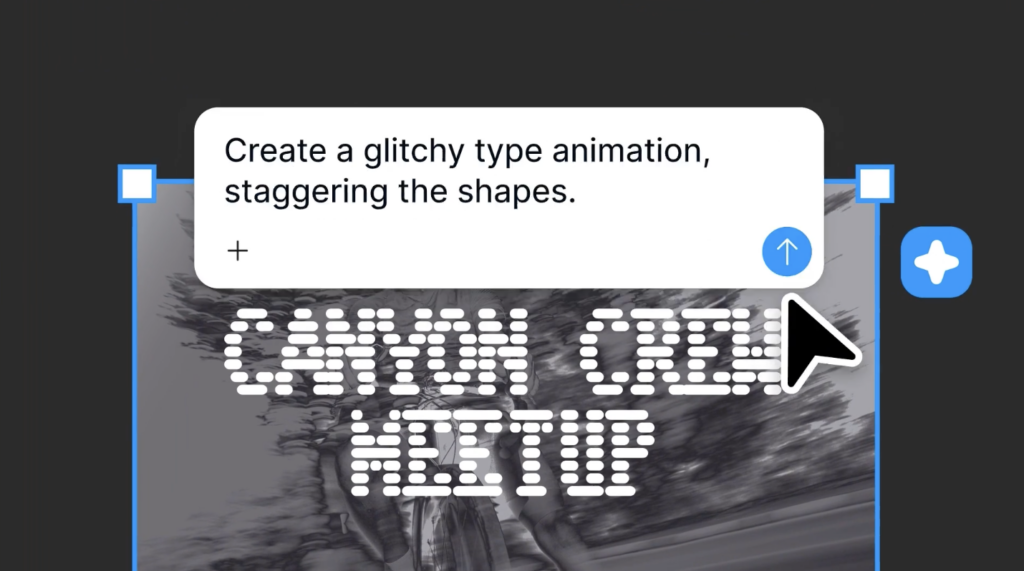
Code layers let teams bring repositories directly into Figma and turn design layers into interactive code with a single click. Figma Motion adds a timeline with keyframes and multi-format export. The AI Design Agent can now search the web without leaving your file. Weave handles AI imagery, video and audio, all on the same canvas. And the agent now connects to the tools already in your stack.
Figma is no longer competing with one design app but the entire creative stack.
The StrategiQ takeaway: The distance between a design decision and a shipped product is getting shorter. So is the distance between a brand asset and a live website. It’s worth signing up now before this becomes everyone’s default.
WPP predicts generative search will be fastest channel to reach $100bn
Generative search (AI-mediated discovery environments including Google AI Overviews and ChatGPT) is forecast to generate $5.1bn globally in 2026. By 2030, it will exceed $100bn, making it the fastest advertising channel in history to reach that milestone. Traditional search took 22 years. Social took 14. Retail media took 10. Generative search is on track to do it in six.
New data from Sparktoro and Similarweb also shows that in the UK, 43.1% of Google searches now end without a click. In the US, for every 1,000 Google searches, only 276 clicks now reach the open web down from 374 two years ago. That’s roughly a quarter of open-web clicks lost in just two years.
The StrategiQ takeaway: The kind of brand salience that gets you named in a chatbot response or cited in an AI Overview is built the same way it’s always been – through consistent presence, thought leadership and authority in your category. It’s worth testing ChatGPT ads, but so far, targeting has been basic and measurement grey – so set realistic expectations.
Universal Cart: Google wants to do your shopping for you
Announced at Google I/O, the Universal Cart is an intelligent shopping basket that works across retailers.
Google’s Shopping Graph now has over 60 billion product listings. The Universal Cart connects across Search, Gemini, YouTube, Gmail and participating merchants, and once products are added, the system continuously works in the background – monitoring deals, price drops, inventory availability and purchase opportunities.
As Google put it: “The moment you add a product to your cart, it gets to work in the background – finding deals and price drops, giving you insights on price history and alerting you when an item is back in stock.”
Currently live for US retailers including Wayfair, Target, Home Depot and Etsy. Coming to the UK and Canada in the coming months. It runs on Google’s Agent Payments Protocol (AP2) – the infrastructure that allows agents to make secure payments on behalf of a user.
The StrategiQ takeaway: If your products aren’t in Google’s Shopping Graph with clean, complete data, you won’t be surfaced when the Universal Cart’s AI is optimising on a customer’s behalf. This isn’t a future concern. Feed quality and Merchant Center hygiene are strategic infrastructure, not routine maintenance. The infrastructure for agents to shop on a customer’s behalf is here.
The AI model that got banned – and unbanned – in two weeks
On 12 June, the US government applied export controls to Anthropic’s two newest frontier models – Claude Fable 5 and Claude Mythos 5. With no reliable way to verify nationality in real time, Anthropic suspended access for all users, everywhere.
As of 30 June, the export controls have been lifted. Fable 5 is available globally from today.
Here’s what actually happened. Amazon researchers found a method of bypassing Fable 5’s safeguards, prompting it to identify software vulnerabilities and, in one case, produce code demonstrating how to exploit one. The government moved immediately.
What Anthropic’s testing then revealed is the important part: every other major model they tested could produce the same demonstration. The technique didn’t expose any unique capability. In Anthropic’s own words, it was “a borderline case” – access to routine defensive cybersecurity work the model had blocked out of caution, not because it was uniquely dangerous.
Anthropic has since trained an improved safety classifier that blocks the reported technique in over 99% of cases. And Anthropic, Amazon, Microsoft and Google have started building a shared industry framework for assessing and responding to AI model jailbreaks.
The StrategiQ takeaway: This is a preview of how frontier AI governance is going to work – fast, sometimes blunt and occasionally caught between what’s technically dangerous and what’s merely theoretically possible. The US government now has both the willingness and the mechanism to apply export controls to AI models at speed. These aren’t abstract policy conversations. They happened this month, to products hundreds of thousands of businesses were actively using.
The StrategiQ takeaway
The tools are moving faster than the strategies. The channels are changing faster than the budgets. And the brands winning are the ones that built a foundation solid enough to move from.
Different stories. Same lesson.
Sources:
- https://blog.whatsapp.com/its-time-to-reserve-your-whatsapp-username
- https://www.figma.com/newsroom/
- https://www.campaignlive.co.uk/article/wpp-predicts-generative-search-will-fastest-channel-reach-100bn/1961671
- https://llmlisted.com/blog/chatgpt-ads-early-results-costs-marketers
- https://www.linkedin.com/posts/randfishkin_new-research-httpslnkdings8z-pfy-as-share-7472906285311549441-OyJC/?
- https://www.linkedin.com/posts/brodieclark_big-news-if-you-work-in-ecommerce-google-ugcPost-7462607179984842752-a1mm/
- https://writesonic.com/blog/chatgpt-ads-rollout-study-may-2026
- https://www.anthropic.com/news/redeploying-fable-5