
Welcome to The Uncertain Times.
The World Cup has become a marketing tournament as much as a football one; airlines are betting their logos, Airbnb is quietly beating hotels at their own game and two of football’s biggest faces are proving that even great talent has a saturation point. While for Netflix’s binge watch model, the gig is up.
The topics we’re keeping score on this week:
- Norwegian Air’s logo bet: what happens when brand banter goes viral
- Beckham vs Haaland: the difference between over-exposure and smart trend-riding
- Airbnb vs the hotel industry: how a marketing push turned into a booking war
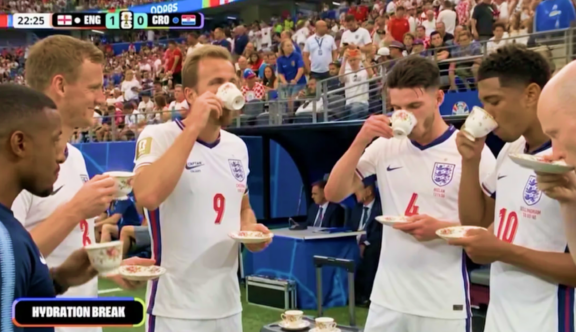
- Hydration breaks: the World Cup’s most divisive three minutes
- Netflix’s short-form pivot: why the inventor of the binge is hedging its bets
Norwegian Air bets its logo and wins the internet
Days before England played Norway in the quarter-final, Norwegian Air publicly challenged British Airways to a bet: lose, and you change your Instagram profile picture to the other airline’s logo until the tournament’s over.
Norway lost 2-1, and true to its word, Norwegian swapped its Instagram profile picture for British Airways’ logo, captioning the post ‘It’s coming home’ and ‘Well played England’. British Airways played along graciously, and a string of other airlines including Finnair, Air Baltic, Riyadh Air and KLM piled into the thread.
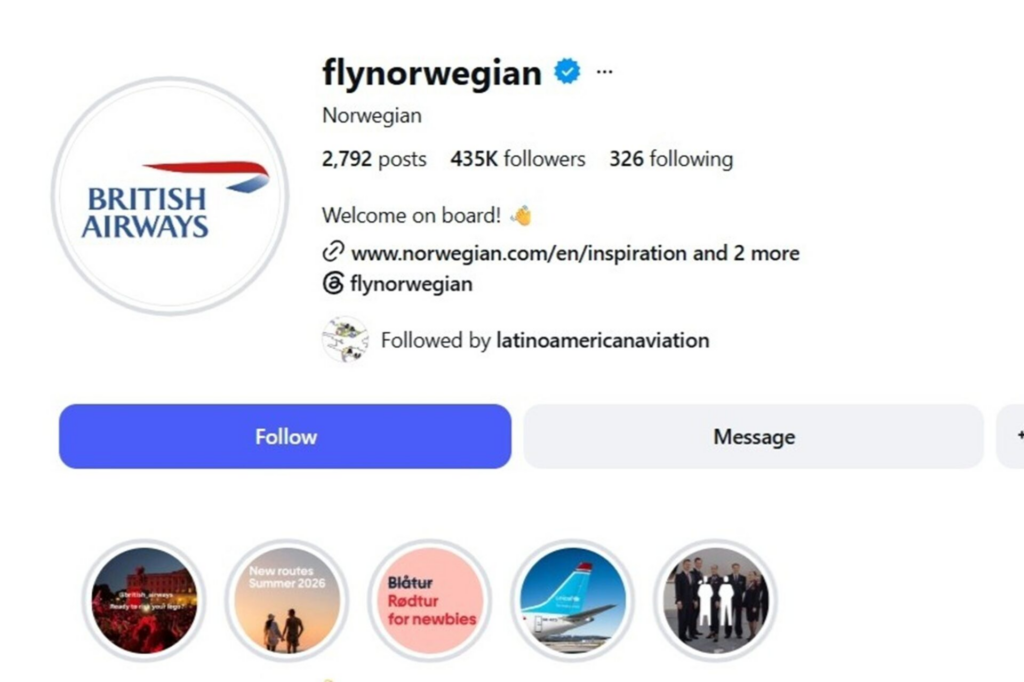
Image: Fly Norwegian
The StrategiQ takeaway: It’s a low-cost stunt, but it worked because the risk was real and public before the outcome was known – that’s what made the follow-up land. Smart brand ‘rival’ plays like this benefit both parties when coupled with good timing – and the nerve to actually pay up if you lose.
Beckham, Haaland and the two ways to use a football face
Two very different stories about star power this week.
David Beckham is appearing in World Cup ads for Adidas, Bank of America, EA Sports, Home Depot, Lay’s, Lenovo, McDonald’s, Ninja Kitchen, Pepsi, Stella Artois and Verizon – eleven campaigns (and counting).
Forbes makes the case that this is now working against the brands paying for it: when one face is selling this many different products, brand messages blur and specific product attribution gets lost. In the US specifically, Beckham functions as a safe, universally recognised shortcut to football culture without the cost of official tournament licensing – but the argument is that the real winner of all this exposure is Beckham’s own brand, not any single advertiser’s.
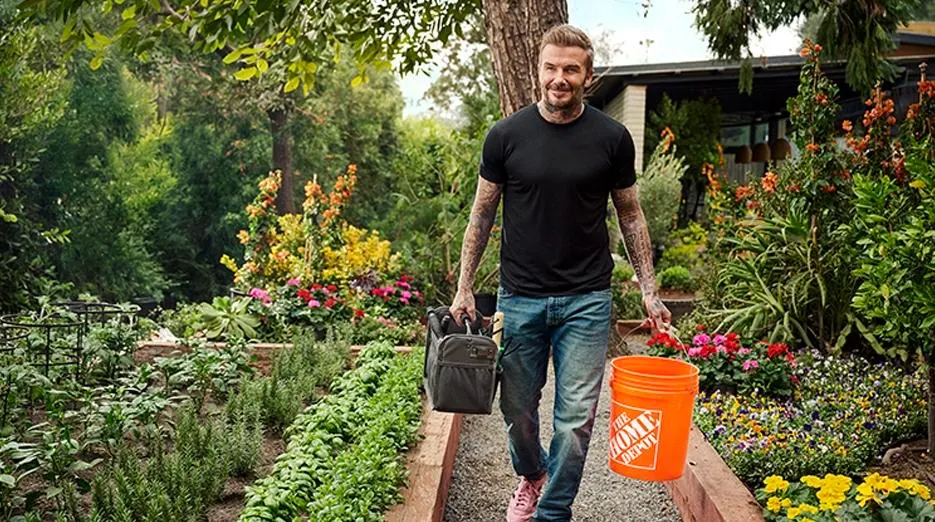
Image: David Beckham staring in a World Cup ad for Home Depot, 2026. Home Depot
Erling Haaland took a different route – or rather, brands took a different route with him.
Since Norway’s exit, Haaland has kept dominating headlines through his partnership with Chinese herbal tea brand WALOVI, but the more interesting pattern is what’s happened without any official deal at all. Haaland’s iconic ponytail and features have found their way into many brand’s creative.
HelloFresh for example has built an ongoing series styling spring onions to look like Haaland’s flowing blonde hair, right down to recreating his signature Viking rowing goal celebration with a handful of them.
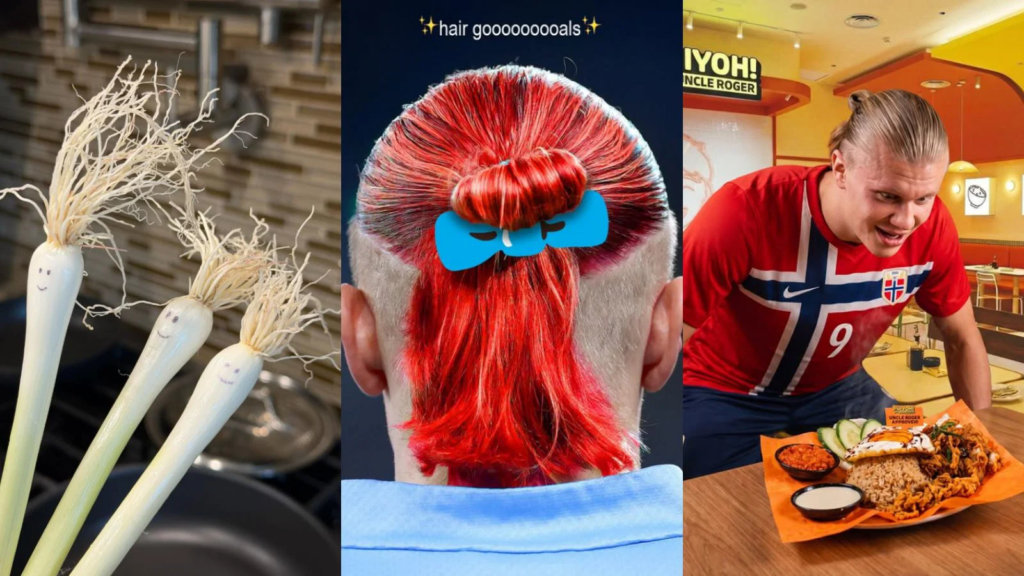
Image: Marketing Interactive
Wendy’s gave the back of Haaland’s head its own red hair and blue bow, captioned ‘Real recognise real’. And FIFA itself posted a TikTok challenging fans to tell Haaland’s hair apart from Sabrina Carpenter’s – for the record, it’s Haaland.
The StrategiQ takeaway: Beckham is being paid to appear as himself, over and over, in campaigns that don’t build on each other. Haaland’s brand moments are opportunistic and specific – and they’re landing because each one only works for the brand that made it.
Airbnb quietly wins the World Cup’s hotel war
Hotels went into this World Cup expecting a windfall. FIFA’s own projections had New York hotels banking on around $300 million in net revenue from the tournament. That expectation shaped how the whole industry planned and priced.
It didn’t play out that way. CoStar data shows hotel occupancy actually fell during the first 17 days of the tournament, as prices in host cities climbed 20% year-over-year, according to Aran Ryan of Tourism Economics.
Vijay Dandapani, president of the Hotel Association of New York City, now expects the city’s hotels to land around $160 million – roughly half the original forecast. His explanation: fans priced out by high ticket and transit costs pulled back on accommodation, or skipped attending in person altogether.
“The pricing has not put out a message that was welcoming,” he said.
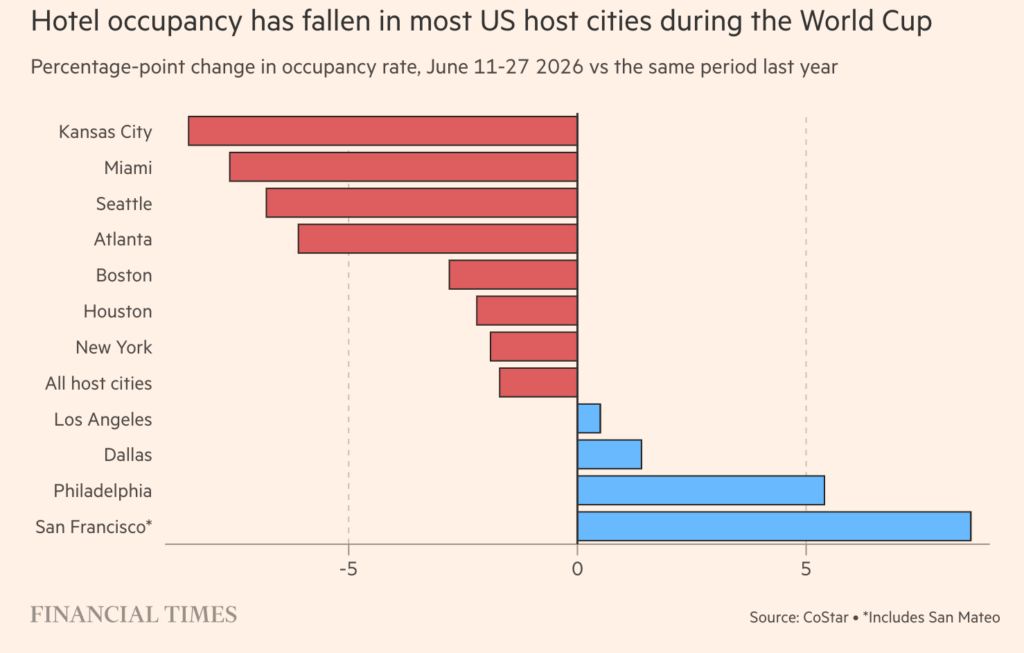
Image: CoStar, Financial Times
By contrast, Airbnb ran a promotion bundling free match tickets with select stays across all 16 host cities, and rolled out $750 bonuses for new hosts near World Cup venues – its biggest new-host incentive programme ever, drawing an estimated 52,000 new short-term rental listings.
Airbnb also concentrated its marketing spend on the tournament – it didn’t simply expect attendees to gravitate to its stays.
Kansas City was case-in-point:
- Short-term rental supply nearly doubled locally, yet rental prices still rose 63% year-over-year.
- While hotel occupancy fell 8.5% over the same period.
It’s worth saying not every hotel lost out.
“The World Cup has still been significant for hotels, but it has been significant through price rather than occupancy,” said Richard Clarke, an analyst at Bernstein. Luxury properties in particular cashed in hosting delegations with, as Clarke put it, ‘essentially infinite funds’.
But that’s a narrower win than the industry originally priced in for.
And Airbnb isn’t just banking the tournament bump and moving on. Chief financial officer Ellie Mertz pointed to Paris as the precedent for what happens next: “What we saw with Paris was that, say, six months after the [Olympics in 2024], we had retained in excess of half of the listings that had come on specifically for the Games.”
The World Cup isn’t just a spike in bookings for Airbnb – it’s a host-acquisition strategy.
The StrategiQ takeaway: Hotels built their World Cup forecasts on an assumption of guaranteed demand, and got burned when guests didn’t show up the way FIFA’s projections promised. Airbnb built its play around flexibility instead – cheap short-term supply, dynamic pricing and a host base it can keep long after the final whistle. Nothing about a ‘sure thing’ event is ever actually sure.
Do hydration breaks dirty the beautiful game?
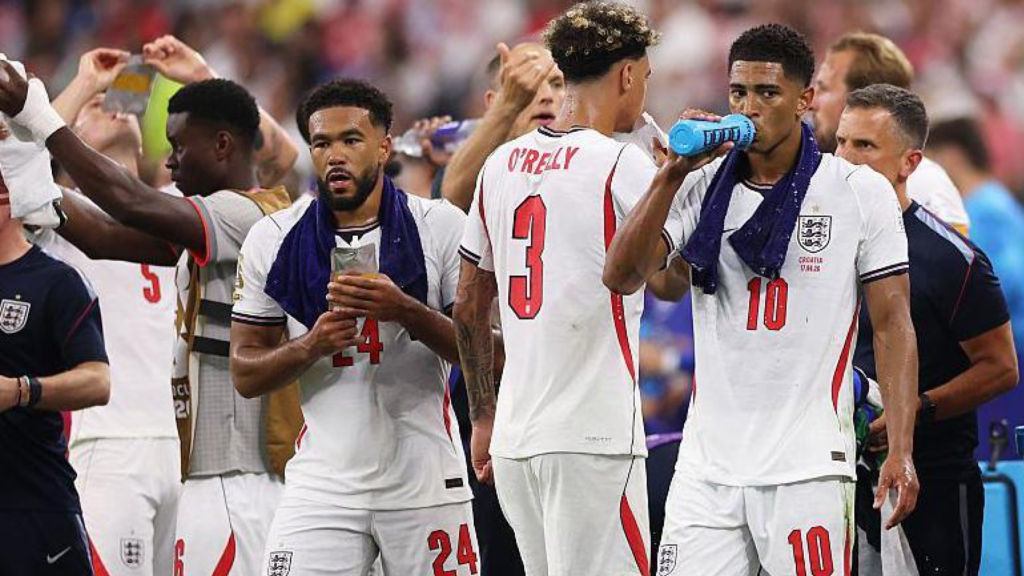
FIFA’s introduction of mandatory three-minute ‘hydration breaks’ midway through each half has split football fans, players and broadcasters – and turned into a lucrative new ad slot in the process.
Fox Sports, which paid an estimated $400-500 million for English-language US rights, could see at least $250 million in ad revenue generated from the breaks alone. Official hydration sponsor Powerade is cashing in directly: during one USMNT match, the breaks delivered 27 million logo impressions and $88,000 in brand value for Powerade – 28% of the total brand value it earned from that game.
Not everyone’s convinced it’s worth it. As one sports marketing exec put it to Marketing Brew, fans “can’t be mad that another brand is entering the sport,” but the frustration is that the breaks exist for commercial reasons dressed up as player welfare.
The StrategiQ takeaway: Reach and revenue don’t automatically mean a placement was earned fair and square. When fans feel like an ad break was inserted for money rather than for them, the brand attached to it inherits that irritation – no matter how good the impressions number looks in the report.
Netflix invented the binge. Now it’s hedging against it
Away from the World Cup, but arguably a more telling story about where attention is heading: Netflix has signed a new wave of publisher deals bringing short-form video onto its platform.
Starting in August, subscribers in the US, Canada, the UK, Ireland, Australia and New Zealand will get access to video content from BuzzFeed Studios, Condé Nast, Hearst Magazines, People Inc., Tastemade and several Penske Media brands including Variety, Rolling Stone and Billboard, with clips ranging from two minutes to over twenty.
The move follows reporting that Netflix is struggling to retain viewers between the first and second seasons of its biggest shows, a trend attributed to long gaps between seasons or shows being discontinued altogether. It’s also got a lot to do with Netflix increasingly competing with YouTube and TikTok as much as with traditional TV.
Netflix, who hands-down invented the binge watch, is now battling the next wave of tide change – towards shorter, buzzier, mightier.
As one Netflix exec framed it: “[viewers] don’t just want to watch a show or film and move on – they want to keep exploring the stories and personalities they love long after the final credits roll.”
The StrategiQ takeaway: The platform that introduced ad-free, continuous streaming as the alternative to traditional TV is now building an off-ramp into shorter content, because that’s where its own audience’s attention is drifting. That’s significant, and we can all take something from that. It’s worth asking whether your strategy and offering is still built for how people are behaving. Because what was once subversive and ground-breaking won’t always be.
The StrategiQ takeaway
One tournament – with millions of eyes on it – and one huge lesson: the brands who picked a single, sharp idea this World Cup and committed to it fully, in public, at the right moment are coming out on top.
Everyone else is just buying reach.
Sources:
- https://www.aerotime.aero/articles/norwegian-changes-profile-logo-to-british-airways-after-losing-world-cup-bet
- https://www.instagram.com/p/DaqX7dcsO_t/
- https://www.forbes.com/sites/shannbiglione/2026/07/07/is-beckhams-ad-saturation-hurting-brands/
- https://www.marketing-interactive.com/erling-haaland-s-world-cup-run-is-over-but-brands-are-still-scoring
- https://www.ft.com/content/21d4a393-701d-4da7-847c-bd53e95ac295?syn-25a6b1a6=1
- https://gizmodo.com/hotels-are-losing-their-world-cup-matchup-against-bitter-rival-airbnb-2000784463
- https://skift.com/2026/07/02/marriott-outspends-rivals-on-tv-but-airbnb-owns-the-world-cup/
- https://www.marketingbrew.com/stories/world-cup-hydration-breaks-powerade
- https://techcrunch.com/2026/07/07/netflix-dabbles-in-shorter-video-content-with-its-new-set-of-publisher-deals-with-variety-others/
- https://techcrunch.com/2026/07/06/netflix-invented-binge-watching-now-it-may-have-outgrown-it/