

This week, the entire country left it until Tuesday to find specialised eyewear for a once-in-a-generation celestial event.
Elsewhere: Search crossed a new threshold, LinkedIn declared war on AI-generated content, Primark borrowed Tesco’s oldest trick to fight Shein and Specsavers pulled off the kind of campaign that makes you wonder why more health brands are still stuck in a waiting room aesthetic.
We’re talking about:
- Half of all Google searches are now triggering an AI Overview
- Specsavers getting Gen X onto a guestlist with a hearing test
- OpenAI is building a proper ads platform inside ChatGPT
- Google’s biggest ever quarter and what AI Mode has to do with it
- LinkedIn launches a ‘seems like AI slop’ button
- Primark cutting prices by up to 29% using the supermarket playbook
- The solar eclipse and why no one could find glasses
Half of Google is now an AI answer
According to data from Similarweb, AI Overviews now appear on around 43% of all Google queries in the US. Semrush puts that figure even higher, at 48%. A year ago, it was sitting at around 15 – 20%.
That means for roughly half of all searches, the first thing a user sees is a synthesised AI answer pulled from multiple sources, displayed before any organic links, with no click required.
The implications are significant. A brand can rank number one for a term and still be completely invisible for a large portion of queries on that topic. Traffic from those queries goes to zero regardless of position. And yet most SEO reporting still treats rankings as the primary measure of visibility.
The StrategiQ takeaway:
The conversation to have now is: what does our brand say inside the AI answer, and are we structured to be cited? GEO is here to stay.
Specsavers turned a hearing test into a hot ticket
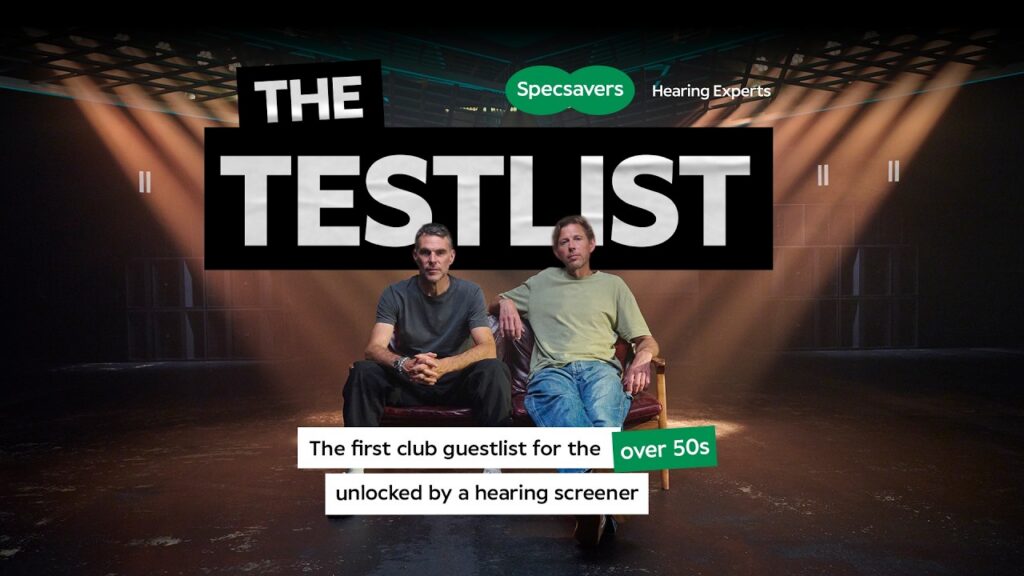
Specsavers has launched The Testlist, billed as the UK’s first club guestlist series for the over 50s, unlocked by completing a free online hearing screener. The headline act for the first event, at London’s Phonox on 15 October, is Groove Armada – who have both experienced hearing loss themselves – performing a DJ set timed to the 25th anniversary of Superstylin’.
The insight underneath it is sharp. Specsavers’ own research found nearly three quarters of over 50s still attend live music events, with over a quarter going as often as they did 20 years ago. Yet nearly half feel they get little credit for creating British rave culture. And one in five say hearing struggles have already reduced their nights out.
The campaign runs across TV, radio, OOH, social, influencer and experiential. Groove Armada’s Tom Findlay put it well: “Our generation was the first to rave and they’re still on the dancefloor now.”
The creative concept was developed by Golin Ketchum with Specsavers’ in-house team.
The StrategiQ takeaway: Specsavers consistently does something most health brands don’t: it meets its audience where they already are, not where a health message assumes they should be. The Testlist works because the insight is specific, the behaviour barrier is real (getting a hearing test is low priority until it isn’t) and the reward is actually decent. There’s also a broader strategic move here – Specsavers is building a cultural conversation around hearing health the same way it built one around eye health. That’s brand equity compounding over time.
OpenAI is building a real ads platform
OpenAI has been methodically assembling an advertising infrastructure inside ChatGPT.
The latest updates include a new Conversions objective using oCPC campaigns with bid caps, still billed per click. Daily budgets now work as seven-day averages with automatic spend pacing. Geo exclusions let advertisers block specific locations. A new Bulk API allows campaigns to be created and edited at scale. And product ad cards now show price and star ratings.
This is a maturing ad platform being built in real time, inside the world’s most-used AI assistant.
The StrategiQ takeaway: The infrastructure is being laid for a legitimate third channel – one where intent is explicit and the user is already mid-decision. Building familiarity with this platform now will give you a structural advantage when it scales. Add it to your paid media roadmap if it isn’t there already.
Google’s biggest quarter ever
Google posted its strongest quarter on record. Q2 2026 revenue was up 24% to $119.8bn. Search revenue alone was up 17% to $63.3bn. And AI Mode has now passed one billion monthly active users.
That last number deserves a double click. One billion people using Google’s AI Mode – a product that launched publicly only recently, now has five new ad formats live within it. Bottom text-based stacked ads, bottom shopping carousel ads, in-line shopping singular ads, in-line non-rich shopping ads and sponsored product grid ads.
The ad formats are following the users. That’s how it always works.
Google also confirmed that Google Ads now requires passkeys for sensitive actions, a security upgrade but one that will catch agencies off guard if they haven’t updated access protocols.
The StrategiQ takeaway: The numbers confirm what the product roadmap has been signalling for months: Google is successfully monetising AI search, not being disrupted by it. For advertisers, the practical question is which of the five new AI Mode formats fits your product type, and whether your creative is structured to work within a synthesised AI response rather than a traditional SERP placement. These formats reward specificity – product data, pricing, ratings – over brand copy.
LinkedIn’s awkward war on AI slop
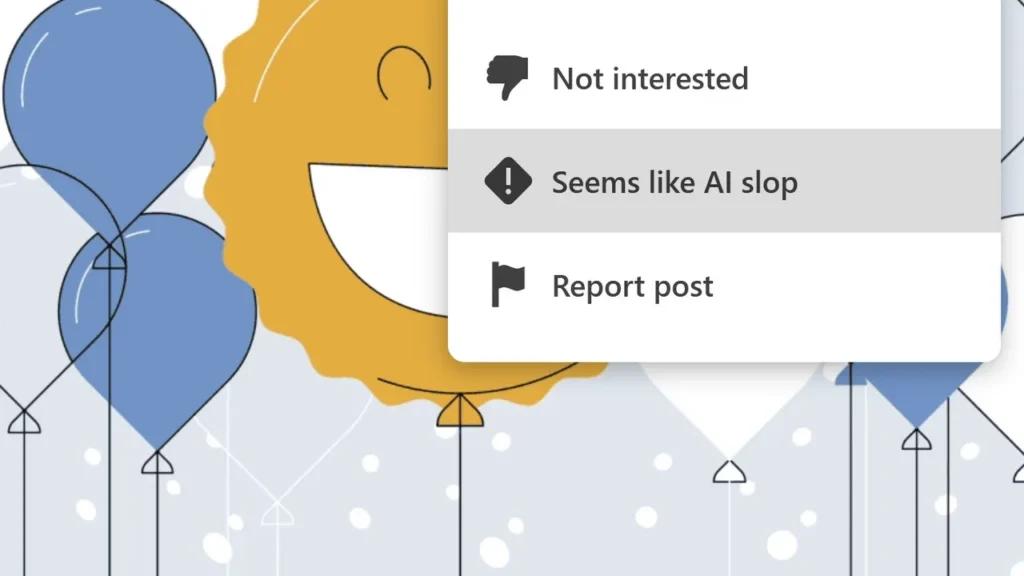
LinkedIn added a ‘Seems like AI slop’ report button at the end of July. Users can now flag posts that read as machine-written. The platform says it already blocks hundreds of thousands of automated AI comment attempts daily.
Research from Pangram Labs, sampling roughly one million posts, found that 41% of long-form LinkedIn posts – anything over 250 words – are now fully AI-generated. That’s the highest rate of any major platform, ahead of X, Reddit, Substack and Medium.
LinkedIn’s response is a combination of user reporting, algorithmic suppression and a private dashboard notification system that will flag creators when their content reads as inauthentic. The platform is also killing its ‘enhance your post’ AI writer and replacing it with a proofreader designed to preserve the user’s voice rather than replace it.
The StrategiQ takeaway: This matters for any brand or executive using LinkedIn as a thought leadership channel. Posts flagged as slop will be suppressed beyond your immediate network, capping reach significantly. LinkedIn’s own phrasing is useful here: AI-assisted content is still welcome, but only if it contains “original perspective, expertise or meaningful contribution.” The differentiator now is point of view – by all means use AI to sharpen a genuine opinion, but we’re all tired of generic content at volume.
£9 jeans and perfect timing: how Primark is battling Shein
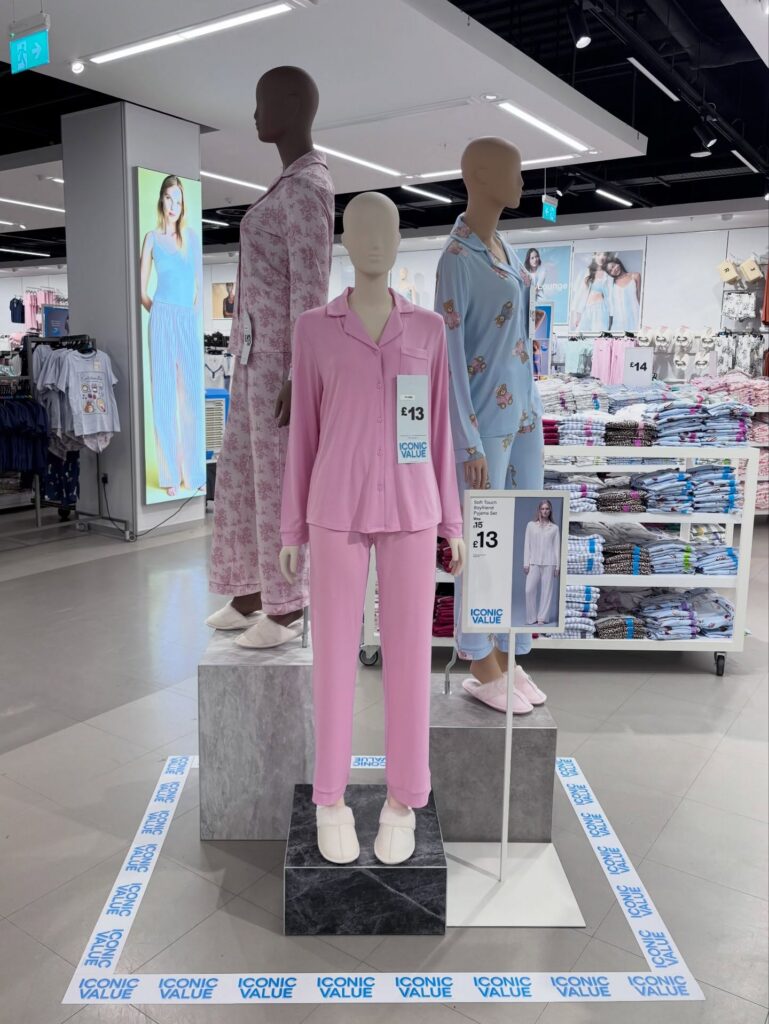
Primark launched its ‘Iconic Value’ initiative in July: permanent price cuts of up to 29% across hundreds of bestselling clothing lines, including jeans at £9, pyjamas from £7 and men’s sweatshirts at £10.
The same week Shein disclosed its first quarterly net loss of $99 million, driven by the closure of the customs exemption that powered its ultra-cheap pricing model. The EU introduced a €3 duty per item on low-value imports in July, and the US had already ended its de minimis treatment for Chinese parcels in May 2025.
Retail analyst Natalie Berg described the move plainly: Primark is borrowing the supermarket playbook – cut-price staples as loss leaders to drive footfall, then profit on impulse additions. It’s a strategy Tesco, Aldi and Lidl have used for decades.
Shein’s structural cost advantage is being dismantled in its key markets. Primark can’t win a pure price war online as it has no home delivery. But it can reposition itself as the credible in-store alternative at the moment Shein’s prices are going up.
The StrategiQ takeaway: This is a masterclass in knowing your competitive moment. Primark isn’t trying to beat Shein at its own game, it’s timing a price reset to land when Shein is at its weakest.
Burnham’s war on subscription traps and what it means for your retention model
Andy Burnham has fast-tracked a ban on subscription traps as part of his government’s cost-of-living drive. The new rules – built on the Digital Markets, Competition and Consumers Act 2024 – require clearer upfront information, regular reminders, a 14-day cooling-off period after free trials end or annual subscriptions auto-renew and a straightforward one-click cancellation route. The government estimates the crackdown could save consumers around £400 million a year, with an estimated 10 million unwanted active subscriptions currently running across the UK.
The rules are expected to come into force in spring 2027 but Burnham has signalled he’s accelerating the timetable. Publishers are already pushing back. The News Media Association, representing titles including The Times and The Guardian, said the government had “rushed ahead” without a proper implementation period, warning that businesses will be left scrambling to adapt.
The policy targets the mechanics that subscription businesses have relied on for years: low introductory rates that spike at renewal, cancellation journeys designed to exhaust rather than serve, auto-renewals buried in small print and free trials that convert by inertia rather than intent. Burnham called these “pretend prices” and “subscription traps” – language designed to land with consumers, not shareholders.
The StrategiQ takeaway: Any retention model that depends on customers not noticing a charge, not being able to find the cancel button or forgetting a trial has ended isn’t a loyalty model but a friction model. The businesses that will come out of this ahead are the ones whose customers stay because they want to, not because leaving is too much effort. If your subscription retention data looks healthy but your churn spikes whenever you make cancellation easier, you already know what the numbers are hiding. Spring 2027 is closer than it feels. Now is a reasonable time to redesign the cancellation journey before you’re required to.
An eclipse of a lifetime and a lesson in demand planning
The UK gets a partial solar eclipse on 12 August 2026 with up to 91% solar coverage in London and up to 95% in Cornwall. It’s the closest the UK has come to a total eclipse since 1999. The next one visible from here isn’t until 2090.
You’d think there would be enough eclipse glasses. There aren’t.
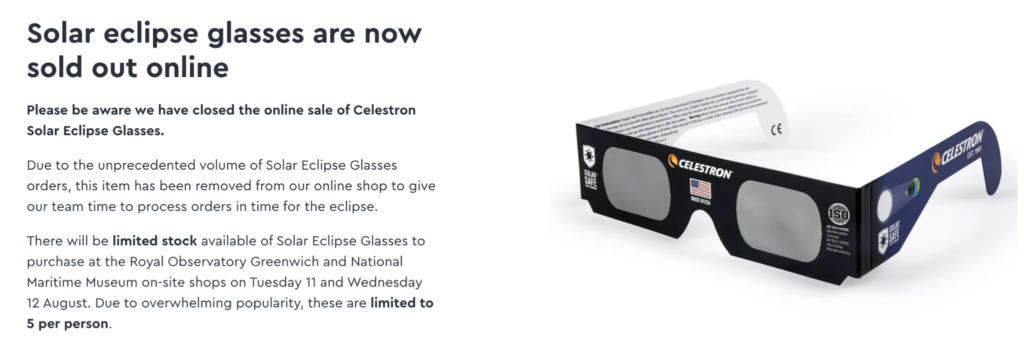
The Royal Observatory Greenwich sold out online. Amazon UK was listing delivery dates after the eclipse. Robert Dyas showed out-of-stock on its website. The 300,000 pairs imported and distributed by Astronomers Without Borders at discounted prices to astronomy clubs mostly didn’t reach the general public in time.
Ordinary sunglasses, for the record, are not safe.
The StrategiQ takeaway: This one isn’t really about eclipse glasses. It’s about the gap between a predictable cultural moment and operational readiness. The last time something like this happened in the UK (the 1999 eclipse) it generated enormous public interest. And yet retailers, distributors and the supply chain weren’t positioned for it. Every brand has its equivalent – a known seasonal event, a regulatory deadline, a cultural moment – where the preparation window closes long before the urgency kicks in. The brands that win those moments are the ones who started early.
The running thread
The businesses that win aren’t always the fastest. They’re the ones paying attention to what’s already in plain sight and doing something about it before it becomes urgent.
Don’t show up without your glasses.
Sources:
- https://www.seroundtable.com/half-google-searches-ai-overviews-41780.html
- serplens.com/blog/ai-mode-ad-types
- https://www.seroundtable.com/google-ad-revenue-earnings-41738.html
- https://ppc.land/google-ads-will-require-passkeys-for-sensitive-actions-from-july-15/
- bbc.co.uk/news/articles/c77g6dm5pr8o
- tubefilter.com/2026/08/10/linkedin-ai-slop-button
- thenextweb.com/news/linkedin-ai-slop-crackdown-generic-content
- https://www.bbc.co.uk/news/articles/c4g3x4j8pgro
- retailgazette.co.uk/blog/2026/07/primark-slashes-prices-by-up-to-29
- columnist24.com/business/9773/primark-price-cuts-take-aim-at-shein
- https://www.linkedin.com/news/story/crackdown-on-subscription-traps-7486004/
- gov.uk/government/news/consumers-to-save-around-400-million-every-year-from-government-crackdown-on-costly-subscription-traps
- https://www.theguardian.com/science/2026/aug/10/solar-eclipse-glasses-uk-high-street-shortage
- https://www.famouscampaigns.com/2026/08/specsavers-recruits-groove-armada-to-get-gen-x-to-check-hearing/
- https://www.specsavers.co.uk/hearing-test/online-hearing-test/testlist
- https://shop.rmg.co.uk/pages/2026-solar-eclipse