
Welcome to The Uncertain Times. The platforms are moving fast, the ad surfaces are multiplying and Google’s quality bar is getting higher.
This week, we unpack:
- Non-commodity content: Google puts a name to what it’s always rewarded
- Gemini ads incoming: Google confirms that ads could be coming to its AI chatbot
- Specsavers switches up its tagline: The most famous line in British advertising gets its first update in 22 years
- Gap at Coachella: What a $100 hoodie in the desert can teach every brand about participation over promotion
- Lucky Saint moves into functional drinks: The UK’s biggest independent alcohol-free beer brand finds its ‘white space’
Non-commodity content: Google finally names what it’s always rewarded
At the Google Search Central Live event in Toronto in April, Search Liaison Danny Sullivan drew an important distinction.
Commodity content covers a familiar topic in a familiar way. The same structure, the same talking points, the same generalised advice found across dozens of other pages. It’s not necessarily wrong and it’s not always low quality. But it’s interchangeable. If one page disappeared, another could fill the gap with little loss in usefulness.
Example: ‘10 tips for improving your content marketing strategy in 2026’
Non-commodity content, by contrast, brings a viewpoint or information that others lack or can’t easily replicate, talks about a specific instance rather than general rules and demonstrates first-hand knowledge or expertise.
Example: ‘We audited 47 of our clients’ content programmes. Here’s what the 3% holding their rankings have that the 97% don’t’
This piece is built on a specific lived experience that no AI brief or competitor can replicate.
Google isn’t outright banning commodity content, it’s a natural part of traditional content strategy, but it’s a weak play for earning search clicks or visibility, especially in an era of AI summaries and tighter quality filters.
This lands alongside the finding that only 3% of AI-generated content pages remained in Google’s top 100 after 3-6 months. The data and the guidance are telling the same story: the content bar has risen. Volume without substance or genuine insight just won’t cut it.
The StrategiQ takeaway: If you removed your brand’s name from your content, would anyone be able to tell who wrote it? If the honest answer is no, you have a commodity problem.
Gemini ads could be loading
For months, Google’s official position on Gemini advertising was: no plans, no timeline, no comment. That position shifted last week when Google SVP of knowledge and information Nick Fox indicated the company may bring ads to its Gemini AI chatbot, following strong Q1 earnings.
“If the default Google experience is evolving into an AI Chatbot, Ads will have to come along for the journey” – James Bavington, CPO, Organic visibility in the age of AI: Webinar
The move comes as AI chatbots increasingly look to advertising as a monetisation opportunity. The commercial logic is straightforward. An ad-free AI chatbot is an expensive commitment to maintain when your competitors are already monetising theirs. Ads are already commonplace on ChatGPT in the US.
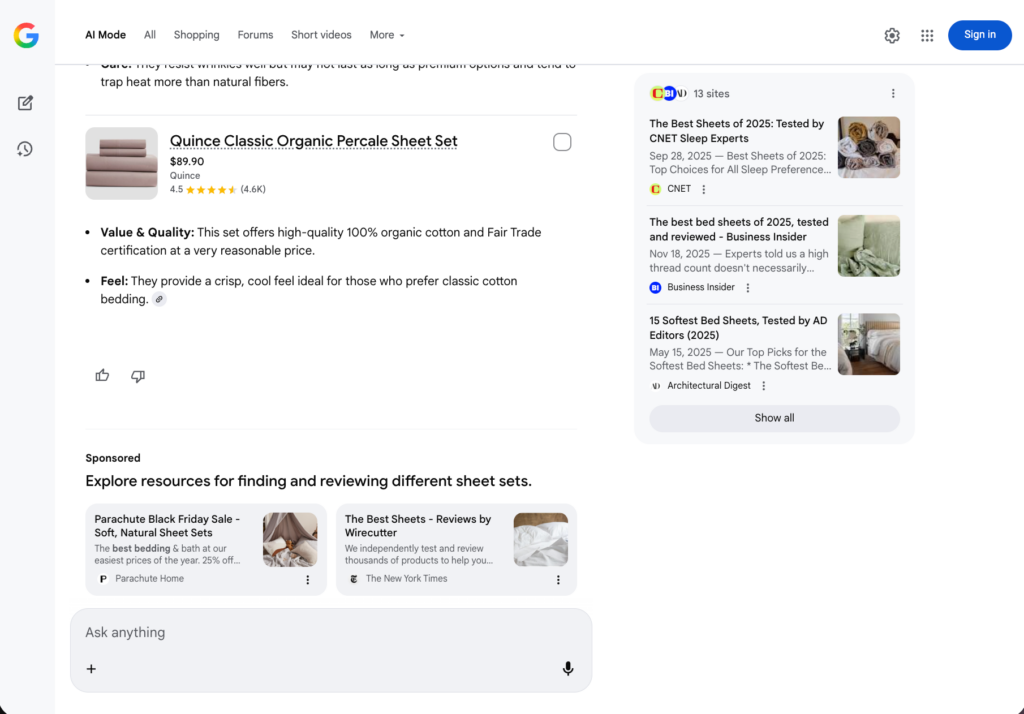
Google Search remains the single largest advertising platform in the world, and its users are already very familiar with paid advertising.
- May ‘25 – Live ads within Google’s AI Overviews started appearing
- November ‘25 – Ads in Google AI Mode started appearing
- 11th February ‘26 – Google’s Instant Checkout was first seen in the wild for Wayfair and Etsy within AI Mode
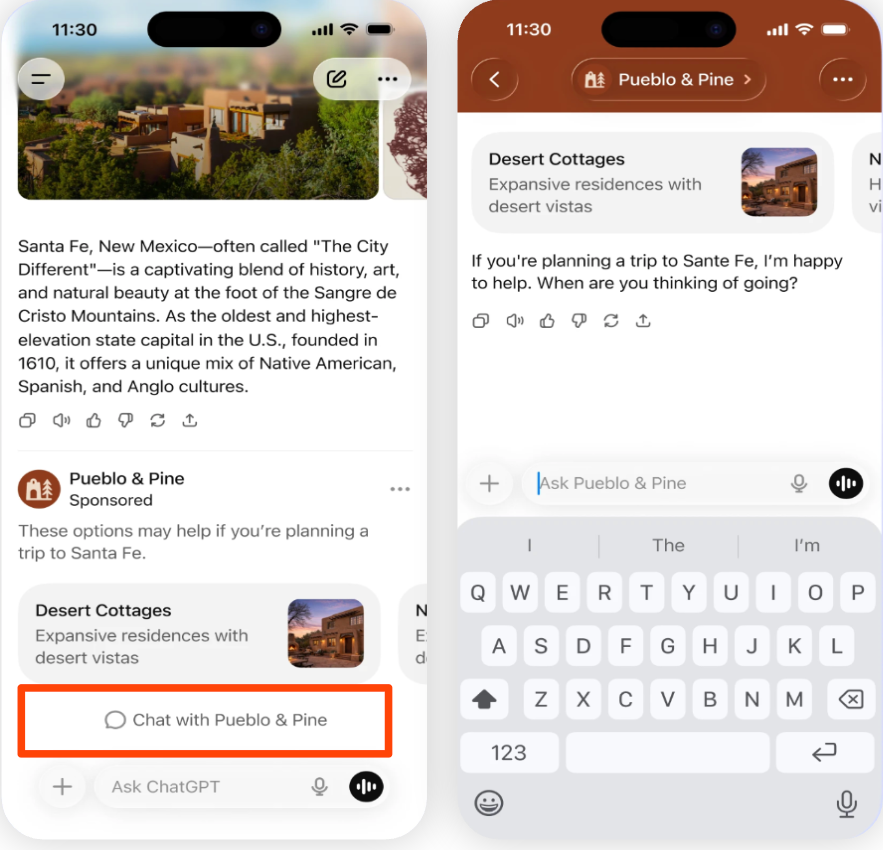
The more interesting question for marketers is what Gemini ads actually look like in practice, and whether the same playbook that works in Search will translate into a conversational environment where users expect objectivity. ChatGPT’s early ad numbers suggest the appetite is there. Whether the trust holds as the inventory scales is another question.
The StrategiQ takeaway: Your brand needs to show up in conversational AI environments with relevance, specificity and the kind of brand authority that earns recommendation.
Specsavers switches up its tagline for the first time in two decades
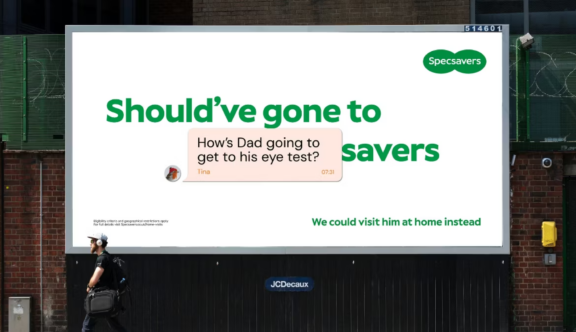
Specsavers has evolved its ‘Should’ve gone to Specsavers’ tagline for the first time in 22 years, coinciding with a new global brand platform launching on 1 May. The updated line becomes ‘Should’ve gone to [problem] savers’. For example, ‘Should’ve gone to Why’s everyone mumbling savers’.
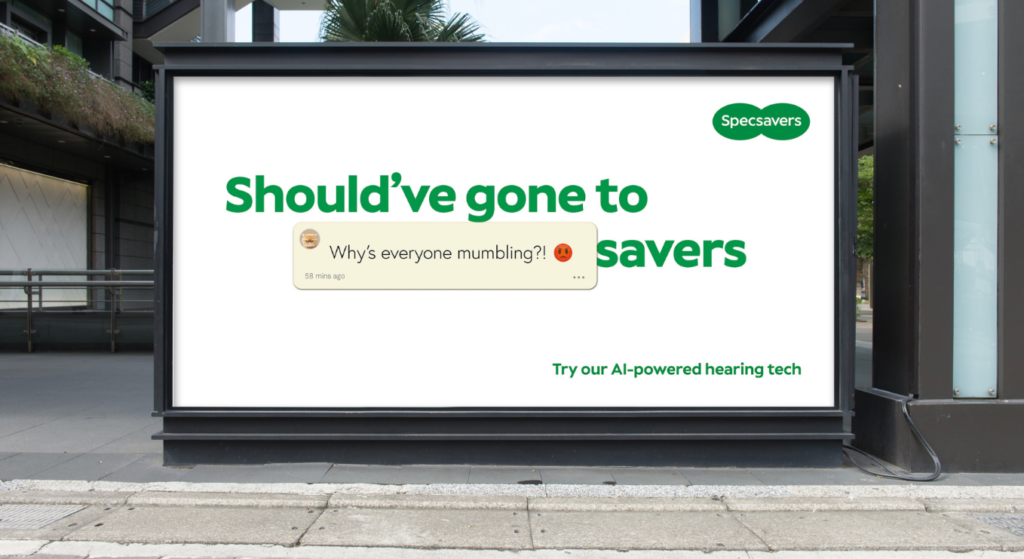
The platform is designed to show how Specsavers supports customers with a wider range of eye and ear care needs, whether in-store or at home, positioning the brand as a trusted provider of healthcare rather than just a place for routine check-ups.
The first TV spot, narrated by Rob Brydon, promotes Specsavers’ home visit service through the line ‘Home visits from Mrs Wren’s journey savers’. Outdoor executions include lines such as ‘Should’ve gone to help-my-eye’s-gone-gammy savers.’
In October 2024, Specsavers won gold at the IPA Effectiveness Awards for its ‘I don’t go’ campaign, which subverted its longstanding ‘Should’ve gone’ tagline to highlight its home visits proposition, delivering an estimated £19.8 million in incremental profit. The new platform is an expansion of the classic line, using its equity to carry a broader service proposition.
This is one of the harder things to do in brand marketing: evolve an asset that has entered everyday language without diluting the thing that made it powerful in the first place. Whether it lands with the same cultural weight as the original is the real test, and that won’t be clear for a while yet.
The StrategiQ takeaway: ‘Should’ve gone to Specsavers’ is one of the most valuable brand assets in British advertising. The fact that it’s been running for 22 years is part of the reason it works. Brands need to be honest about what they own, careful about what they change and disciplined enough not to mistake novelty for progress. Specsavers has earned the right to experiment.
Gap at Coachella: a $100 hoodie in the desert
Gap debuted as Coachella’s exclusive clothing apparel sponsor for 2026, anchored by the Hoodie House – an on-site pop-up where festivalgoers could buy and customise a limited-edition $100 Gap x Coachella hoodie with patches, drawstring beads and collectible charms.
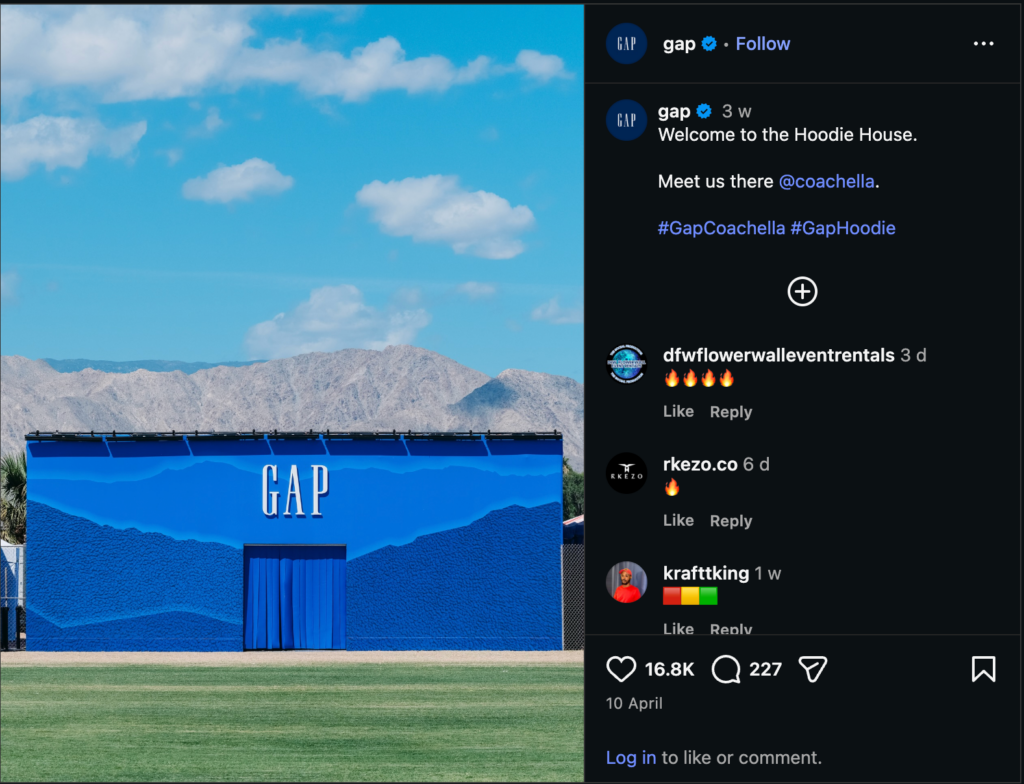
The campaign generated over one million views, beating its target by 35%, with an average view rate of 51.5%, well above benchmark. Google Trends showed a breakout spike in searches for Gap of more than 5,000% over the weekend.
The hoodie wasn’t a giveaway or a branded photo opportunity. It was a blank canvas that visitors completed themselves. That’s what made it filmable, shareable and genuinely owned by the people who left with one.
Gap’s global CMO Fabiola Torres said: “People are watching Coachella through creators now; they don’t want to just see the polished version; they want a perspective, or point of view, from the people they watch.”
From unboxing invites, to getting ready and styling the swag – Gaps’ brand visibility got amplified far beyond the desert by creators and influencers.
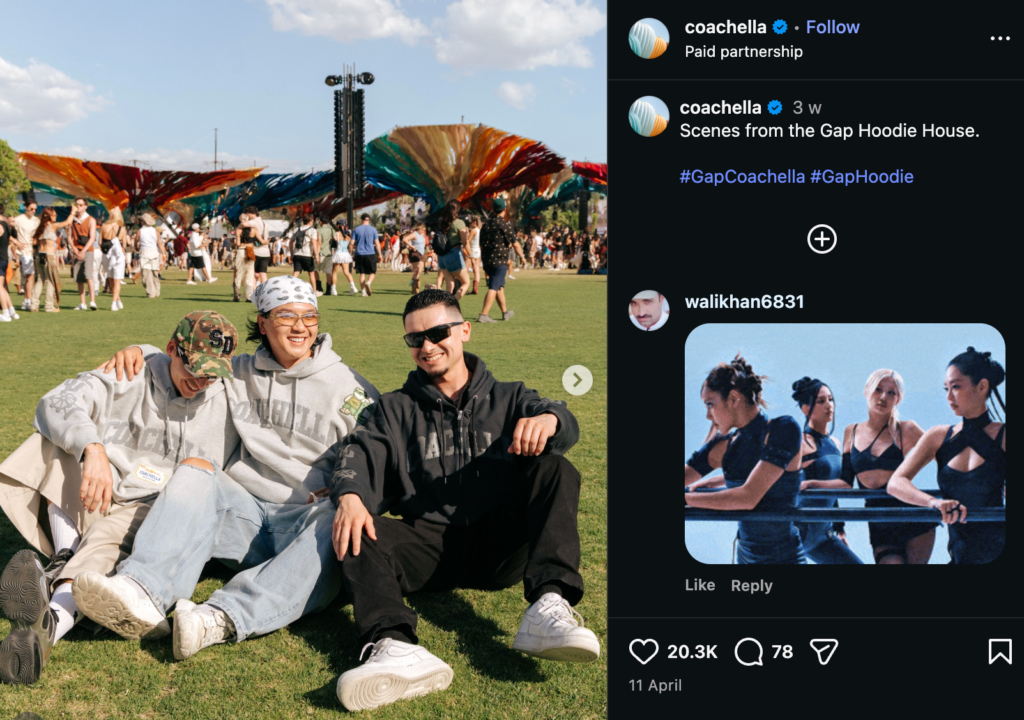
The StrategiQ takeaway: The distinction between participation and promotion is the whole game in experiential marketing right now. Brands that give people something to make, customise or discover generate content that feels genuine because it is.
Lucky Saint stretches categories with functional drinks
Lucky Saint, the UK’s largest independent alcohol-free beer brand, has made its first foray into functional drinks with the launch of a lime and sea salt electrolyte lager – an alcohol-free beer brewed with sea salt providing magnesium, potassium and sodium to support hydration and performance.
The launch also marks Lucky Saint becoming the first non-alcoholic beer brand to sell on TikTok Shop. It’s launching exclusively on TikTok Shop and DTC, with no retail presence, relying on a huge creator marketing campaign to shift cans.
I was handed a can by promoters on my cycle home from work through Broadway Market on a sunny day last week – a welcome refreshment and a strategic spot for getting the attention of young tastemakers in London.
CMO Kerttu Inkeroinen describes the thinking: “If you look at consumer behaviour, a lot of the times when people are looking to moderate, they actually often choose to drink nothing instead of swapping alcohol with anything else. But that’s where the white space and opportunity very much is.”
Lucky Saint has expanded deliberately, each step into a new occasion rather than a new category. The electrolyte lager is the first product that doesn’t position itself purely as a beer. You can drink it at a party, or after a run. That’s a meaningful strategic shift for a brand built on the proposition that alcohol-free beer can be as good as the real thing.
Functional drinks are a growing market. Partly fueled by wellbeing influencers on Instagram and TikTok, brands like Poppi, which PepsiCo acquired in 2025 for $1.95 billion, reflect more demand for advanced hydration.
The StrategiQ takeaway: Lucky Saint’s expansion is a useful model for any brand thinking about category stretch. The brand has moved step by step, never so far that it loses the positioning that made it valuable, always far enough to reach new occasions and new consumers. The electrolyte lager is a logical extension of a brand that has always been about what you can drink, not what you’re giving up.
The StrategiQ takeaway
Five stories. One thread. The platforms are multiplying, the ad surfaces are expanding and Google is raising its quality bar. Meanwhile the brands doing the most interesting work this week are the ones with a clear enough sense of identity to evolve deliberately, stretch purposefully and show up in ways that earn attention. Generic content doesn’t win anymore. Generic strategy never did.
Sources: