

Welcome to The Uncertain Times. This week, the AI industry had a very public argument about whether its own technology is going to kill everyone.
Separately, Mastercard built an AI shopping agent. The government told people to stockpile tinned food. Pokémon turned 30. And a Michelin-adjacent fake restaurant served unsuspecting diners processed chicken burgers and congealed baked beans.
Standard week.
Here’s what we’re talking about:
- The AI existential risk debate that escaped the lab and went fully mainstream
- Mastercard’s agentic commerce infrastructure and what it means for your checkout funnel
- The government’s stockpile advice and what it signals for brands in an anxious market
- Three nostalgia plays in three weeks – Pokémon, Bob the Builder and last week’s Harry Potter – and what connects them strategically
- A fake restaurant, real school dinners and a masterclass in behavioural reframing
Will AI kill us all? The debate continues
Earlier this month, a British researcher, Jacob Coxon, resigned from Anthropic, posting a thread on X and accidentally starting a civilisational debate.
The part of his post that caught everybody’s attention: “The people building AI earnestly believe that it could kill us all by the end of the decade.”
The thread racked up 150 million views. It reached journalists’ group chats. Arts reporters were asking their tech colleagues about the impending apocalypse. Two other Anthropic researchers publicly backed the concerns. Evan Hubinger, a current Anthropic employee, said he believes there’s greater than a 10% chance AI poses existential risks within a decade. More than 1,100 AI industry staff signed a petition urging the US government to deliberately slow AI development.
Anthropic CEO Dario Amodei responded on 12 September with an essay titled ‘We Must Pace the Frontier,’ calling for a three-step slowdown and cooperation between frontier AI companies and governments. OpenAI CEO Sam Altman and XAI CEO Elon Musk both signalled agreement.
Then Nvidia CEO Jensen Huang stepped in. Speaking to CBS News on 20 September, Huang declared there is “zero percent chance” AI ends humanity by 2030. He dismissed the warnings as “not grounded in science” and suggested there are “ulterior reasons” behind apocalyptic framing from critics, a pointed comment given that Nvidia’s $5.3 trillion valuation is built on selling the chips that power the models in question.
The StrategiQ takeaway:
Set the existential question aside for a moment and focus on what this debate actually reveals: the people closest to the technology disagree, fundamentally and publicly, about how dangerous it is.
For brands and businesses, this matters. Not because your CRM integration is going to end civilisation, but because public trust in AI is now more contested than it’s ever been. The brands that are transparent about how they use AI, what they use it for and who’s accountable for its outputs will build durable trust. The ones treating it as an invisible efficiency lever will find the question asked of them eventually.
Mastercard is rebuilding the checkout button
On 9 September, Mastercard launched Agent Connect, a single integration point that lets merchants plug into AI-powered shopping.
The platform allows AI agents to browse products, compare options and complete purchases on behalf of consumers, using pre-authorised parameters set by the user. Alongside Agent Connect, Mastercard expanded its Agent Suite for Merchants and introduced Agent Pay, a system that secures transactions through what the company calls “verifiable intents” or tokenised authorisation from the consumer that the AI can only act within.
Visa moved simultaneously, announcing its own Intelligent Commerce programme in partnership with Anthropic, Microsoft, OpenAI, Perplexity and Samsung.
The initial rollout for Mastercard targets the US market. Partners include Samsung and Trip.com. The pitch to merchants: “Consumers are increasingly relying on AI-powered assistants to discover products, compare options and decide what to buy. To participate, merchants need product information that AI agents can find, understand and act on.”
The StrategiQ takeaway:
The checkout button isn’t disappearing this quarter, but the direction is clear and moving fast. AI agents making purchases on behalf of consumers changes the entire discovery-to-conversion funnel. An AI system will make recommendations based on structured product data, pricing, availability and merchant-authorised signals.
We’ve said it before – your product information needs to be structured in a way AI agents can parse and act on.
Nostalgia as a marketing technique
We covered Harry Potter’s 25th anniversary last time – the Back to Hogwarts global celebration that stretched across cinemas, theme parks, streaming and retail. This week, two more nostalgia plays landed.
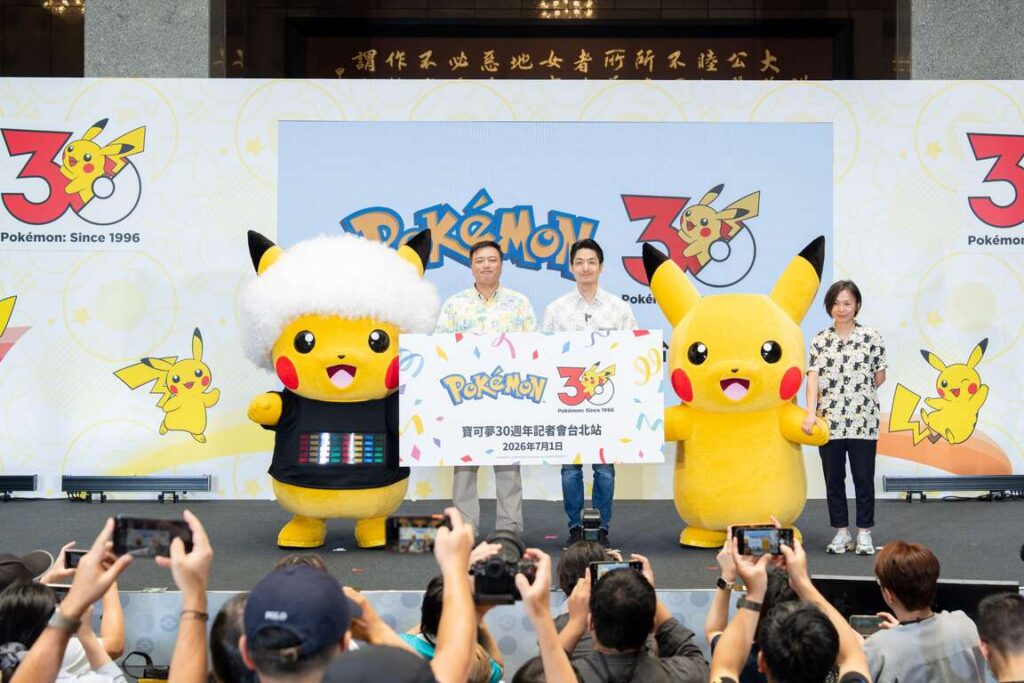
Pokémon turned 30 in 2026 and has treated the whole year as a sustained campaign. A Super Bowl ad, a simultaneous global TCG card launch, LEGO partnerships, worldwide Day Out and Night Out events and a “What’s Your Favourite?” social campaign that generated 2.3 billion impressions in 48 hours. Collectors queued outside shops in the UK for new anniversary trading cards, which sold out in 15 minutes.
The marketing is deliberate about who it’s talking to: the Super Bowl spot featured celebrities who grew up during original Pokémania. Heritage Auctions reported 35% more registered bidders for Pokémon card lots in Q1 2026 versus Q1 2025, with a notable spike in first-time bidders aged 28 to 38 – the cohort that grew up with the Base Set.
E.ON Next, meanwhile, has brought back Bob the Builder in his original stop-motion form, with Neil Morrissey returning as his voice for the first time since 2011, and sent him to green skills training. The 90-second film catches up with Bob after 15 years of yoga, birdwatching and a trip to Australia, before he returns to Britain and enrols at E.ON Next’s Net Zero Training Academy.
The StrategiQ takeaway:
Harry Potter, Pokémon and Bob the Builder all tap into the same emotional territory – the part of an adult brain that still responds to something it loved as a child. But the ones that work hardest commercially are the ones that direct that feeling somewhere. Pokémon uses anniversary energy to pull a lapsed audience back into active spending. E.ON uses Bob’s existing association with learning to make green skills training approachable. Warner Bros. uses Hogwarts to generate demand for a new HBO series.

The UK was told to stockpile. What does that mean for brands?
On 18 September, a viral post claimed the UK government was urging citizens to stockpile canned food and water. It spread quickly and the nuance got lost, but the underlying story is real.
This comes after a summer of extreme heat and wildfires across Europe, flooding disruption, growing concern about infrastructure vulnerability and a broader public conversation about resilience in the face of climate-driven disruption. The Cabinet Office has been actively updating its national contingency plans, and the advice to households – keep a few days of non-perishable food and water – reflects a shift in how seriously the government is taking the likelihood of severe environmental and systemic shocks.
UK retail sales volumes rose 0.5% in August, defying economist forecasts of a decline, in part driven by the kind of precautionary purchasing behaviour this story accelerated.
The StrategiQ takeaway:
Climate disruption, infrastructure fragility and cost-of-living pressure have created a consumer mindset that is less certain about the future than it was five years ago. That changes what people buy, when they buy it and what messages land. Brands in food, household goods, utilities and retail have an opportunity to position around genuine resilience – not fear or doomscrolling, but practical confidence.
The mood your audience is in when they encounter your brand matters. Most campaigns are still written for a confident consumer. Increasingly, that’s not who’s reading them.
Experiential school dinners
BBH London and The School Food Project created a pop-up called Centena (an anagram of canteen) presented as chef Angela Hartnett’s latest dining venture.
Unsuspecting diners were served processed chicken burgers, stale buns, soggy chips and cold, congealed baked beans. Their reactions were filmed. Then they were shown what better school food could actually look like.
The School Food Project brings together Bite Back, Chefs in Schools, School Food Matters, The Food Foundation and the Jamie Oliver Group. The campaign coincides with the government publishing new school food standards for England, due to take effect from September 2027.
The StrategiQ takeaway:
Behavioural reframing is one of the most underused tools in campaign planning. Most public interest campaigns tell people what to think. This one made people feel it, then showed them the alternative. The gap between knowing something is bad and having a visceral reaction to experiencing it is exactly the space experiential work can occupy. This is a textbook example. The anagram name, the celebrity front, the filmed reveal – every element is in service of making one thing land: if you wouldn’t eat it, why are your children?

The StrategiQ takeaway
There’s a through-line this week between the AI debate, the stockpile panic and the nostalgia wave. People are anxious about the future and looking for things they can trust.
Uncertainty is the context your marketing is landing in right now. The brands that understand that (and show up accordingly) will connect. The ones running confidence-first messaging into an anxious market will find it harder.
Different stories. Same lesson.
Sources:
- The Guardian, AI doomsday warning
- The Guardian, Nvidia boss dismisses AI warnings
- BBC, Not all AI workers think the tech could kill everyone
- BBC, Gemini AI hacked three companies
- BBC, Would you buy branded clothing from your favourite tech firm?
- LinkedIn, Mastercard moves to AI powered shopping
- Linkedin, Pokemon fever is back
- Famous Campaigns, Eon hires Bob the Builder
- BBC, What food items should you stockpile
- Famous Campaigns, Angela Hartnett serves diners a school lunch