
When the product has to stay off screen, the brand has to step up. The dedicated among you may remember when we covered the junk food ad ban in our January edition of The Uncertain Times.
A few months on, we’re taking a look at some of the inspiring responses to advertising with limits.
“Perhaps the most powerful thing a brand can do is make people feel something that has nothing to do with the product at all.” – Olivia Philips, Creative Strategist
Key takeaways:
- The HFSS ban didn’t kill creativity. For brands already building, it clarified it.
- Distinctive assets are a long game. The brands saying the least right now invested the most over the last twenty years.
- If your brand can’t communicate without a product shot, you don’t have a brand, you have a distribution channel.
- AI search is the next frontier of brand control. Buyers are already asking LLMs questions your paid team can’t intercept. If the accurate version of your brand isn’t clearly structured and widely corroborated, the machine will find another version.
What was banned?
In October 2025, the UK introduced a ban on junk food advertising, restricting TV spots before 9pm and prohibiting all paid online ads for high fat, salt and sugar products.
For years, precision-targeted digital advertising was the growth engine most food and drink brands relied on. Find the right person, at the right moment, with the right product. And now, for a significant portion of the category, it’s no longer available. Digital targeting was the great equaliser, allowing newer brands to compete without the media budgets of heritage players.
This ban forces a return to long-term brand equity.
Back in January we pondered as to whether this tighter regulation would spark a creative renaissance in outdoor advertising, sponsorship and experiential marketing.
Now, we’re starting to see the responses…
Here’s what’s catching our eye
The best night’s end with…
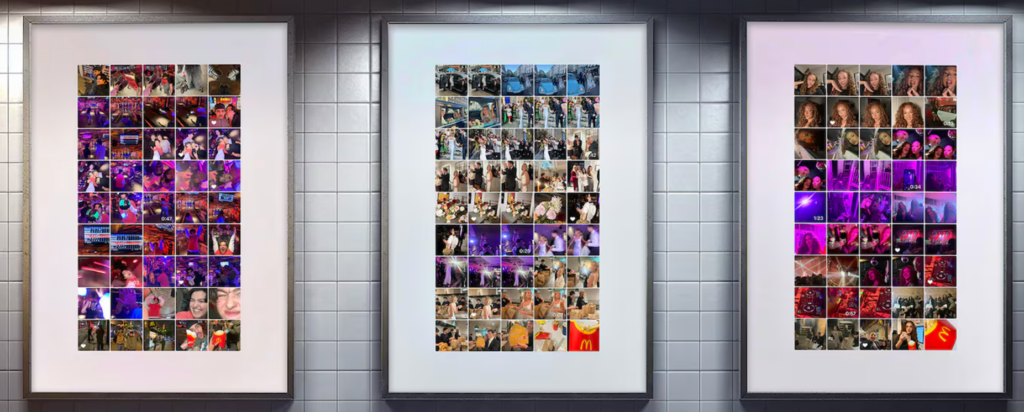
Image credits: Media Marketing
McDonald’s UK could have played it safe. Instead, Leo Burnett reviewed real camera rolls shared by fans and noticed a pattern: a lot of nights out, regardless of where they started, seemed to end in the same place.
The result is a multi-channel campaign built entirely on unedited screenshots from real people’s phones.
Just blurry, late-night, phone camera images of bowling trips, parties and wedding celebrations, each one ending at the golden arches. The campaign debuted during the 2026 Brit Awards, with influencer GK Barry sharing her own post-Brits camera roll – ending, inevitably, at McDonald’s – to more than 100,000 likes before the week was out.
The StrategiQ takeaway: “I really like the honesty of it. And it’s interesting timing too. If brands can’t always show the product, they’ll need to lean more into culture, behaviour and brand storytelling instead. And McDonald’s seems to be leading the way right now. Sometimes it isn’t about inventing something new. It’s about spotting the story that’s already there.” – Amber Smith, Creative Studio Executive
Macdonalds NZ goes minimalist
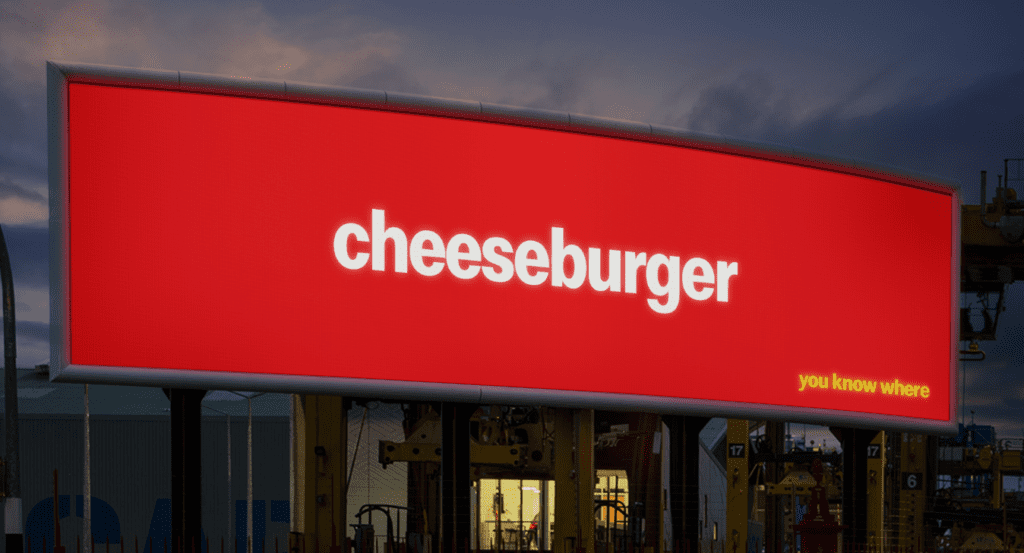
Image credits: Little Black Book
McDonald’s in New Zealand has been testing billboards carrying nothing but menu item names. No logo. No imagery. Just the words ‘Fries’ or ‘Cheeseburger’ in clean type. And you know immediately, without question, who it is.
From a behavioural science perspective, this is mental availability at work. The cues alone are enough to trigger memories built over decades of brand investment.
But (and this is the important part) it only works because of everything that came before it.
The StrategiQ takeaway: “It feels like a smart test of how brands can rely more on distinctive assets and memory rather than product imagery. It’ll be interesting to see if we see more of this from other brands” – Amber Smith, Creative Studio Executive
Nothing hits the spot like a loophole
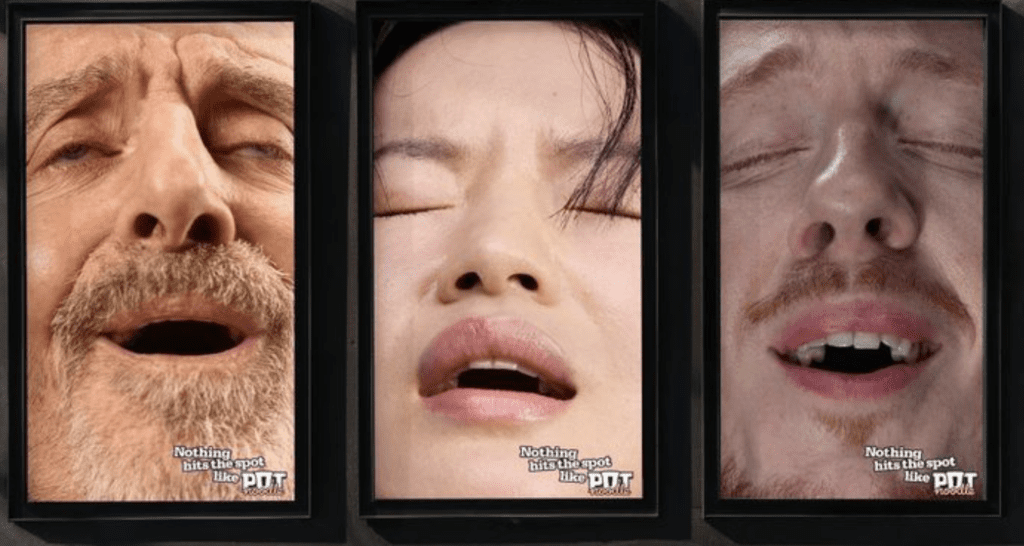
Image credits: Creative Salon
Pot Noodle is an HFSS product by most reasonable definitions. High in salt, processed, cheerfully unashamed about it.
The out of home campaign does exactly what Pot Noodle has always done best, say something that makes you look twice and grin slightly against your better judgement.
Extreme close-ups of ecstatic faces. The slogan: ‘Nothing hits the spot like Pot Noodle.’ The suggestion of what spot is being hit is left entirely to your imagination.
It’s cheeky, plausibly about noodles, obviously about something else, and completely on brand for a product that has spent decades building a reputation for going as far as it can get away with.
It also solves the ban neatly. You can’t show the product in paid digital spaces. You can absolutely plaster a euphemism across a billboard.
The StrategiQ takeaway: When you can’t show the product, what’s left is character. Pot Noodle has spent years building a character so distinct that removing the product shot makes the work more interesting, not less. Most brands don’t have that.
But what about the smaller guys?
You may have noticed that we’ve focused on food giants so far.
McDonalds can lean into culture because they’ve spent decades building it. These responses work because they’re drawing on reserves of brand equity that smaller, newer or less established brands simply don’t have.
For the smaller challenger brands that used precision-targeted digital ads as a means of competing without the budgets of heritage players, the path forward is more challenging.
The creative renaissance we’re seeing in OOH and broadcast is real but it’s expensive, and it favours the established.
The StrategiQ takeaway: The ban is, at its core, a test of brand strength. If your growth has been built on the efficiency of digital targeting rather than the strength of your brand idea, this is the moment that gap becomes visible.
| So what should smaller brands actually do?Start with the brand truth you do have, however small. Find the one thing that makes you genuinely different and commit to it completely across every channel available. Community, PR, earned media, organic social, partnership and experiential don’t require a heritage budget. They require a clear point of view and the consistency to repeat it. And we can help define your core proposition. This is the heart of your strategy. Your unique value in the market. It’s what you stand for, and why your customers should care. |
The LLM problem nobody’s talking about yet
There’s another challenge sitting underneath all of this that the industry hasn’t fully reckoned with.
Buyers are increasingly turning to AI search to ask questions like “what’s the healthiest fast food option?” or “how much protein is actually in a Pot Noodle?”
These aren’t search queries your paid team can intercept. They’re AI-generated answers drawn from whatever the machine can find. And right now, for many food brands, what it can find is a mixture of outdated nutritional data, unverified third-party claims and the kind of misinformation that spreads fast in communities where health and food intersect.
The brands that get ahead of this will be the ones that have invested in making the accurate, brand-owned version of that information so clear, well-structured and widely corroborated that AI systems have no reason to reach for anything else.
It’s the next frontier of brand control, and it’s one that most strategies haven’t accounted for yet.
The StrategiQ takeaway: The HFSS ban removed your ability to push your brand into digital spaces. AI search is now pulling your brand into conversations you can’t see. If the nutritional, ingredient and brand truth isn’t clearly and accurately represented in the sources AI trusts, someone else’s version of your brand will be.
Answer 10 quick questions to understand how visible your brand really is in AI-driven Search.
The StrategiQ takeaway
The creative renaissance we’re starting to see in OOH, broadcast and brand partnerships isn’t a workaround. It’s a return to what brand building was always supposed to be. The most resilient brands in a restricted advertising environment are the ones with the clearest sense of who they are and the courage to show.
IT’S ALWAYS STRATEGY.
Sources and references
- BBC – Junk food TV and online advert ban comes into force
- The Drum – Macdonald’s turns real camera rolls into a late night campaign
- Creative Salon – Pot Noodle Presents The Horror Of The Slurp
- Does the AI algorithm know your brand better than you do?
- Where AI influences discovery and decision making
- The Uncertain Times – January 2026