

Welcome to The Uncertain Times. In this edition: an automated feature built ads for the National Trust that nobody approved. A Tesla did a barrel roll. And the whole country has one eye on a Budget that lands next week.
The theme is control. Who has it, who thinks they have it and who’s about to find out they don’t.
This week, we’re getting into:
- The Budget lands next Wednesday – who could feel it first?
- The National Trust’s TikTok ads that nobody approved
- Google testing ads inside its AI answers
- A flying Tesla, a Call of Duty street in Shoreditch and a Pringles urn: why real, physical and ownable is winning
The Budget is next week. Here’s who could feel it first
Chancellor John Healey delivers his first Autumn Budget next Wednesday, 28th October. The headline tax rates are expected to stay put. The detail is where businesses get nervous.
Start with the online giants. The Times reports that Amazon, eBay and Temu are expected to become responsible for collecting the tax owed by sellers on their platforms, part of a crackdown on overseas sellers avoiding VAT. The move is expected to fund lower business rates for High Street shops, by raising the threshold at which small companies start paying rates. The Treasury hasn’t yet commented.
Then family firms. The Telegraph reports the chancellor is weighing income tax on business owners who pass their company to the next generation. Today, transfers can be arranged to attract capital gains tax, which is charged at a lower rate. This would push the bill up.
What’s already confirmed is a 20% cut to business rates for pubs, social clubs and live music venues in England from April 2027, on top of the 15% relief in place for 2026-27. The government estimates nearly 32,000 businesses will benefit, with the typical pub saving around £1,100 in the first year. The catch: it won’t cover the very largest live music venues, and nobody’s said where that line falls.
The StrategiQ takeaway:
Read the speculative reports as a map of who feels it first. High Street retailers and pubs could gain from lower rates. Marketplace sellers could see their costs shift. Family business owners could rethink succession and investment.
Our advice – brief two plans now, one for a gentle Budget and one for a rough one, and agree the trigger for each before the day.
Nobody approved these ads. TikTok made them anyway
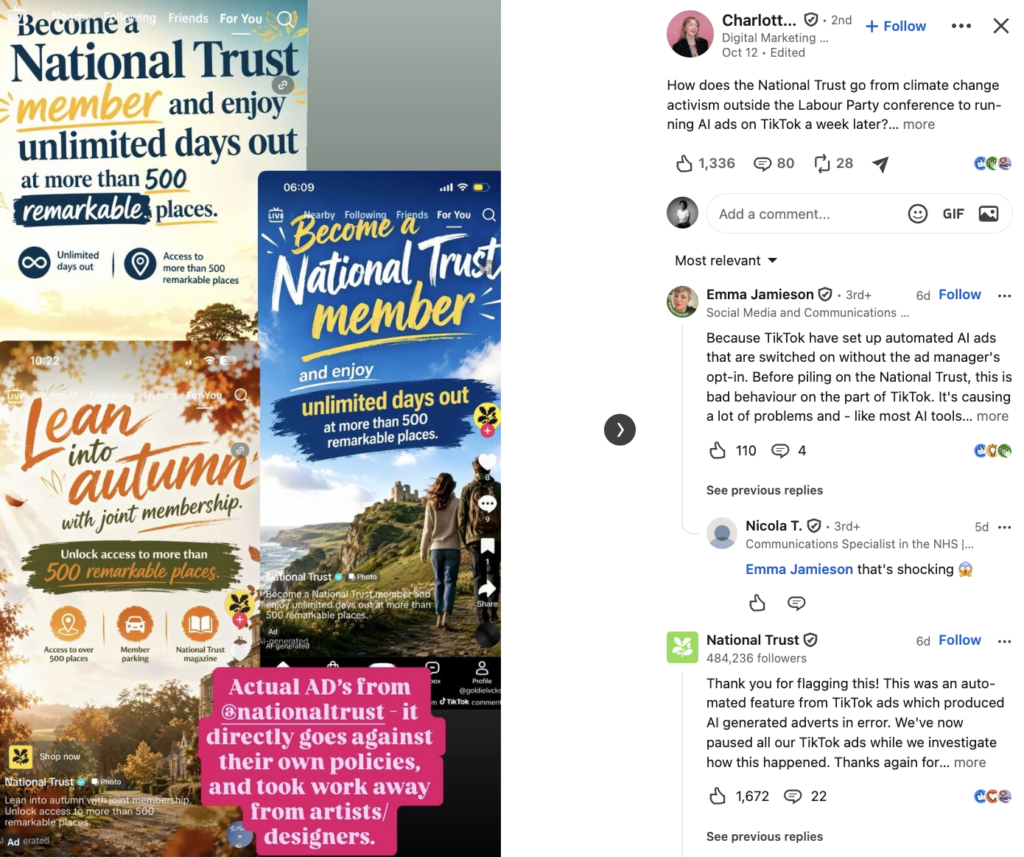
AI-generated TikTok ads inviting people to become National Trust members appeared this month. Critics said they looked off-brand and at odds with the ethics of an organisation so close to conservation.
Charlotte Anstee, a digital marketing executive at Ocean, flagged the ads on LinkedIn. She said they sat awkwardly next to the charity’s climate campaigning and looked nothing like its usual content. Alex Pollard of Pollard Media made another point: the Trust has one of the country’s finest photo libraries, so why would anyone need AI to invent its places?
The Trust says an automated feature in TikTok Ads produced them in error, and that the content was “not part of the National Trust’s approved creative.” It has paused all its TikTok advertising while it works with TikTok on safeguards.
The StrategiQ takeaway
Your ad platforms now have opinions about your brand. Automated asset generation is turning up as a default in more and more tools. This week, audit every ad account you run for auto-generated creative and make someone senior own those settings. If your policy says a named human signs off every piece of AI-assisted work, make sure the platform knows.
While AI creative has a place, it needs to be used carefully in these spaces.
The AI answer may now be for sale: Google tests in-answer ads
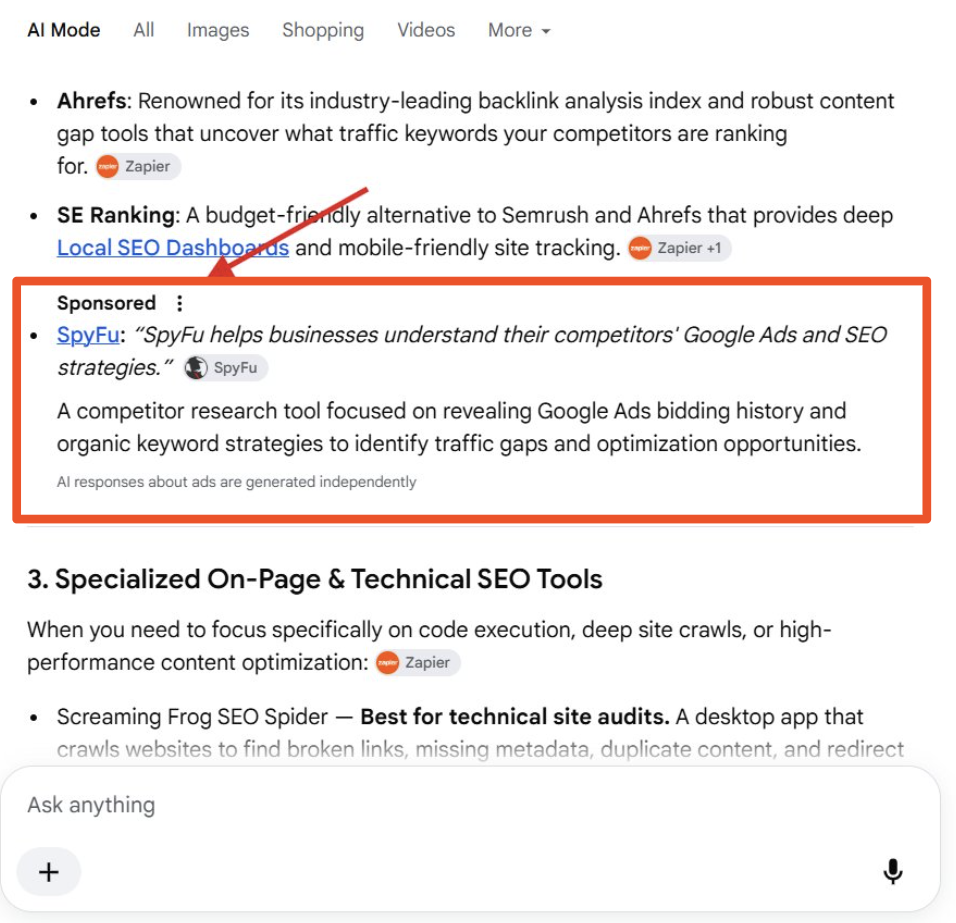
Google is testing a text-link ad format in AI Mode. Spotted in mid-September and reported by Search Engine Roundtable, the ads look like the normal text links in an AI answer, with anchor text, and carry a ‘Sponsored’ label above the AI-generated response. It’s a test, not a rollout.
The StrategiQ takeaway
Paid and organic could be about to share one box, with a label as the only difference. For paid teams, ad copy needs to read like a useful answer rather than a headline. For SEO and GEO teams, being cited and being sold in the same space are now two halves of one job. Start by making sure your claims, prices and landing pages say the same thing everywhere. The AI repeats whatever it finds.
Real, physical, ownable: stunts are having a moment
Here’s three activations that caught our eye this week…
Flying cars are real
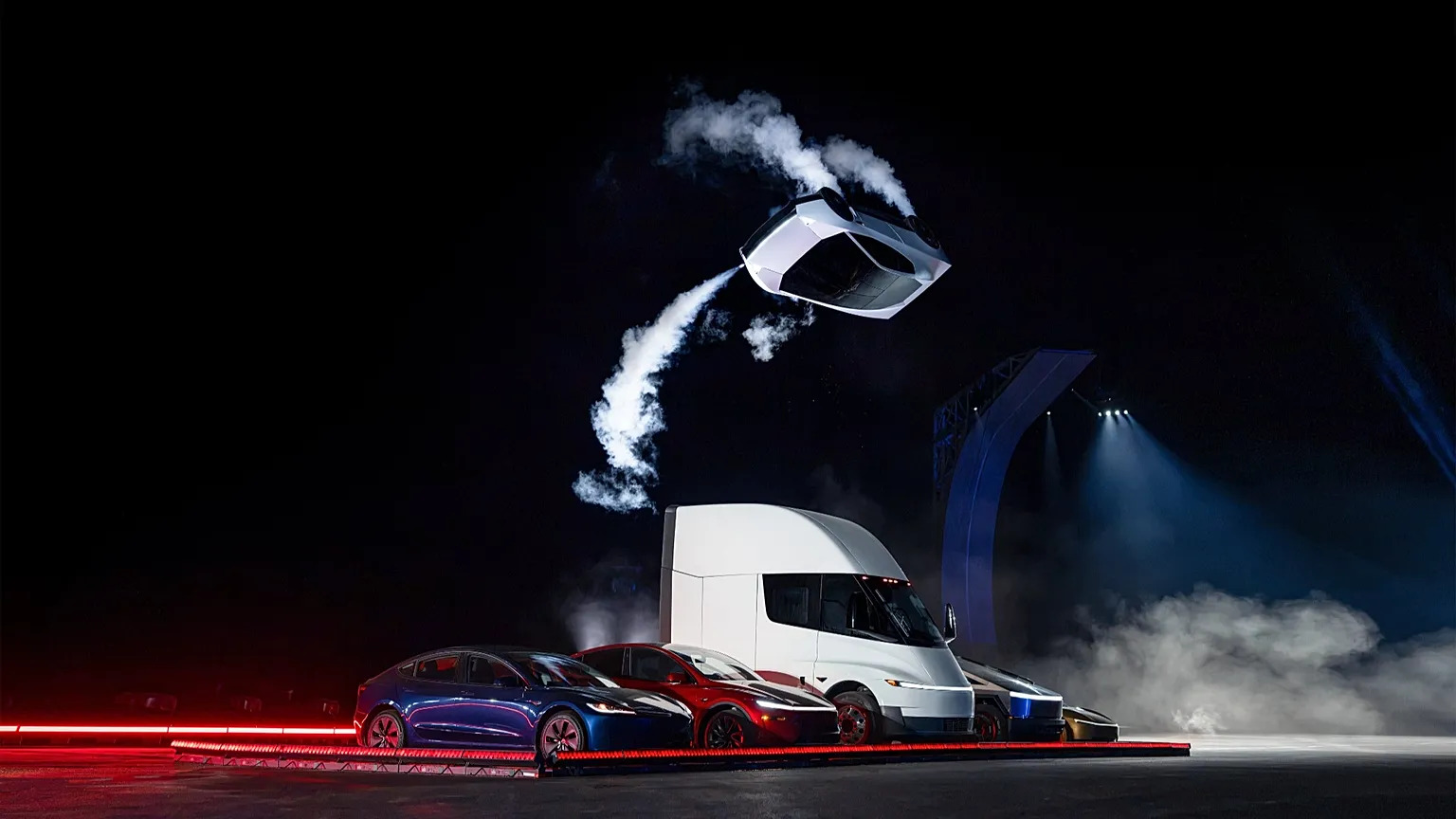
Tesla unveiled a new Roadster last Thursday at a SpaceX test facility in Texas. In a livestreamed demo, a driverless car launched off a ramp, did a barrel roll and landed on its wheels. “Flying cars are real,” said Elon Musk. Production is promised for 2028. Musk first showed a Roadster prototype in 2017, when production was promised for 2020. Tesla itself says flying it on public roads isn’t permitted.
A Korean back alley in Shoreditch
Call of Duty launches Modern Warfare 4 this Friday. Activision and Omnicom Media built a full-scale replica of a Korean back alley from the game’s opening level on Shoreditch High Street, right around the corner from our office.
Every evening, fireworks, flames, smoke, confetti and helicopter sound turn the street into a city under attack, before it’s reset for the next day.
Our very own Social Media Specialist, Jasmine, went to see it for herself: “It can’t get more immersive than playing a game demo in a street that looks just like the city it’s set in. And details still matter – from road markings to signage, it even tricked my friend who’s living out there!”
When competing with the launch of GTA – another massive cult video game – it’s a wise move to go experiential.


Pringles will bury you in a can
Pringles ‘Once You Drop’ campaign invites US fans to sign a “will and taste-ament” pledging to have their ashes buried in a Pringles can. The winner gets an engraved can-shaped urn and $28,080, the cash equivalent of one can a week for 200 years. The idea comes from the brand’s own history: Fredric Baur, who designed the can, had some of his ashes buried in one after he died in 2008. Famous Campaigns called it “a stunt that another snack brand couldn’t credibly copy.”
The StrategiQ takeaway
Real, physical and ownable is a good place to be when everything in the feed can be generated. The test is simple: could a competitor run this tomorrow by swapping the logo? Nobody could copy any of these, which is exactly why they’re being talked about.
The StrategiQ takeaway
Look across the week and it’s one question in different clothes: who’s in control? An ad platform ran creative nobody signed off. Google is blurring the line between answer and advert. A Budget has plans in limbo.
Against that, the brands cutting through are doing something real, ownable and out in the open: a can-shaped urn, a street built from a video game, a car that did its trick in front of a livestream.
Control isn’t yours by default any more. You keep it by checking the settings, labelling the work and building things nobody else could.
Sources:
- BBC – What is the budget?
- PwC, Autumn Budget 2026 preview
- Grant Thornton, Autumn Budget 2026 predictions
- Simply Business, Autumn Budget 2026 predictions for small businesses
- Simply Business – budget beginners guide
- Crowe, Autumn Budget 2026
- LBC, Chancellor to crack down on online foreign retailers evading VAT
- The Cool Down – National Trust AI ads
- Charity Times
- Charlotte Anstee’s LinkedIn post
- Alex Pollard’s LinkedIn post
- The Guardian – Tesla
- The Drum – Call of Duty in Shoreditch
- Famous Campaigns – Pringles urn campaign
- Search Engine Roundtable