
Welcome to The Uncertain Times. The world may feel unpredictable. But one pattern is clear: we’re craving realness, badly.
It shows up in all our stories this week. AI-generated content has become so normal that we’re starting to question what’s real in the first place. And when Pinterest asked Coachella attendees to lock their phones away, the response said everything. People couldn’t wait to switch off.
This week, we cover:
- The scroll-back: Why UK adults are going passive on social media
- Real vs AI: LEGO’s World Cup ad and the RSPCA’s unlikely authenticity crisis
- The Sora collapse: What the Disney-OpenAI fallout tells us about platform risk
- The Coachella lessons: Justin Bieber underwhelmed, while Pinterest set festival-goers free (from their phones)
- The living room as a media channel: Samsung Ads’ Immersive Carousel
Are UK adults falling out of love with social media?
According to new data from Ofcom, just under half of adult social media users (49%) now say they post, share or comment on platforms such as Instagram, Facebook and X, down from 61% the previous year. Nine in ten adults still use at least one platform. But active participation is declining fast.
Only 59% of respondents believe the benefits of being online outweigh the risks, down from 72% last year. Just 36% of social media users say these services are good for their mental health and 67% report spending too long online most days.
What’s driving the retreat? Social media consultant and analyst Matt Navarra says it suggests people are seeking ‘digital self-preservation’ – turning to smaller, more private spaces like group chats and DMs.
“People haven’t fallen out of love with social media,” Matt said. “They’ve just become a lot more intentional about how they show up on it.”
The platform dynamics are part of the picture too. Social feeds are no longer really about our friends – they’re algorithmic, video-first entertainment platforms. Where people once went to share, they now go to watch.
The StrategiQ takeaway: This shift has been happening for a while, and it doesn’t mean it’s time for brands to exit the feed. Instead, it’s a signal to show up carefully. Audiences engage with content that feels worth their time. Brands need to respect this, and de-prioritise strategies around volume or sharing because ‘they think they should’.
Real vs. AI: LEGO and the RSPCA fight for what’s real
Two very different stories this week. One unexpected connection.
LEGO released its headline campaign for the 2026 FIFA World Cup – a star-studded ad bringing together Messi, Ronaldo, Mbappé and Vinícius Jr to assemble a Lego trophy. The campaign has been widely shared across social platforms, accompanied by a disclaimer: it is not AI-generated.

Copyright Credit: LEGO
That a brand felt compelled to say that – almost as a selling point – tells you everything about where we are.
The RSPCA found itself in a very different situation, but facing the same issue. After more than 250 dogs were discovered at a single property, in conditions so shocking they strained belief, the charity was forced to deny claims that the images were AI-generated.
“This photo is not AI, it’s real,” said RSPCA superintendent Jo Hirst. “This is the staggering reality of what can happen when even well-meaning owners become overwhelmed.”

Photo credit: RSPCA
Two brands. Two very different contexts. The same underlying problem: we have trained ourselves to doubt what we see.
The StrategiQ takeaway: Whether it’s a World Cup ad or a welfare crisis, audiences now question whether any content is real. For brands, it once more highlights the need for real voices, real stories and real moments. Plus, being ready to stand by your content, if it comes to it.
What the Disney-OpenAI fallout tells us about platform risk
In December 2025, Disney announced a landmark $1bn investment in OpenAI, with plans to license over 200 of its characters – from Mickey Mouse to Iron Man – for use on Sora, OpenAI’s AI video generation platform. It was framed as the future of fan creativity on Disney+.
However, months later, and just 30 minutes after a meeting between Disney and OpenAI about the Sora project – the Disney side was informed that OpenAI was shutting down the project.
OpenAI is instead pivoting toward a successor, codenamed Spud, focused on enterprise ‘world models’ rather than consumer-facing video tools, with a launch expected around July 2026.
Publicly, Disney responded diplomatically. Privately, the reaction appears to have been frustration. Sora was central to the logic of the partnership. Once OpenAI deprioritised it, the value of the deal was called into question.
For the wider industry, this is a sharp illustration of platform risk.
The StrategiQ takeaway: Build strategies around platforms, by all means – but don’t build them on top of them. Even the highest-profile partnerships can unravel overnight when a vendor’s priorities change.
The Coachella lessons: Bieber disappointed, Pinterest showed real-world moments still matter
In two very different ways, Coachella schooled us on what audiences really want.
Bieber’s lone sing-a-long
Justin Bieber headlined Coachella last Saturday night – his first major performance in four years. Anticipation was high. The reaction? Divided.
The set was stripped back: Bieber alone for most of it. No backup dancers. No elaborate staging. No costume changes.
The moment everyone talked about? Bieber pulling up his own YouTube videos on a laptop to sing along with.
Some fans saw intimacy and rawness. Others saw a lack of preparation – maybe even self-indulgence. But whichever side you land on, the expectation was the same: the crowd wanted intention and effort from the star.
“Controversial but I liked JB’s set. I think it’s a fan’s dream come true for him to do this with some of these songs he never plays.” – Jasmine Gilbert, StrategiQ Social Media Specialist.
A digital platform helped people disconnect
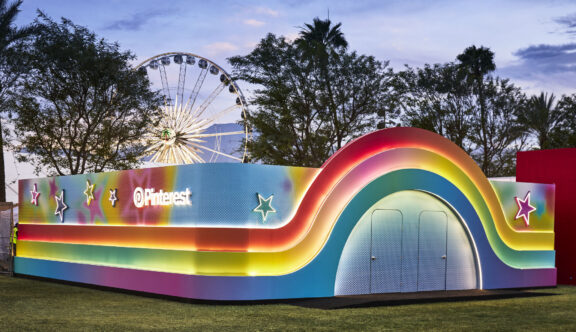
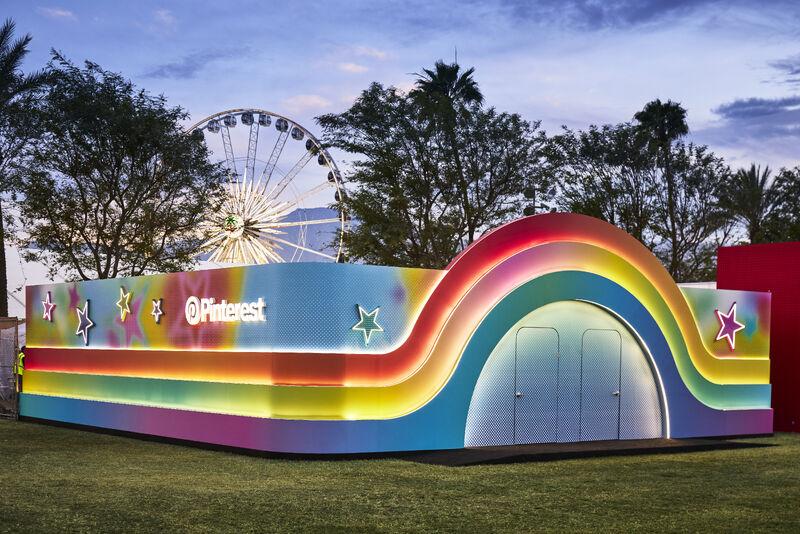
Meanwhile, a few hundred metres away, Pinterest was pulling off something rarer: getting people to voluntarily switch off.
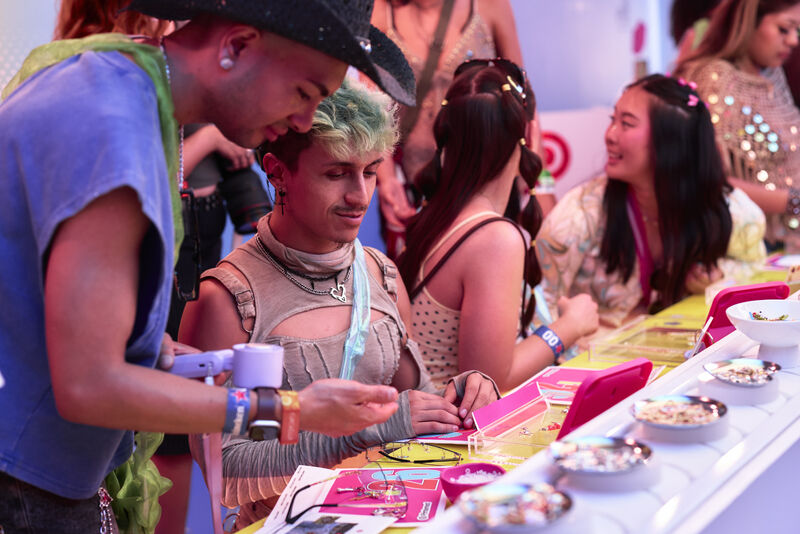
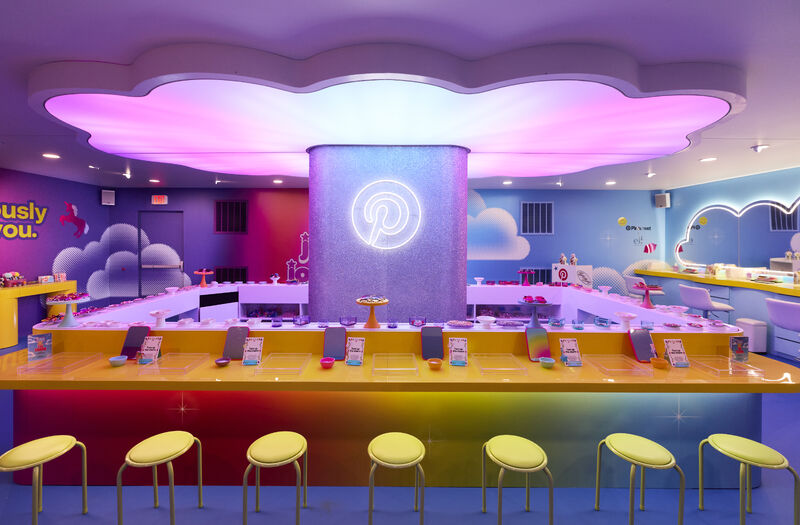
In a world that feels more online than ever, its activation was deliberately phone-free. Attendees locked their devices in secure pouches and stepped into a space designed for ‘IRL connection’. Think charm-making, beauty touch-ups and printed ‘Joy Guides’ – small, tactile moments that were exactly right for the Coachella crowd.
Pinterest read the room and recognised that what people want right now can’t always be found on a screen.
A hypothesis about culture, played out in public – and proved right.
Samsung Ads’ Immersive Carousel: The living room takes its seat as a media channel
One for the media planners this week. Samsung Ads has launched a new Immersive Carousel ad unit for Samsung TV home screens, giving brands access to more than 70 million Smart TVs across Europe.
The format auto-rotates every five seconds, while still allowing users to navigate manually. And crucially, it sits on the home screen – visited, on average, five times a day. It’s one of the few places in today’s fragmented streaming landscape where a mainstream audience can still be reliably reached.
Early results suggest real impact. ITVX used the format to promote a range of titles, with Samsung ACR data showing exposed viewers spent 90 minutes longer in the app over the course of a week compared to those unexposed.
The StrategiQ takeaway: Connected TV advertising has long promised a breakthrough moment. This might be it. As streaming continues to fragment, the home screen is emerging as one of the last environments where audiences are both reachable and in a discovery mindset.
The StrategiQ takeaway
The thread this week leads to one place: in a world of infinite digital content, pausing to enjoy the real thing has never mattered more.
Audiences are retreating from broadcasting their own lives. They question whether what they see is true. And they remember the brands that give them something to feel – aka a reason to stay engaged.
That might mean investing more in earned, human-led content. It might mean creating experiences that ask people to put their phones away. Either way, it’s thoughtful, intentional work, like Pinterest at Coachella or LEGO turning a simple disclaimer into a differentiator.
Remember…
Sources:
- https://www.ofcom.org.uk/research-and-data/telecoms-research/adults-media-use-and-attitudes
- https://petapixel.com/2026/04/03/social-media-users-are-less-active-on-platforms-due-to-rise-of-short-form-video/
- https://www.theregister.com/2026/04/07/ofcom_social_media_use/
- https://www.storyboard18.com/brand-marketing/messi-ronaldo-mbappe-vinicius-lego-pulls-off-star-studded-fifa-world-cup-2026-campaign-94133.htm
- https://news.sky.com/story/rspca-denies-using-ai-after-image-of-dozens-of-neglected-dogs-in-living-room-branded-fake-13529321
- https://www.hollywoodreporter.com/business/digital/openai-shutting-down-sora-ai-video-app-1236546187/
- https://variety.com/2026/digital/news/why-openai-disney-ended-sora-deal-bob-iger-1236698901/
- https://variety.com/2026/digital/news/why-openai-shut-down-sora-sam-altman-felt-terrible-disney-ceo-josh-damaro-1236705497/
- https://www.rollingstone.com/music/music-live-reviews/justin-bieber-performance-coachella-2026-1235543481/
- https://newsroom.pinterest.com/news/coachella-2026-phone-free/
- https://www.hercampus.com/wellness/pinterest-2026-coachella-activation-phone-free-analog-hobbies/
- https://www.broadbandtvnews.com/2026/02/24/samsung-ads-rolls-out-immersive-carousel-home-screen-format-across-europe/
- https://www.advanced-television.com/2026/03/19/samsung-ads-launches-product-carousel/