
Welcome to The Uncertain Times. This edition is about intent versus impact. A Halloween costume meant to raise awareness. A TV quiz hoax meant to protect viewers. A flaw found by AI to make the web safer, and a leak that put it in hackers’ hands. It goes to show you can mean well, but once something is out there, you don’t get to decide how it lands.
Stories in this edition:
- Martha Stewart’s ‘awareness’ costume: she dressed as a homeless person
- Bradley Walsh’s Million Pound Shot: a gambling hoax disguised as a TV quiz
- The Celebrity Traitors final: a huge stage for charity, but was awareness raised?
- PHP2Shell: AI found the flaw, hackers found the leak
- The second-biggest one-day market value loss in US history is Google’s parent Alphabet
- John Lewis’ Christmas ad whisks Kristin Scott Thomas on a shopping spree with a toy dog
Martha Stewart’s ‘awareness’ costume
For Halloween, Martha Stewart posted a photo of herself dressed as a homeless person, in torn clothes and dirt-effect make-up, holding a sign reading “I am hungry. Help me!!”. The caption plugged her QVC candles. The post was deleted, but not before the backlash arrived.
Her first statement said the costume was meant to bring awareness to homelessness and that she was “distressed” people were offended. Critics pointed out that awareness wasn’t mentioned in the original post. A day later she tried again, writing on Instagram that her earlier statement “didn’t go far enough” and that the costume was “insensitive and not funny”.
The StrategiQ takeaway: Sell candles when you want to sell candles. Raise awareness when you want to raise awareness. Do both in one post and the audience will spot it, get confused or fill in the gaps themselves, and they won’t think about you kindly. Everything has its place in marketing, just not all at once. And the line is thin ice for sensitive causes. Having honest friends for a second opinion on “is this appropriate?” are priceless.
Bradley Walsh’s Million Pound Shot: a gambling hoax divides viewers
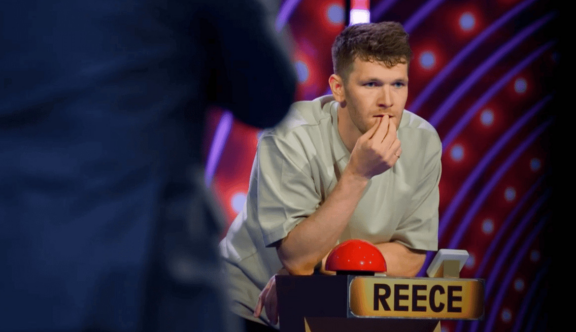
On Sunday 1 November, Channel 4 aired Million Pound Shot, billed as a big-money quiz with a ‘huge secret twist’ and the subject of weeks of online speculation. The first half played as an ordinary game show, with three contestants putting their bank cards into a chip and pin machine to play.
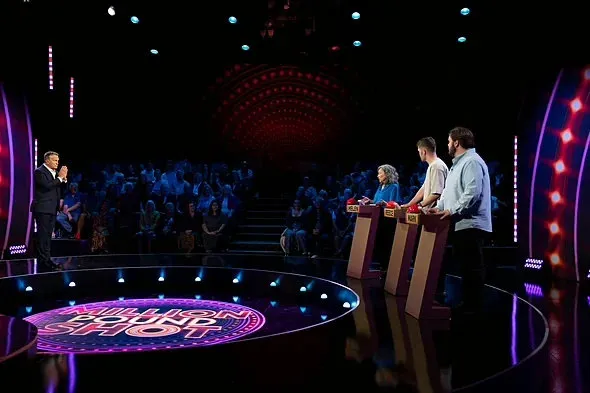
Image: Channel 4. Players were seen to gamble their own money on the show
One of them, 30-year-old Reece, said he’d agreed a £1,700 spending limit with his girlfriend, Leslie, who was watching in the audience. But as he fed his card into the machine again and again, chasing the high of an early win, the studio audience, who thought it was all real, split.
Some urged him on, while others spoke out as his losses mounted. When he was offered the chance to go further into debt, a woman stood up and said the concept was “disgusting”, and was hushed by those around her. Reece and Leslie were led off stage in tears.
After an ad break, Walsh revealed the show had been a performance. Reece, Leslie, the floor manager and the woman who spoke out were all actors, and the format copied techniques used by gambling companies. Reece’s story was based on Patrick, a former teacher who spent 13 years addicted to gambling and ran up about £250,000 of debt, who spoke at the end of the programme.
The StrategiQ takeaway: No one likes to feel duped, and here it was the studio audience and the viewers at home being misled. People also aren’t good at having morality thrust at them unexpectedly, so many found it uncomfortable viewing for reasons Walsh and the producers never intended.
Some even spotted the twist early, perhaps because they remembered Inside No. 9’s 2023 ‘3 by 3’ hoax, when the BBC promoted an episode that never existed, then aired what looked like a replacement Lee Mack quiz show that turned into something far darker. A reminder that consumers’ instinct is never to be underestimated.
And then there’s the messenger. Walsh also fronts ITV’s The Chase, which is sponsored by Gala Bingo, a point viewers and his co-star Mark Labbett were quick to make.
So was Million Pound Shot successful? It certainly got us talking. We thought: great concept. But to pull it off without riling someone up, somewhere… impossible.
The Celebrity Traitors final missed a trick
On Friday 30 October, Romesh Ranganathan and Sebastian Croft won the second series of The Celebrity Traitors, splitting a £83,000 pot between their charities. Ranganathan’s £41,500 went to the Refugee Council and Croft’s to Choose Love, a humanitarian charity for refugees and displaced people that he used to volunteer for. The series opened to more than 15 million viewers, which makes it one of the best awareness platforms in British television. Yet, the two winners’ charities were named only at the very end, with a sentence or two each, and viewers didn’t hear which charities the other celebrities were playing for.

Image: BBC/STUDIO LAMBERT/PAUL CHAPPELLS
The series saw 21 contestants slowly cut down to a final six.

Romesh Ranganathan and actor Sebastian Croft after they won BBC1’s The Celebrity Traitors as faithfuls
Image: BBC/Via Independent
Celebrity Traitors did get people talking about something else. The format asks players to lie and deceive, and that pressure showed the day before the final. When Michael Sheen laid out how the murder in plain sight had happened, James Acaster, a comedian who has spoken openly about his mental health, became very anxious and confessed to being a Traitor at the roundtable, a first for the show, before leaving the game. Support flooded social media afterwards.
The StrategiQ takeaway: a prime-time audience of that size is one of the best awareness platforms in British television, yet the charities didn’t get much airtime. Next time, BBC? But the most talked-about moment of the series wasn’t planned at all. Seeing someone openly show how much pressure he was under got people talking about anxiety in a way no campaign could have scripted. Awareness comes in different forms, and the most powerful may be the human moment. You can’t plan one, and you shouldn’t try to stage it.
PHP2Shell: AI found the flaw, hackers found the leak
Two critical flaws were found in PHP, the language behind around 70% of websites, including WordPress. Researchers at Wiz and Calif found them in August using advanced AI models, and PHP released fixes on 21 October.
But news of the flaws leaked online and hackers moved fast. US cyber agency CISA has confirmed that attackers are exploiting the bugs and ordered federal civilian agencies to patch. Hosts including WP Engine had patched their platforms by 22 October, but updating WordPress itself doesn’t fix it, because the flaw is in PHP.
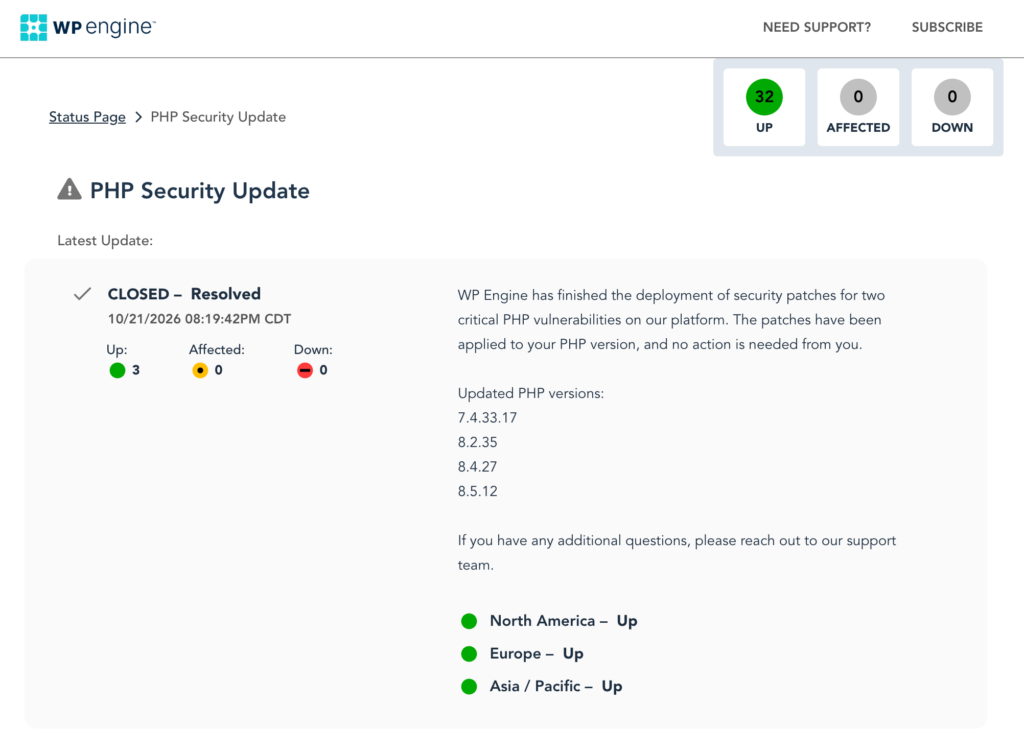
Image: WP Engine
The StrategiQ takeaway: Your website is brand infrastructure. Get crystal clear from your host on whether both flaws are patched, and don’t assume a WordPress update covers it. In September we reported on the open letter warning that AI-enabled cyber attacks would become far more widespread within months. This is that warning arriving: the same tools that find flaws are being used to exploit them, and the gap between discovery and attack is shrinking. Security is a trust issue, and trust is a marketing issue.
Alphabet’s $500bn devalue
On Thursday 29 October, Alphabet’s shares fell 12.6%, its worst day since going public in 2004, wiping about $500bn off its market value. That’s the second-biggest one-day wipeout in US market history, behind Nvidia’s $589bn drop in January 2025.
The trigger was its third-quarter results: revenue up 25% to $127.6bn but slightly below forecasts, search revenue growth slowing to 12% from 17% in the previous quarter, and capital spending of $51.4bn in the quarter, leaving free cash flow negative. Alphabet expects to spend $195bn to $205bn this year. It’s a drop in market value, not cash lost, and operating income still rose around 30%.
The StrategiQ takeaway. Alphabet’s downfall? It couldn’t show when its huge AI spending pays back. For advertisers, search still grew 12%, so this isn’t the end of paid search. But we’d expect pressure on Google to show its AI products earn their keep, which may mean more AI-driven ad formats, which we’ll be keeping a close eye on.
Read more:
- Google’s most consequential month for paid search: Our Head of Paid Media, Dale, breaks down five Google changes – and exactly how urgently each one needs your attention.
- Google’s Deciding Your Account’s Fate. Research Shows AI Overview Already Did: Search Engine Land’s own testing confirms AI Overviews are already contradicting paid ads on the same results page, with no warning and no reporting metric that catches it.
John Lewis’s 20th Christmas ad: don’t give up on giving
John Lewis launched its 2026 Christmas ad on Tuesday 3 November, on social at 7.30am and on TV during Coronation Street and The Great British Bake Off.
Gloria and Pickles stars Dame Kristin Scott Thomas as a grandmother who, short on ideas, slips cash into her Christmas cards. A talking toy dog, Pickles (Paul Whitehouse), tells her “You can do better than cash” and drags her to John Lewis by magical tuk-tuk. She ends up building a ‘Gran Cave’ for the grandchildren, using things she already owned or items under £100. Sam Fender covers You Can’t Always Get What You Want, and John Lewis is donating its profits from the record to Action for Children. The tagline is ‘Don’t give up on giving’, with the aim, as marketing director Rosie Hanley says, of restoring the nation’s gift-giving confidence.

Image: John Lewis/PA. Dame Kristin Scott Thomas in a scene from John Lewis’s Christmas TV advert for 2026.
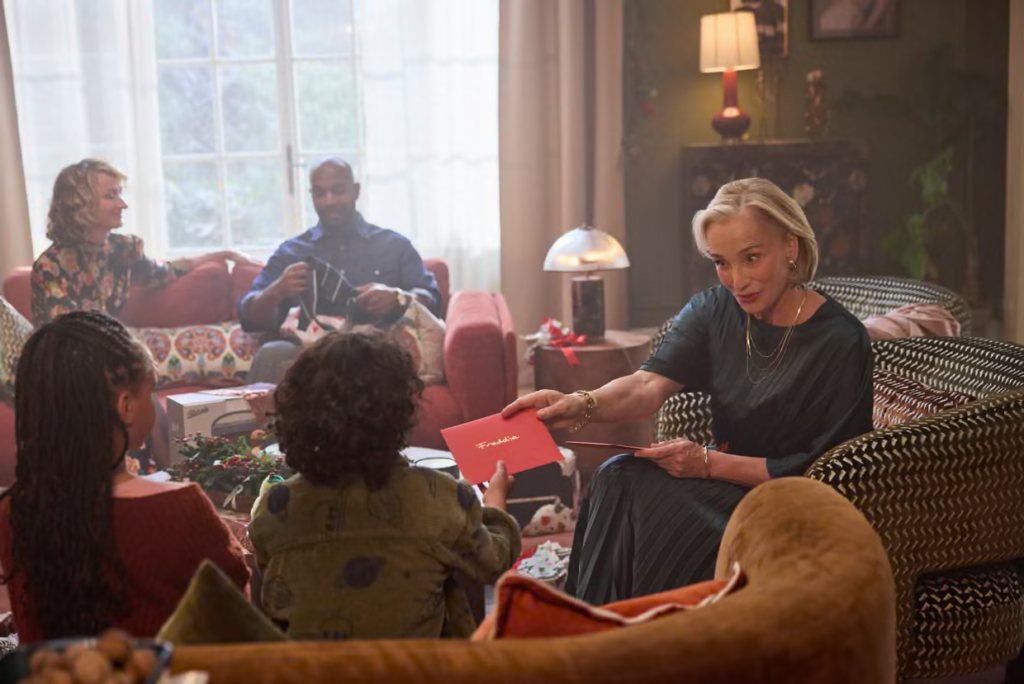
Image: John Lewis/PA. Scott Thomas’s character hands out gifts to her family.
The StrategiQ takeaway: It’s a long way from 2013’s The Bear and the Hare, the animated tearjerker that had the nation reaching for tissues. Since then John Lewis has moved towards real people and real feelings, and this year’s ad is a close cousin of last year’s father-and-son music story, Where Love Lives, in which a gift said what a teenager couldn’t.
‘Don’t give up on giving’ names the fear of choosing the wrong present, and the easy way out of handing over cash, and it puts effort at the centre. It isn’t a clean break from ‘magical’ and ‘whimsical’, with a talking toy dog still in the cast, and there’s a risk: in a cost-of-living squeeze, being told you can do better than cash could sound like a scolding. The under-£100 Gran Cave is the answer. But the ad only works if people feel they can afford to act on it.
“This isn’t my favourite John Lewis Christmas ad. The message reads to me a little like: spoilt rich children get what they want and never learn the true magic of Christmas. However, the tuk tuk sleigh is fun and who doesn’t love a little bit of aspirational luxury in the form of rich people’s houses at this time of year. The glamorous Kristin Scott Thomas is fab too. John Lewis are leaning into a targeted persona with each ad, and I don’t think it’s a bad strategy.”
– Emily Sotudeh, Content Strategist, StrategiQ
The StrategiQ takeaway
Every story started with good intentions. Martha Stewart meant to raise awareness. Walsh did too, at a cost to trust. The Traitors could have – they were playing for charity (and had been all along). AI was meant to make the web safer, yet the leak made it riskier.
Before you launch anything, ask what you intend, what your audience will say it was for, and whether the two match.
IT’S ALWAYS STRATEGY.
Sources
- https://www.cnn.com/2026/11/02/entertainment/martha-stewart-homeless-halloween-costume-intl-scli
- https://abcnews.com/GMA/Culture/martha-stewart-apologizes-homeless-person-halloween-costume/story?id=137770962
- https://variety.com/2026/digital/news/martha-stewart-backlash-halloween-costume-homelessness-1236936874/
- https://www.hollywoodreporter.com/news/general-news/martha-stewart-responds-backlash-halloween-costume-homeless-1236745531/
- https://www.cbc.ca/news/entertainment/martha-stewart-homeless-halloween-backlash-9.7405774
- https://news.stv.tv/entertainment/bradley-walsh-hopes-faux-game-show-million-pound-shot-educates-viewers-on-gambling
- https://uk.news.yahoo.com/million-pound-shot-bradley-walsh-225359079.html
- https://www.gbnews.com/celebrity/bradley-walsh-channel-4-million-pound-shot-anti-gambling
- https://britbrief.co.uk/entertainment/television/bradley-walsh-reveals-reason-behind-gambling-show-twist.html
- https://britbrief.co.uk/entertainment/television/walsh-defends-anti-gambling-hoax-after-co-stars-jibe.html
- https://www.racingpost.com/news/industry/betting-industry/misleading-portrayal-bgc-slams-channel-4-over-bradley-walsh-show-that-posed-as-a-gambling-game-to-attack-the-industry-abdbU6h8amob/
- https://www.itv.com/news/2026-10-30/romesh-ranganathan-and-sebastian-croft-win-the-celebrity-traitors-as-faithfuls
- https://en.wikipedia.org/wiki/The_Celebrity_Traitors
- https://thetab.com/2026/10/30/every-time-celebrity-traitors-james-acaster-has-spoken-out-about-his-mental-health-battles
- https://www.npr.org/2026/10/24/nx-s1-6012327/ai-found-the-flaw-hackers-found-the-leak-the-race-to-save-php2shell
- https://techcrunch.com/2026/10/27/us-government-says-hackers-are-now-exploiting-critical-php-web-bugs/
- https://meowapps.com/php2shell-wordpress/
- https://www.theindustry.fashion/john-lewis-unveils-dont-give-up-on-giving-christmas-ad/
- https://www.tyla.com/life/john-lewis-christmas-advert-2026-833540-20261102
- https://www.marieclaire.co.uk/news/fashion-news/the-john-lewis-christmas-ad-is-here-and-we-defy-you-not-to-cry-96462
- https://www.itv.com/news/2025-11-04/john-lewis-christmas-ad-shows-father-and-son-bond-over-90s-club-hit
- https://www.johnlewis.com/content/gifts/every-john-lewis-christmas-advert-ever-aired