
Welcome to the first 2026 edition of The Uncertain Times. As the new year breaks, we unpack:
- The 10k Threshold: Why the FTSE 100’s record high is a lesson in narrative, not just numbers.
- The Junk Food Ban: How regulation is forcing a return to brand equity.
- Hard Power in the Boardroom: Why conflict is the new top risk for CFOs.
- Retail Re-engineered: Zara’s AI play and the end of the physical changing room.

FTSE 100 breaks 10,000: What the UK market milestone signals for business leaders
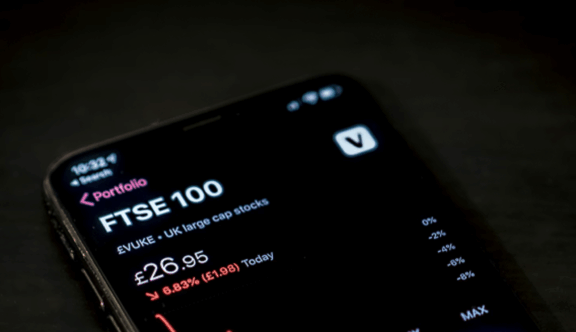
The UK’s FTSE 100 index has crossed the 10,000-point threshold for the first time, marking a symbolic milestone for British equities and reflecting renewed investor confidence. While this 10k mark is largely psychological, the forces driving it offer a roadmap for C-suite leaders navigating 2026.
This isn’t a simple story of a booming UK economy. Market analysts caution that the milestone should not be read as a direct indicator of the health of the UK consumer. Instead, it reflects where global capital is currently flowing: toward companies perceived as resilient, strategically important or well-positioned to benefit from structural shifts in energy, defence and resources.
The market’s focus on resilience and long-term value also reinforces the premium placed on credible innovation, operational stability and clear purpose. In a climate where capital is selective, brands that can clearly articulate how technology underpins efficiency or sustainability are the ones that will resonate.
Our takeaway: The FTSE’s climb underscores that investor capital is currently flowing toward resilience. The market is rewarding brands that can articulate a long-term strategy tied to structural shifts (energy, security and automation). It highlights the growing importance of strategic storytelling aligned with macro themes. If your brand story doesn’t yet connect your ‘day job’ to these themes of stability and innovation, you’re leaving value on the table.
“The UK has a habit of underselling itself. While the world wrestles with volatility, British businesses are quietly building, exporting, innovating and delivering returns. Over 70% of FTSE 100 revenues come from overseas; proof that UK companies compete and win globally. Confidence follows competence so isn’t it time we talked up our success…not with bravado, but with evidence? Steady growth is still growth.” – Will Anderson, Chief Growth Officer, StrategiQ
The junk food ad ban: The end of marketing on autopilot?
“Legislation permits companies to switch from product advertising to brand advertising” – Anna Taylor, Executive Director of the Food Foundation campaign group.
The UK’s ban on junk food advertising – restricting TV before 9pm and prohibiting all paid online ads – is a blunt reminder that regulation is now as powerful a force in shaping growth as creativity or technology.
For years, brands used precision-targeted digital loops as a crutch for growth. That era is over. This policy change might just be an extinction event for ‘autopilot’ marketing.
One risk is that this regulation creates a lopsided playing field. Precision-targeted digital ads were the ‘great equaliser’, allowing startups to bypass massive budgets to find their audience. Heritage brands, who already own real estate in the consumer’s mind, can pivot. But for newcomers, the ladder has been pulled up. Do we risk a market where the only brands that survive are those that were lucky enough to get big before the gates closed?
Our view: If your brand can’t communicate meaningfully without showcasing a product or a ‘Buy Now’ button, you don’t have a brand – you have a distribution channel. This ban forces a return to long-term brand equity. The winners will be those who invest in narrative and trust, proving that their brand matters even when the digital noise is silenced.
This isn’t just a food-industry problem. Whether it’s tech, gaming or energy, governments are increasingly willing to redraw commercial boundaries when social outcomes are at stake.
When channels shrink, thinking must expand. Perhaps tighter regulation will spark a creative renaissance in outdoor advertising, sponsorship and experiential marketing. Brands are being forced to answer the only question that matters: Would anyone miss us if we disappeared?
The Zara mirror: Could AI make the changing room obsolete?
Inditex’s recent record-breaking performance has held a mirror up to the retail industry, revealing a stark divide between the tech-native and the stagnant. But the most provocative reflection isn’t found in their logistics – it’s in the fitting room. As Zara leans heavily into AI, the high street is forced to ask: are physical changing rooms becoming a relic of the past?
By integrating AI-powered ‘virtual try-ons’ and smart mirrors, Zara is solving a $500 billion returns problem and re-engineering the economics of fashion.
The algorithm of fit
For years, the changing room has been the ‘bottleneck’ of the store, a place of friction, queues and discarded stock. Zara’s pivot toward AI fitting technology aims to solve the industry’s $500 billion returns problem. By using machine learning to map body types and predict ‘true fit’, the goal is to give consumers the confidence to buy without ever stepping behind a curtain. Every virtual try-on feeds an algorithm that tells Zara how a garment sits on a real human body, allowing them to refine designs.
According to City AM, 69% of British retailers are set to invest in AI-driven tech this year to reduce rising costs. But while a giant like Inditex has the capital required to build proprietary AI models, smaller labels will struggle to keep up.
Our thoughts: Zara’s success proves that modern retail isn’t just about selling clothes but managing information. By ditching traditional friction points in favour of AI, Inditex is shifting from a service model to a science model. Agility is no longer just about how fast you can ship; it’s about how fast you can innovate.
The geopolitical boardroom: Why conflict is the new top risk
For decades, the ‘Corporate Risk Register’ was dominated by interest rates, tax and consumer confidence. In 2026, predictability has vanished and those levers have been overshadowed by global conflict. According to the latest Deloitte data, geopolitical risk is now the top concern for UK businesses, outranking domestic competitiveness for the first time.
The primary threat to growth has shifted from a lack of productivity to the unpredictability of a world in flux. When you can’t control the stability of a border or the price of energy, the only variable left to optimise is internal intelligence. This is why three in five CFOs now believe AI will deliver the efficiency gains needed to salvage margins.
Growth is no longer a given; it’s a prize for the resilient. To survive in 2026, companies must move from a ‘just-in-time’ to a ‘just-in-case’ reality.
The StrategiQ takeaway:
Readiness is now a competitive advantage. That means moving beyond reactive marketing toward scenario-based strategy, with contingency plans and crisis communications built before pressure hits, not after.
For brands operating across borders, cultural nuance is no longer a “nice-to-have”; it’s a form of risk management. In a fragmented global market, a seemingly insignificant oversight in one region can be catastrophic elsewhere. Predict the friction, invest in consumer insight and be ready to pivot.
To sum up
2026 is starting with a clear message: Strategy is the only differentiator. Whether it’s surviving an ad ban or innovating in retail, the ‘autopilot’ era has ended. To shift the dial, you need smart partners who can help you cut through this complexity and secure your New Future Value™.
Sources and references
- FTSE 100 breaks 10,000 mark for first time, capping stellar year for UK market – The Guardian, 02 Jan 2026
- UK’s FTSE 100 closes above 10,000 for first time on mining, defence gains – Reuters, 05 Jan, 2026
- Ban on TV junk food advertising before 9pm comes into force in UK – The Guardian, 05 Jan 2026
- Fashion giant Zara holds a mirror up to retail disruption City AM, 05 Jan 2026
- Finance chiefs fearful of war and geopolitical risks, City AM, 06 Jan 2026