
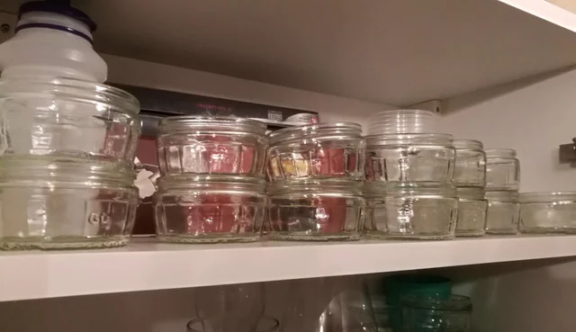
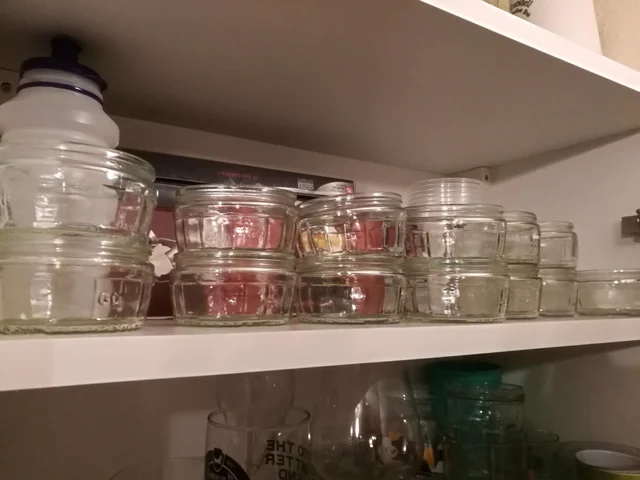
Go and open your kitchen cupboard. Somewhere between the mugs from conferences you can’t remember attending and the bowl nobody likes, there’s a decent chance you’ll find a little stack of heavy glass ramekins. The chocolate pud is long gone. But at some point you rinsed those Gü pots, dried them, and put them away like they were part of the family china.
Now think about the jar of spag bol sauce you finished last week. Where is it? In the recycling, probably within seconds. It was bigger, sturdier, came with its own lid, and was frankly far more useful for leftovers. Didn’t matter. Gone.
Breakage works the same way. Knock a £2 IKEA tumbler off the counter and you’ll stand there tutting at yourself over the shards. Lob an empty bottle of Savvy B into the glass recycling, though, and that clatter is weirdly satisfying. It’s all the same stuff, sand, soda ash and limestone. The wine bottle is arguably the better-made object. Yet one breakage feels like a tiny tragedy and the other is just good sense tidying up.
The reason this is interesting.
We don’t value things for what they’re made of or what they can do. We value them for what they mean, what we expect from them, and who they let us pretend to be.
Start with that last one. The spag bol jar is real life.
Orange-stained lid, sticky label residue, and a quiet reminder that you’re the sort of person who made Tuesday’s tea from a jar because you’re too tired to chop an onion. The Gü pot on the other hand, is aspiration incarnate. It’s a prop for the version of you who hosts relaxed dinner parties and serves individual panna cottas without breaking a sweat. We bin the evidence of who we are and keep the props for who we’d like to be.
Then there’s the mental buckets things live in.
Even the most type B of us can’t help but fall into this trap. As humans, we like order which helps us to make sense of the complex world we experience, so we tend to sort everything into categories, and that category then sets the value. The IKEA glass lives in ‘kitchenware’, which comes with an unspoken promise that it’ll stick around. The wine bottle lives in ‘packaging’, which is worthless the moment it’s empty. The beauty of this theory is that it’s infinitely hackable with clever brand positioning, but its nuance must be understood first.
And finally, there’s the promise.
The sting of breaking a cheap glass isn’t about the two quid that could have bought you like half a Freddo? It’s that the glass broke its promise. It was meant to last years but the wine bottle only ever promised you a nice evening, and it delivered. When reality falls short of what we were promised, especially by some way, the disappointment is out of all proportion to the actual loss. But when something does exactly what it said it would, letting go is easy. Binning that bottle is closure, not loss.
Which brings it back to your business.
Because packaging isn’t just a jar or a box. It’s the context around the thing you sell, and every business has it, even if all you sell is advice.
In professional services, the packaging is the proposal that lands in someone’s inbox, the first week of onboarding, the way a report is put together, and the tone of the final meeting. The core work might be brilliant. But the client experiences it through the container, and the container decides whether it ends up on the shelf or in the bin.
Take the aspiration bit.
A spag bol jar deliverable reminds the client of the mess they were in. It’s forty slides of problems, written for the people who already know them. A Gü pot deliverable makes the client look good. It’s the thing they forward to their boss, drop into the board pack, or quietly take credit for in the next meeting. You’re not just solving their problem. You’re giving them a prop for the version of themselves they’d like to be at work.
Then there’s the bucket.
If you’re filed under ‘supplier’, you’re a wine bottle, useful while the job’s on, forgotten the moment the invoice is paid. If you’re filed under ‘partner’, you’re kitchenware, and people expect you to stick around. A lot of that comes down to framing. A one-off report gets read once and archived. The same thinking, packaged as a framework or a playbook the team keeps coming back to, lives in the cupboard for years. Same content. Different bucket.
And then there’s the promise.
Clients rarely fall out with you over the fee. They fall out over the gap between what they thought they were getting and what turned up. Be clear about what the contract really is, whether that’s a sprint, a long-term relationship or a single brilliant answer, and then honour it. A project that ends exactly the way it said it would doesn’t feel like a loss. It feels like closure, and closure is what brings people back.
So here’s the test.
Once the main event’s been used up and the buzz has worn off, what’s left in your customer’s cupboard?
A spag bol jar experience does the job. It’s functional, transactional, and leaves a bit of sticky residue behind. When it’s over, the client feels a small sense of relief letting it go. They don’t hate you, they just won’t miss you.
A Gü pot experience is considered a bit special and says something about the person who chose it. Long after they’ve had the good bit, there’s something left that they can’t quite bring themselves to throw away.
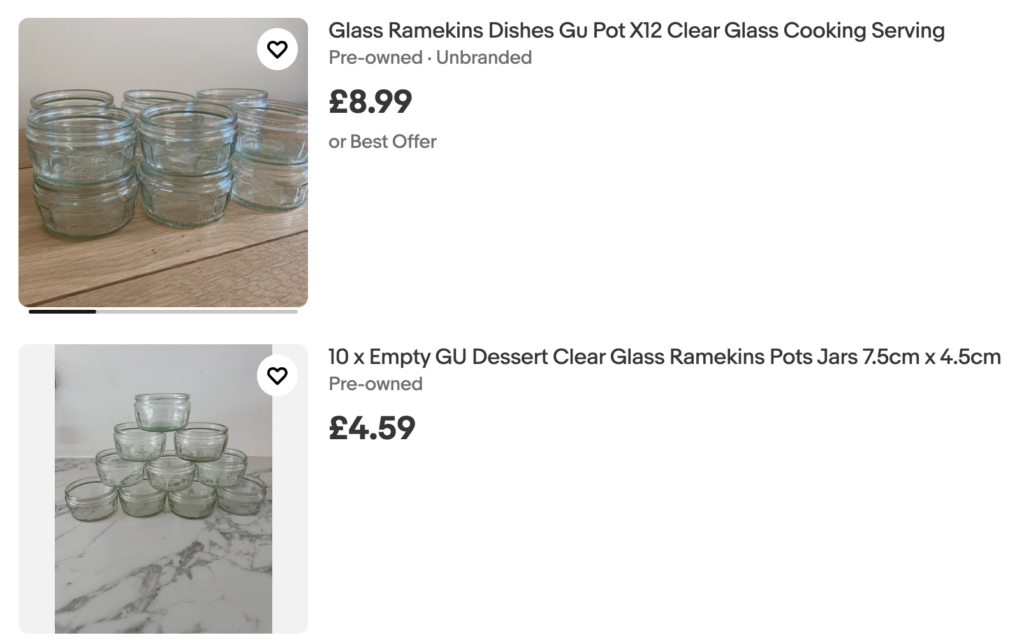
And it doesn’t stop there. Search eBay and you’ll find people selling empty Gü pots by the dozen, to strangers who’ll use them for tea lights, weddings and dinner parties. The pudding was eaten by someone else months ago, and the pot is still finding new owners. That’s what a great experience does. It gets passed on, recommended and forwarded, and ends up valued by people you’ve never even met. Nobody’s listing spag bol jars.
The difference in what the two cost to make is next to nothing. The difference in loyalty, and in what you can charge, is enormous.
So go and have a proper look in the cupboard. Is your customer experience a spag bol jar, or a Gü pot?