

AI is reshaping how consumers discover and choose brands.
Shopping assistants and early forms of agentic commerce, platforms like ChatGPT, Gemini, Perplexity and e-commerce AIs aren’t just tools anymore. They’re gatekeepers.
That’s why measuring brand performance in AI-driven journeys is no longer optional.
There is no single metric that tells the full story. But there is a practical framework brands can use today to understand:
- Where and how they appear in AI responses
- How AI systems describe and rank them
- How they compare to competitors in AI-led decision moments
This guide breaks that down.
Key takeaways:
- AI-mediated discovery is already influencing brand consideration
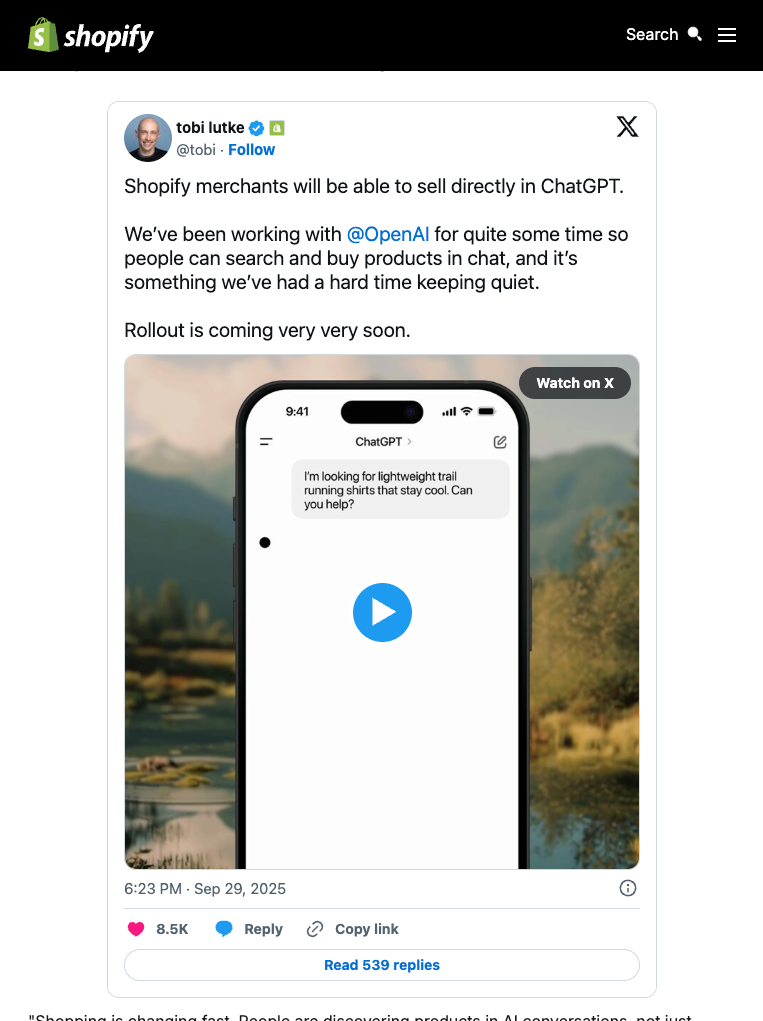
- Agentic shopping – where AI assists or completes parts of a transaction – is scaling unevenly but accelerating across major platforms
- AI visibility is measurable today using a mix of prompt testing, sentiment analysis and share-of-voice tracking
- Brands that don’t actively monitor how AI represents them are letting third-party systems define their story
What is an ‘AI-driven customer journey’?
An AI-driven customer journey is any path where artificial intelligence plays a meaningful role in influencing – or acting on – a consumer’s decision.
1. Brand discovery through LLMs
Consumers asking large language models (LLMs) like ChatGPT, Gemini or Claude for brand opinions or recommendations.
‘Is KFC any good?’
‘What’s the best fast-food chain in the UK?’
The response becomes an instant trust signal – shaped by content, reviews and how visible your brand is across the open web.
2. Category-level search on commerce platforms
AI-driven ranking systems on platforms like Amazon, Shopify and Google don’t just list products – they decide which brands are surfaced.
‘Best wireless headphones under £200’
If your brand isn’t picked by the AI, you’re invisible.
3. AI-powered customer service
Customer support bots and recommendation engines increasingly offer guidance – sometimes nudging users toward alternatives or flagging risks like hidden costs.
‘Is this the best deal for me?’
These micro-moments shape perception just as much as ads or reviews.
4. Assisted and agentic shopping
Some AI platforms now combine discovery and checkout. In certain markets, users can research, compare and purchase without visiting a traditional website.
Adoption varies by platform, region and merchant support. But the direction is clear. AI is moving from advisor to actor in commerce.
In all cases, the AI’s response matters. It can reinforce your positioning – or quietly undermine it.
How to see if AI mentions your brand
The smartest brands are already testing new methods. You can do the same. It starts by getting curious.
- Identify key AI touchpoints
Ask a simple question: Where would my customer turn for answers today?
Map all the AI platforms relevant to your category.
Retail & Consumer Products
Customers may ask AI tools:
‘What are the best wireless earbuds under £150?’ or
‘Are Nike Dunks true to size?’
Financial Services
Platforms like Confused.com or NerdWallet use AI to help customers compare financial products. Customers might ask:
‘Best credit cards for frequent flyers’ or
‘Cheapest home insurance with accidental damage cover’
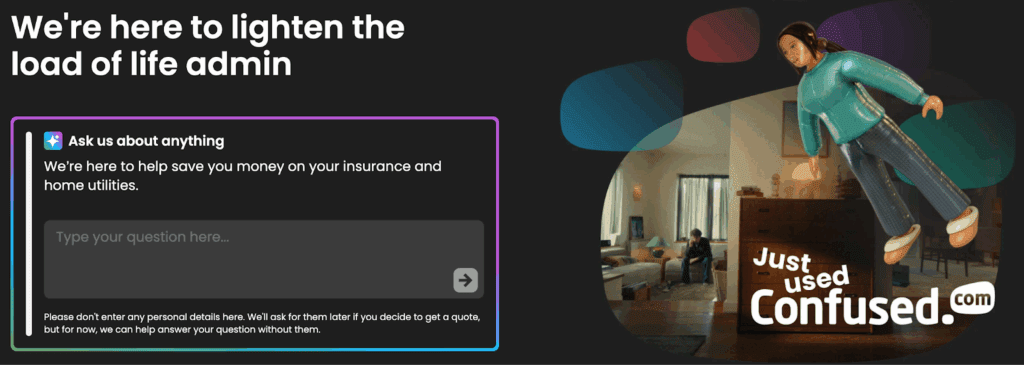
Ask us anything, says Confused.com
- Craft intentional prompts
To stay focused, start with 3–5 core prompts aligned to your goals.
To test brand perception
- How is [Your Brand] perceived in the market?
- What makes [Your Brand] stand out?
- Describe [Your Brand] in three sentences using its tone of voice
For historical or competitive insight
- How has public perception of [Your Brand] changed over time?
- How does [Your Brand] compare to [Competitor]?
For e-commerce AIs, tailor prompts to structured inputs:
- Compare [Product A] vs [Product B] on value, reviews, and durability
- Which features matter most in [Category]?
- Track results systematically
You don’t need complex software to start. A spreadsheet is enough. Record:
- Brand mention (yes/no)
- Position or ranking
- Sentiment (e.g. –2 to +2)
- Key descriptors or associations
- Competitors mentioned and their positioning
- Repeat the same prompts:
- Across multiple AI platforms
- On a regular cadence (monthly or post-campaign)
Repeat the same prompts:
- Across multiple AI platforms
- On a regular cadence (monthly or post-campaign)
Measuring ‘AI Share of Voice’ (SoV)
You’re tracking AI brand mentions. Now quantify your visibility.
AI Share of Voice formula:
(Your Brand Mentions / Total Brand Mentions) × 100
Example
| Brand | Mentions Across 5 AIs | Share of Voice (%) |
| McDonald’s | 5 mentions | 50% |
| Greggs | 3 mentions | 30% |
| Five Guys | 2 mentions | 20% |
10 Total AI mentions
McDonald’s AI SoV = (5 ÷ 10) × 100 = 50%
This gives you a benchmark to compare:
- Visibility vs competitors
- Changes over time
- Alignment with traffic, conversions or sentiment
Used alone, it’s just a number. Used consistently, it becomes a signal.
Acting on what you learn
Insight only matters if applied.
- Authority beats keywords
LLMs favour content that demonstrates depth and credibility – not thin SEO pages. Think:
- Guides
- Explain-ers
- Reviews
- Content that answers real questions people ask AI tools
- Reviews shape AI narratives
AI systems often synthesise insights from aggregated reviews. Strong, credible review signals increase the likelihood of positive AI mentions.
- Structured data is non-negotiable
Clean product feeds, schema markup and consistent PDP data help AI systems interpret and surface your brand accurately.
As commerce platforms move toward more structured AI ecosystems, this becomes table stakes.
Tools to monitor AI mentions and journeys
The ecosystem is evolving fast, but brands already have options:
- AI visibility features in SEO tools that track citations and mentions in generative results
- Dedicated AI-monitoring platforms focused on prompt-based brand tracking
- Analytics platforms like GA4 to identify traffic from AI assistants and chatbot referrals
Enterprise listening tools using NLP to analyse sentiment, emotion, and tone at scale
There’s no single source of truth – yet. That’s why triangulation matters.
Don’t let AI define your brand without you
AI is already shaping how people discover, evaluate, and choose brands – often in places you don’t control.
The brands that win won’t be the ones chasing every new tool. They’ll be the ones who understand how they’re represented, measure it consistently and act with intent.
FAQs – tracking performance in AI journeys
What are the limitations of measuring AI performance?
- Attribution is tricky – Just because an AI mentions your brand doesn’t mean it drove a purchase. Other touchpoints like ads, social media and organic search still influence outcomes.
- AI knowledge is limited and variable – Many AI models don’t have live access to review sites, social media or real-time web data unless specifically integrated with a retrieval layer. This can make their responses outdated or incomplete.
Platform differences matter – Each AI uses its own algorithms, training data, and ranking signals. A brand visible in ChatGPT may be invisible in Perplexity or Gemini.
Transparency is limited – Most generative AI platforms don’t disclose exactly why a brand is cited or how responses are ranked, so measurement often relies on indirect observation rather than precise metrics.
Bottom line: AI brand tracking is a valuable signal, but it should be combined with traditional monitoring and customer analytics to get a full picture of performance.
Do consumers truly trust AI?
It’s a mixed bag. Some people actively avoid AI interactions, while others increasingly rely on them for research, recommendations and purchases.
Key trends:
- AI is becoming more helpful and context-aware, able to remember preferences and tailor suggestions across sessions.
- Trust is category-dependent: people are more likely to rely on AI for product research, e-commerce and comparison shopping than for financial or medical decisions.
Familiarity drives trust: users who interact regularly with AI assistants (e.g., ChatGPT, Google Gemini, Perplexity) tend to weigh their suggestions more heavily.
Bottom line: AI is not universally trusted, but its influence is growing – especially among digitally savvy consumers who use it as a trusted decision-support tool.
Sources and references
- More than half of consumers trust AI – Retail Customer Experience
- ChatGPT Advertising: Inside Your (And OpenAI’s) Next Revenue Channel, SEO.com
- Mintel – Customer Service in Retailing – UK – 2024